

Lower your water bill in El Paso starts with finding out where water is actually going before you replace anything. Compare your recent bills, run a simple meter test, and check the fixtures that fail most often here – toilets, faucets, and irrigation. Combine that with El Paso-specific habits around hard water and desert watering, and most homes see a real, lasting drop in usage without sacrificing comfort.
Key Takeaways
- A higher water bill doesn’t always mean a major leak – billing cycles, guests, and seasonal irrigation all move the number.
- A 30–60 minute water meter test tells you whether water is flowing when it shouldn’t be.
- Toilets, faucets, supply lines, and irrigation are the most common sources of unnoticed waste in El Paso homes.
- El Paso’s hard water – averaging around 10 grains per gallon from the Hueco Bolson aquifer – accelerates wear on all of the above.
- Consistent habits and seasonal maintenance beat replacing fixtures at random.
Introduction
An unexpectedly high water bill is frustrating, especially when nothing about your routine has changed. Before assuming a pipe has failed, it’s worth ruling out the less obvious causes first – a longer billing period, a run of house guests, summer irrigation, a worn toilet flapper, or water pressure that’s higher than it needs to be.
Water management matters more here than in a lot of cities. El Paso’s heat, dry air, and the demands of desert landscaping put extra load on both your indoor plumbing and your irrigation system, so a full picture means checking both – not just the faucet you use every day.
Why Is Your El Paso Water Bill Higher Than Usual?
A higher bill doesn’t automatically mean a serious plumbing problem. It can come from a longer billing cycle, a change in household routine, seasonal watering, a rate adjustment, or water moving through the system unnoticed. Work through the likely causes in order before you call anyone or replace a fixture.
Compare Recent Bills Carefully
Look at more than the total due. Check the number of billing days, compare against your usage from the same season last year (not just last month – El Paso households use noticeably more water in summer from irrigation, outdoor cleaning, and evaporation), and note any rate or fee changes on the statement itself.
Consider Changes Inside the Household
House guests, extra laundry loads, longer showers, more dishwasher cycles, washing a car, or filling a pool can all move the needle without anything being wrong. Write down anything that changed before assuming a leak.
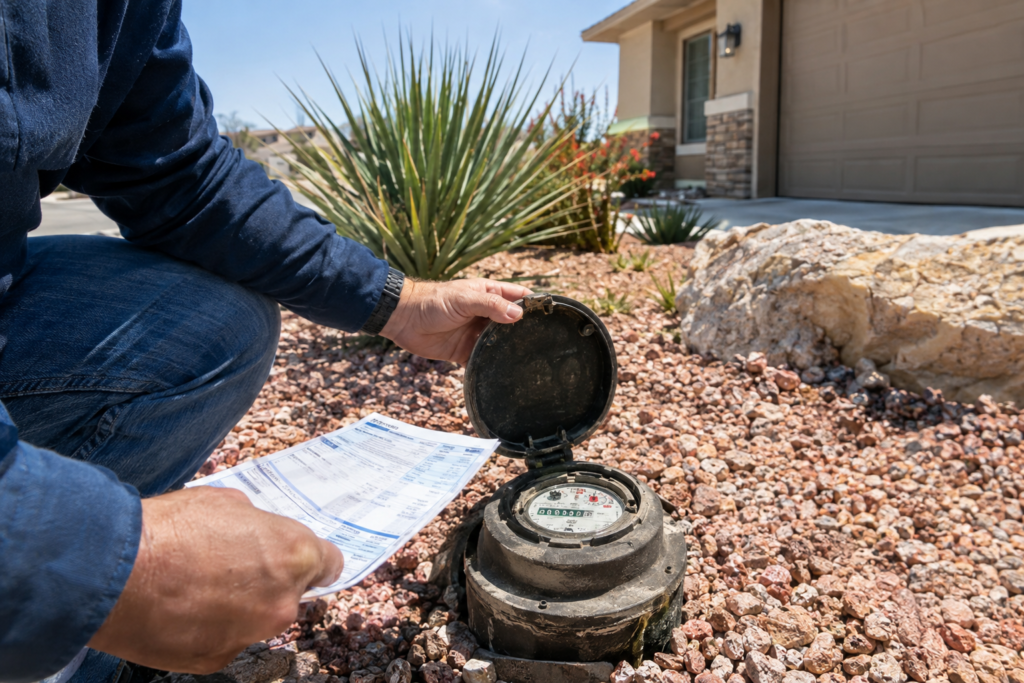
Run the Water Meter Test
If nothing about your routine explains the jump, your meter can confirm whether water is moving when it shouldn’t be:
- Turn off every faucet, shower, and appliance – including irrigation.
- Confirm toilets aren’t refilling.
- Record the meter reading.
- Wait 30–60 minutes without using any water.
- Check the reading again.
If it moved, something is using water with everything off. That confirms a leak – it doesn’t yet tell you where.
Finding | What It May Mean | Practical Next Step |
Usage increased, meter stayed still | Household or seasonal use is genuinely higher | Review daily habits and irrigation schedule |
Meter moves with everything off | Hidden or continuous leak | Inspect fixtures (below) or call for leak detection |
Charges rose, usage stayed flat | Billing days or rates changed | Review the utility statement itself |
High usage with no clear cause | Concealed plumbing or irrigation issue | Schedule a professional inspection |
Why is my El Paso water bill suddenly higher? In most cases it’s one of four things: a longer billing cycle, a change in household or irrigation habits, a rate adjustment, or a hidden leak. The meter test above is the fastest way to rule the first three out and confirm whether the fourth applies to you.
Where Hidden Plumbing Leaks Commonly Waste Water
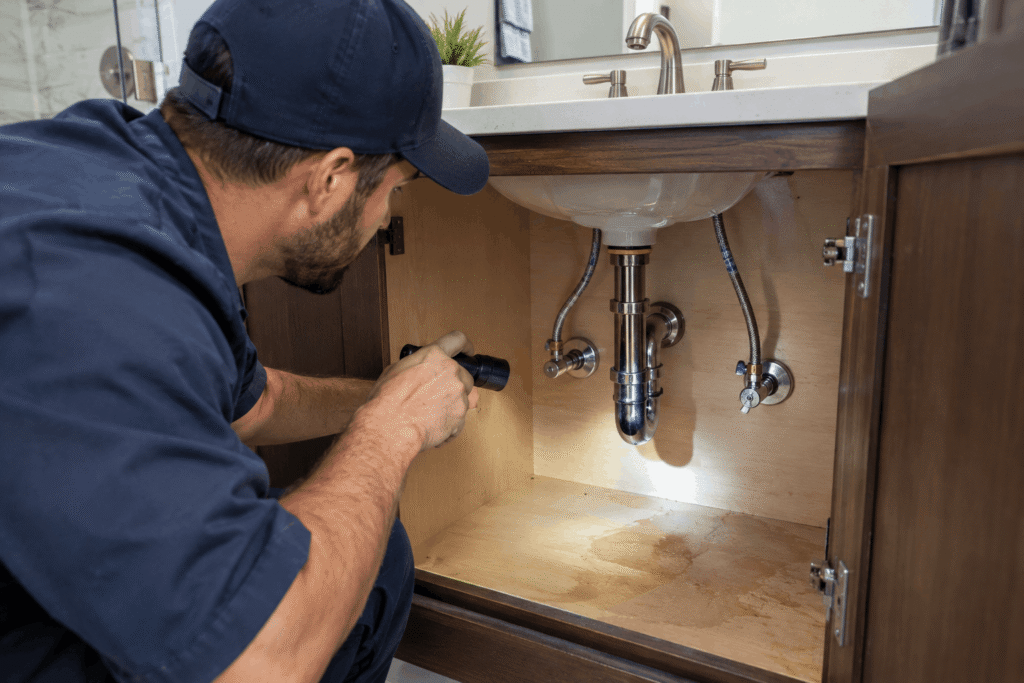
Some of the most common water loss in El Paso homes produces no noise and no visible flooding – just a slowly climbing bill.
Test Toilets for Silent Leaks
Toilets are the single most common source of unnoticed waste. According to the EPA’s WaterSense program, a running toilet can waste up to 200 gallons of water a day – a number that shows up fast on your next bill. Add a few drops of food coloring to the tank, wait 10–15 minutes without flushing, and check the bowl – colored water means it’s time for a toilet repair or fill-valve replacement.
Inspect Faucets, Showerheads, and Supply Lines
El Paso’s hard water – averaging around 10 grains per gallon, drawn largely from the Hueco Bolson aquifer that supplies roughly half the city’s water – accelerates mineral buildup inside aerators, showerheads, and supply-line fittings faster than in most Texas cities. Watch for dripping after the tap is off, corrosion around fittings, or cracked, swollen supply hoses. A faucet repair or fixture replacement is often a same-day fix.
Look Beyond the Obvious
Musty odors, ceiling stains, peeling paint, a warm or damp floor spot, or reduced pressure at just one fixture can all point to a leak somewhere other than where the symptom shows up. If your home is in one of El Paso’s older neighborhoods – Kern Place, Sunset Heights, Five Points, or Segundo Barrio – this is worth taking seriously: most homes there predate 1990 and still carry original galvanized piping that’s had decades of hard-water exposure.
Inspection Area | What to Look For |
Toilets | Running water, random refilling, dye-test results |
Faucets | Drips, loose handles, moisture at the base |
Showerheads | Uneven spray, mineral buildup |
Supply lines | Corrosion, cracked hoses, damp fittings |
Walls & cabinets | Stains, odors, unexplained moisture |
If several of these show up together, or your meter keeps moving after you’ve checked the obvious spots, that’s the point to bring in professional leak detection rather than keep guessing – our technicians use acoustic and electronic equipment to find the source without unnecessary digging or demolition.
Improve Plumbing Efficiency Without Sacrificing Performance
Measure Your Home’s Water Pressure
Strong flow can feel like a benefit, but excessive pressure pushes more water through every fixture and adds wear to pipes and valves over time – one of the reasons older pipes in El Paso fail sooner than they would elsewhere. A pressure gauge attached to an outdoor hose bib, tested with appliances and irrigation off, gives you a real number instead of a guess.
Know When a Fixture Is Worth Replacing
Not every older fixture needs to go. Repair makes sense for a worn washer, cartridge, or seal; replacement makes more sense once a fixture needs repeated repairs, shows corrosion, or clearly predates modern efficiency standards.
Choose Verified Upgrades
Fixtures carrying the EPA’s WaterSense® label are independently tested to reduce water use without cutting performance – a meaningful upgrade when a fixture is due for replacement anyway, rather than a reason to replace fixtures that are still working fine.
Plumbing Condition | Recommended Approach |
Fixture operates normally | Continue routine maintenance |
Minor component worn | Repair the part |
Repeated failures | Evaluate replacement |
Replacement needed | Choose a WaterSense-certified fixture |
Build Water-Saving Habits Into Your Daily Routine
Bathroom: turn off the tap while brushing your teeth, avoid running the shower before stepping in, keep showers focused.
Kitchen: wash produce in a bowl instead of under running water, thaw food in the fridge rather than under the tap, keep a pitcher of water chilled instead of running the faucet.
Laundry & dishwasher: run only full loads, use the right cycle for the job rather than defaulting to heavy-duty.
10 habits worth building as a household:
- Turn off the tap while brushing your teeth
- Keep showers focused and efficient
- Fix dripping fixtures as soon as they’re noticed
- Run only full dishwasher loads
- Wash full laundry loads whenever possible
- Use the correct appliance settings
- Wash produce in a bowl, not under running water
- Keep drinking water chilled in the fridge
- Never flush wipes, paper towels, or similar waste – it’s also one of the fastest ways to end up needing drain cleaning
- Get the whole household on the same habits – consistency is what actually moves the bill
Manage Outdoor Water Use More Efficiently in El Paso
Irrigation is often the single biggest swing factor in a summer water bill here.
- Water early morning, not midday – El Paso’s heat evaporates a large share of midday watering before it reaches the roots.
- Inspect sprinklers each season for broken heads, overspray onto pavement, or leaking valves.
- Choose desert-adapted landscaping – native plants and drought-tolerant shrubs need less supplemental water than turf or non-native plantings.
- Help soil hold moisture with mulch, and check soil moisture before watering out of habit rather than need.
Outdoor Observation | Recommended Adjustment |
Water reaches sidewalks/driveways | Realign sprinkler heads |
Water pools around one zone | Inspect valves and sprinkler components |
Soil dries out quickly | Apply mulch, monitor moisture |
Same schedule year-round | Adjust irrigation seasonally |
Create a Long-Term Water-Saving Plan That Works
Common Mistakes to Avoid
- Assuming every high bill means a hidden leak
- Replacing fixtures before inspecting them
- Ignoring small drips or odd fixture behavior
- Skipping outdoor irrigation checks
- Stopping maintenance after fixing one problem
Myths vs. Facts
Myth | Fact |
A quiet toilet can’t leak | Internal components can leak silently – the dye test is the real check |
Stronger pressure is always better | Excess pressure raises usage and stresses fixtures and pipes |
Every high bill means major repairs | Habits, irrigation, or billing changes are just as often the cause |
Every old fixture needs replacing | Condition matters more than age |
A Simple Maintenance Schedule
Frequency | Task |
Monthly | Review your water bill for unusual changes |
Every few months | Inspect toilets, faucets, showerheads, visible connections |
Seasonally | Check irrigation performance and adjust the schedule |
When usage looks off | Run the meter test and inspect fixtures |
When It’s Time to Call a Professional
Bring in a plumber when your meter keeps moving with everything off, the bill stays high without explanation, moisture shows up inside walls or flooring, pressure changes suddenly, or the same problem keeps coming back after a repair. That’s also exactly when it’s worth calling a burst pipe or active flood an emergency rather than a next-week appointment.
Questions worth asking before you approve any work: What’s causing the increase? How will the system be inspected? Is repair possible, or is replacement the real recommendation – and why? Will I get a written estimate first? Is there a workmanship warranty?
Frequently Asked Questions
Can a small plumbing leak really increase my water bill? Yes – a slow leak from a toilet, faucet, irrigation line, or supply line wastes water continuously, and because it develops gradually, most homeowners only notice once the bill moves or visible moisture appears.
How can I tell if my home has a hidden plumbing leak? Watch for an unexplained rise in your bill, damp cabinets, water stains, musty odors, a running toilet, or dripping fixtures – then confirm with the meter test above.
What is considered normal water pressure for a home? It varies by property, but consistently high pressure increases both usage and wear on fixtures; a pressure gauge gives a real answer where guessing by feel doesn’t.
Are WaterSense-certified fixtures worth installing? When a faucet, showerhead, or toilet needs replacing anyway due to wear or repeated repairs, choosing a WaterSense-certified model is a straightforward way to cut long-term use without losing performance.
How often should I inspect my plumbing? A visual check every few months covers most homes – toilets, faucets, showerheads, supply lines, and irrigation are the areas that matter most.
Does outdoor watering affect my bill in El Paso? Yes, often more than anything indoors during summer. Watering early, inspecting sprinklers, mulching, and choosing drought-tolerant plants all reduce that share of the bill.
Should I repair or replace a plumbing fixture? Base it on condition, not age – worn seals or components are usually repairable, while repeated failures or corrosion point toward replacement.
When should I call a professional plumber? As soon as your meter shows continuous use, the bill stays unexplained, pressure changes suddenly, moisture appears inside walls or flooring, or you suspect a concealed leak. Call us or request an estimate and we’ll help you figure out the next step.
Final Thoughts
Lowering your water bill in El Paso comes down to finding where water is actually going, fixing the small things before they become big ones, and adjusting habits – indoors and in the yard – to match a desert climate. Regular checks, the right fixtures, and a bit of consistency go a lot further than replacing things at random.
Need a Hand in El Paso?
If your bill is still climbing after working through this, that’s exactly what we’re here for. Paso Plumbing is TX-licensed (License #12051) and based right here at 617 S Virginia St, serving homeowners across West El Paso, East El Paso, Far East El Paso, Horizon City, and Socorro – real people answer the phone 24/7, with upfront pricing before we touch anything. Call (915) 200-8525 or request an estimate.
Sources: U.S. EPA WaterSense (epa.gov/watersense); El Paso Water – Our Aquifers (epwater.org); City of El Paso water chemical analysis report; Paso Plumbing company information (license number, address, phone, service areas) as published on pasoplumbing.com.