
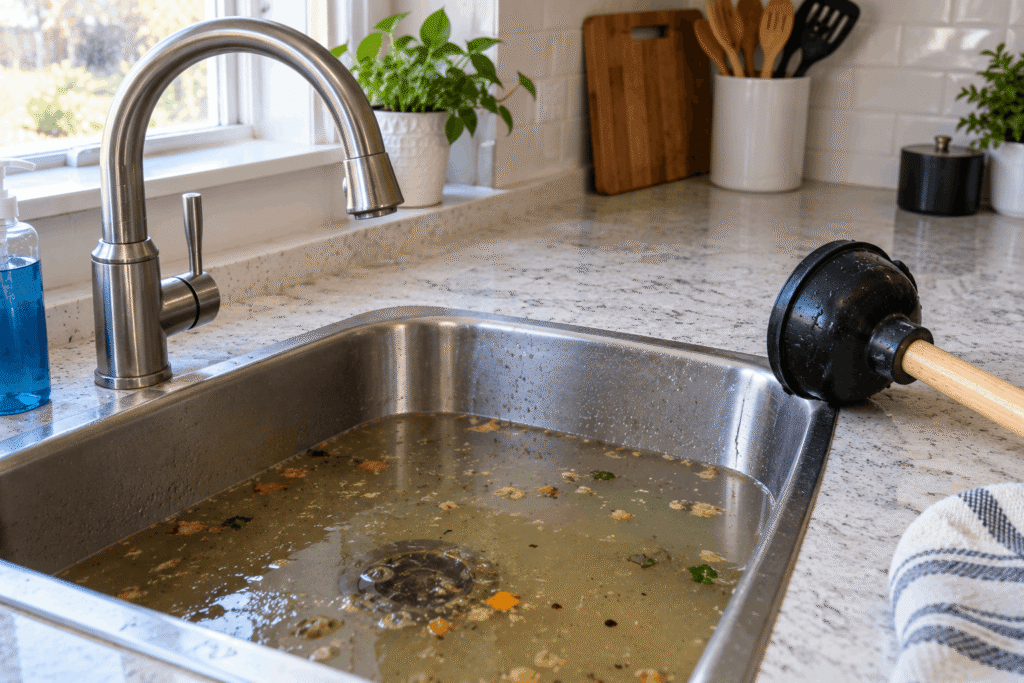
A drain that keeps clogging almost always means the first fix cleared a path through the blockage without removing what caused it. Grease, hair, mineral scale, roots, or a structural pipe problem can all leave material behind that catches new debris. The fixture affected and how fast the clog returns usually point to whether you need drain cleaning, a camera inspection, or a pipe repair.
A drain that clogs once is easy to explain. A drain that keeps clogging is different – it usually points to a blockage that was never fully removed, buildup that keeps re-forming, or a problem deeper in the line. The pattern matters: a kitchen sink clogs for different reasons than a shower drain, and several slow drains at once often point to something bigger than any one fixture.
Why does the same drain keep clogging? Most often because the original fix restored flow without removing everything that caused the blockage – grease, hair, soap residue, or food waste can stay on the pipe wall and collect more material over time. A repeated clog can also mean the real problem is farther down the line: heavy buildup, poor slope, root intrusion, or pipe damage.
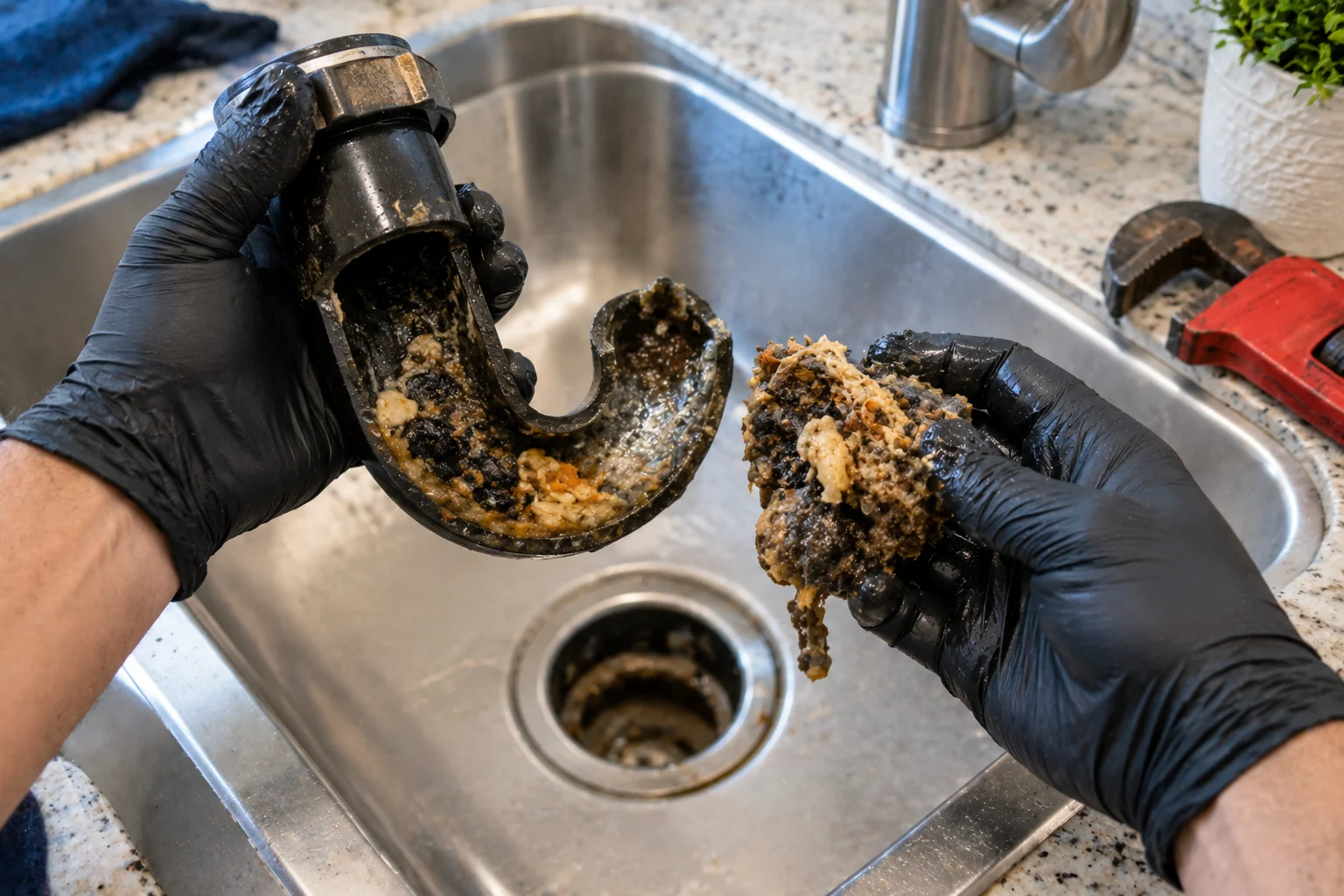
A cleared drain isn’t always a clean one – water can start moving again while buildup still coats part of the pipe. A small opening is enough to work for a while, but it gives new debris somewhere to catch, and the same slow drain or backup returns as that opening narrows again.
10 Common Reasons Your Drain Keeps Clogging
1. The previous blockage was only partly cleared. Snaking or a quick fix can open a path through grease, hair, or debris without removing the material around it – new waste catches on what’s left and the drain clogs again within days or weeks.
2. Grease and fat keep coating the pipe. Cooking fat sticks to the inside of kitchen drain lines instead of washing away. Food particles and other debris attach to that sticky coating, narrowing the pipe until water moves noticeably slower.
3. Hair and soap residue build up together. Hair catches around a stopper or along a bathroom pipe wall, soap residue sticks to it, and the mass grows – one of the most common causes in shower, tub, and bathroom sink drains.
4. Food and other solids keep entering the drain. Small scraps, coffee grounds, and other solids settle where flow is weaker, even with a garbage disposal in place – a disposal breaks down some waste, but not everything that goes down a kitchen sink.
5. Mineral scale narrows the drain opening. El Paso’s water runs hard – the City of El Paso’s own water quality report puts average hardness at roughly 10 grains per gallon, drawn largely from the Hueco Bolson aquifer. That mineral content leaves rough, narrowing deposits inside pipes over time, which is worth factoring in on any recurring drain issue here, even though hardness is rarely the sole cause.
6. Wipes or foreign objects create a partial blockage. Wipes, hygiene products, and other items can lodge in a drain or sewer line without stopping flow entirely at first – the blockage can return even after the visible clog is cleared if the object stays deeper in the line.
7. Tree roots enter the sewer line. Roots find their way in through cracks or loose joints, then catch paper and waste as more roots grow. Clearing the immediate blockage restores flow, but the roots remain – this is one of the more common reasons a sewer line needs more than a simple cleaning, especially after El Paso’s monsoon season pushes root growth toward buried pipe joints.
8. A pipe belly or poor slope traps waste. A low spot in the line – a “belly” – holds water and waste instead of moving it along. Cleaning removes what’s collected there, but it doesn’t fix the pipe’s shape, so the same spot clogs again.
9. Damaged or corroded pipes catch debris. A rough or uneven interior – common in older galvanized pipe that’s had decades of hard-water exposure – gives waste something to catch on repeatedly, in the same location, until the pipe itself is addressed.
10. The real blockage is farther down the system. The visible problem might be at one sink while the actual restriction sits in the branch drain or main sewer line. If several drains slow down or back up around the same time, that shared section is where the real issue usually lives.
What Does the Pattern of the Clog Tell You?
| What You Notice | What It May Point To |
| One drain repeatedly clogs | Local or branch-line restriction |
| Several drains slow together | Shared drain line or main-line problem |
| Clog returns soon after clearing | Remaining buildup or partial blockage |
| Toilet bubbles when another fixture drains | Shared restriction or vent-related issue |
| Backups become more frequent | A restriction that’s getting worse |
Only one drain clogs – while nearby fixtures work fine, the problem is more likely local to that fixture’s branch line. Several drains slow or back up together – that points further downstream, to where those lines share a connection. The clog returns fast after clearing – the first attempt likely didn’t remove everything, just opened a path through it.
What to Check Before Trying the Same Fix Again
- Which fixtures are affected – one, or several?
- How quickly does the clog return after clearing?
- Is there visible debris – hair at a shower stopper, food near a kitchen strainer?
- Is there gurgling from a nearby drain or toilet?
- Does water back up in one fixture when another runs?
- What was tried last time – plunged, snaked, or chemically treated?
None of these alone diagnose the problem, but together they make the next step – cleaning, camera inspection, or repair – a more informed decision than repeating the same fix.
Why Quick Fixes Sometimes Fail
A plunger or snake opens a path through soft debris, but buildup often remains on the pipe walls or farther down the line – new waste catches on it and the drain slows again. Chemical drain cleaners have a similar limit: they may break down some organic material, but they don’t correct pipe damage, poor slope, or root intrusion, and repeated use can be hard on older plumbing. If a clog keeps coming back, the real question is why it keeps re-forming – not just how to open it one more time.
Drain Cleaning, Camera Inspection, or Pipe Repair?
Drain cleaning is usually enough when hair, grease, soap residue, or food waste is the restriction – the goal is removing the material that keeps catching new debris, not just punching another hole through it.
A camera inspection makes sense when the same blockage keeps returning without a clear cause, several fixtures are affected, or roots, damage, or a pipe belly are suspected – it locates the actual problem before you pay for the wrong fix.
Pipe repair becomes necessary when an inspection shows a collapsed, misaligned, or bellied section that cleaning can’t correct. Worth knowing if you’re considering doing exploratory work yourself: under Texas Occupations Code §1301.054, a homeowner can legally do plumbing work on their own primary residence without a state plumbing license – but a City of El Paso permit and inspection is still required for most drain and sewer line work, and that exemption doesn’t extend to rental property.
| Situation | Likely Fix |
| Hair, grease, soap, or food buildup | Drain cleaning |
| Cause unclear, or multiple fixtures affected | Camera inspection |
| Roots, structural damage, or a pipe belly confirmed | Pipe or sewer line repair |
How to Reduce Future Clogs
Kitchen drains: keep grease, oil, and food solids out of the sink; a strainer catches scraps before they enter the line; a garbage disposal helps but doesn’t make every kind of waste safe for the drain.
Bathroom sinks: clear hair and soap residue from the stopper before it moves deeper into the pipe.
Showers and tubs: a hair catcher, cleaned regularly, stops most of what causes these clogs.
Toilets: flush only human waste and sewer-safe toilet paper – wipes and hygiene products stay intact longer and restrict the line farther down, which is one of the most common calls we get for a toilet or drain backup.
Whole system: don’t ignore a drain that keeps slowing after repeated clearing. If several fixtures show the same pattern, or the time between clogs keeps shrinking, that calls for diagnosis, not another temporary fix – and if it turns into an active backup or flooding, that’s an emergency call, not a next-week appointment.
Frequently Asked Questions
Why does my drain keep clogging after I clean it? Some of the buildup likely stayed inside the pipe, or the real restriction sits deeper in the line. Restoring flow doesn’t always remove the grease, hair, soap residue, or roots that keep trapping new debris.
Why does my drain keep clogging after snaking? A snake can open a path through a blockage without clearing the material around it. If buildup remains on the pipe walls, or the cause involves roots, damage, or a pipe belly, the clog reforms.
What does it mean when multiple drains clog at the same time? It usually points to a restriction in a shared drain line or the main sewer line rather than a single fixture – worth a proper diagnosis rather than treating each drain separately.
Can hard water contribute to recurring drain buildup? Yes – El Paso’s hard water (roughly 10 grains per gallon on average, per the City’s own water quality report) can leave mineral deposits that narrow pipes and create rough surfaces where other debris collects more easily. It’s usually a contributing factor rather than the sole cause.
Does a recurring clog mean I need a sewer camera inspection? Not always – it’s most useful when the same clog keeps returning without explanation, several fixtures are affected, or roots, damage, or a pipe belly are suspected.
How do I stop the same drain from clogging again? Reduce what enters the drain and pay attention to how the clog returns. If the same fixture keeps slowing down after repeated clearing, the next step is finding the underlying restriction – reach out here and we’ll help you figure out whether that means cleaning, a camera inspection, or a repair.
When to Call a Plumber
A recurring clog deserves professional attention once it keeps returning after basic clearing, affects more than one fixture, or starts causing backups or gurgling. Paso Plumbing (TX License #12051) handles drain cleaning, camera inspection, and sewer or pipe repair across El Paso – call (915) 200-8525 or request an estimate and we’ll help you figure out which one actually fixes it.
Sources: City of El Paso water chemical analysis report (hardness data, epwater.org); Texas Occupations Code §1301.054 (homeowner plumbing exemption); Paso Plumbing company information as published on pasoplumbing.com.