
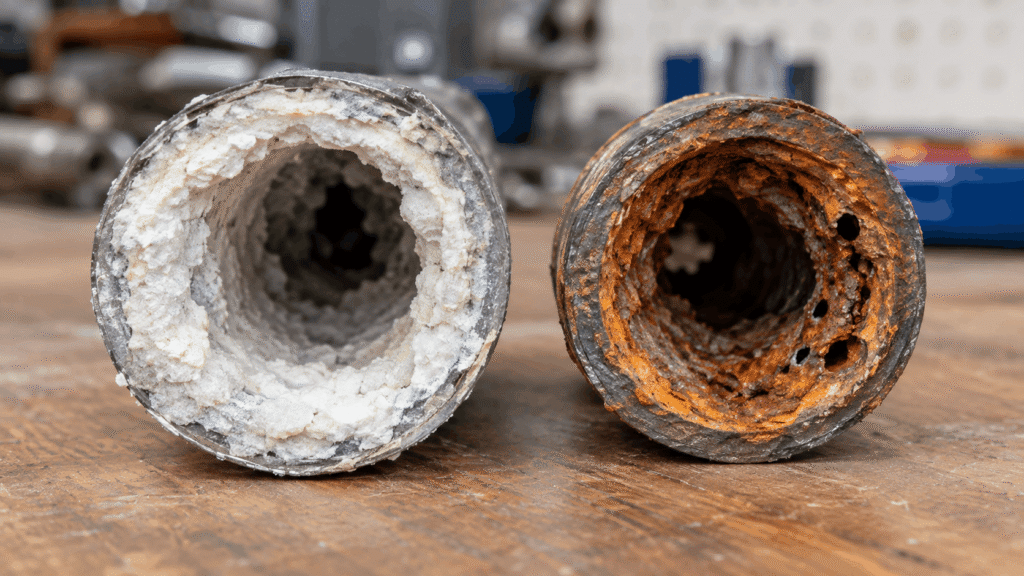
Hard Water Scale and corrosion are different problems with different repairs. Scale forms when minerals from hard water deposit on a pipe’s interior surface – it adds material and can narrow the usable opening. Corrosion is the pipe material itself deteriorating through chemical reaction – it removes or weakens metal and can lead to pitting or pinhole leaks. Both can exist in the same aging pipe at once, and removing scale never restores metal already lost to corrosion.
Key Differences at a Glance
- Scale adds material to the inside of a pipe; corrosion removes or changes the metal in the pipe wall
- Scale often looks white, chalky, or crusty; galvanized corrosion tends toward brown or rust-colored signs, while copper corrosion can show pitting or blue-green staining
- Heavy scale can reduce usable pipe diameter; corrosion can weaken the pipe itself
- Removing scale does not restore metal already lost to corrosion
- Both can happen in the same pipe, especially older metal plumbing
What Is Hard-Water Scale?
Hard water carries dissolved calcium and magnesium, and under the right conditions, some of that mineral content separates from the water and forms solid deposits on plumbing surfaces – calcium carbonate is the most common scale-forming material. The U.S. Geological Survey’s own explanation of water hardness confirms the mechanism directly: it can leave scale inside pipes and equipment, and long-term buildup can gradually reduce a pipe’s inside diameter and lower water movement.
Scale doesn’t have to damage the pipe wall to cause a problem – it’s material added to the surface, not the surface breaking down, which is exactly why it shouldn’t automatically get called corrosion.
What Is Pipe Corrosion?
Corrosion is the pipe material itself deteriorating through a chemical or electrochemical reaction between the pipe and its environment. In metal plumbing, that process changes or removes material from the pipe wall, and the exact behavior depends on pipe material and water chemistry – pH, alkalinity, dissolved oxygen, chloride, and other factors all play a role. Hardness alone shouldn’t be treated as the only cause of corrosion.
Corrosion commonly shows up as rust or corrosion products, pitting, thinning of the pipe wall, pinhole leaks, rough internal surfaces, and eventually pipe failure.
Scale vs. Corrosion, Side by Side
| Feature | Hard-Water Scale | Pipe Corrosion |
| What happens | Minerals deposit on the surface | Pipe material deteriorates |
| Typical process | Mineral precipitation | Chemical or electrochemical reaction |
| Common appearance | White or chalky deposits | Rust, pitting, discoloration |
| Main plumbing effect | Narrows usable opening | Weakens or damages pipe wall |
| Flow impact | Heavy buildup can restrict flow | Corrosion products may also restrict flow |
| Leak risk | Scale alone doesn’t mean the wall is leaking | Wall loss or pitting can contribute to leaks |
| Can cleaning help? | Sometimes, depending on location and condition | Cleaning cannot replace lost metal |
| Can both happen together? | Yes | Yes |
A thin calcium-carbonate layer can sometimes reduce direct contact between water and metal, while excessive scale becomes thick enough to actually reduce pipe capacity – one more reason the two shouldn’t be treated as the same process.
What the Visible Signs Can Tell You
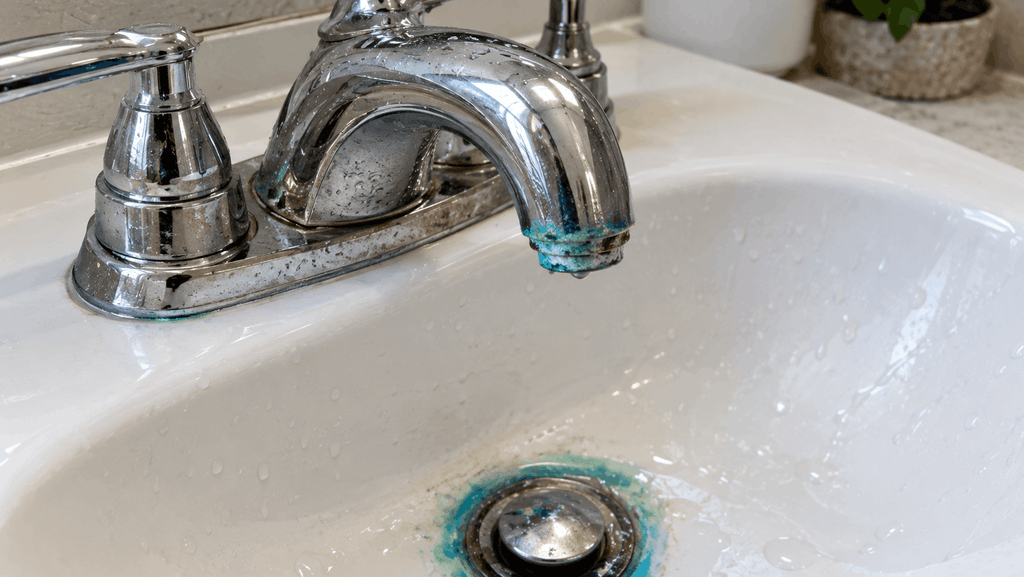
White or chalky deposits are more consistent with mineral scale than corrosion – commonly seen where hard water repeatedly contacts and dries on a surface. It’s a clue, not proof the pipe wall underneath is damaged.
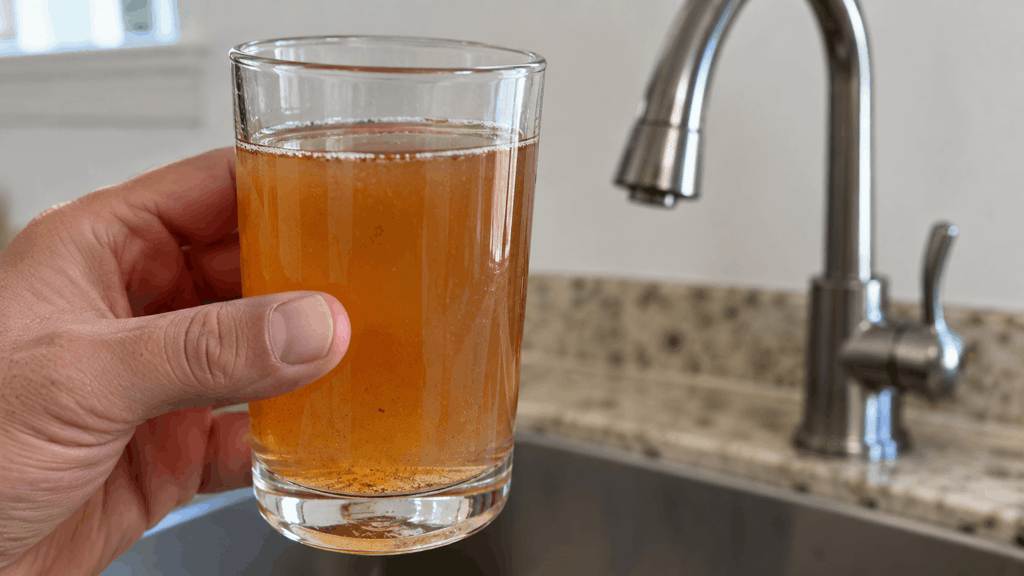
Brown or rust-colored water points toward iron-related corrosion in galvanized plumbing. El Paso Water’s own water quality FAQ is direct about this: rusting in galvanized pipes is the typical cause of discolored household water, though a main break or fire hydrant use can also cause temporary discoloration from the distribution system. Iron discoloration isn’t a health risk on its own, and El Paso Water recommends running cold water for a few minutes to clear it (not hot, which can pull sediment into your water heater) – if it doesn’t clear, they ask you to call them directly at 915-200-8525.
Blue-green staining is associated with copper corrosion – the EPA sets a copper action level of 1.3 mg/L in drinking water specifically because corrosive water can dissolve copper plumbing, and visible blue-green staining is one recognized sign of that corrosive condition. It’s a clue worth taking seriously, not automatic proof a pipe is about to fail.
Pitting and pinhole leaks point more strongly toward actual metal deterioration – these involve the pipe material itself, not a removable surface coating, and deserve a proper inspection rather than a guess.
Why This Distinction Matters in El Paso
El Paso Water’s own FAQ describes the local supply as moderately hard to hard, so mineral scale is a realistic concern citywide. Corrosion is a separate question – and El Paso Water is actively dealing with it at a system level: their lead-awareness program includes ongoing corrosion-control strategies for the distribution system, and they’ve committed to notifying customers whose service lines are classified as lead or “galvanized requiring replacement” by December 2025, with annual follow-up notices until the material is confirmed. That’s worth knowing if you own an older El Paso property and haven’t heard from them yet – it’s a genuine, checkable fact about your own service line, not just a general corrosion risk.
Two homes receiving the same hard water can still show completely different problems: one may have mineral deposits with no meaningful pipe deterioration, while an older metal system nearby may carry corrosion, rust, or both scale and corrosion products together. Hard water alone should never be treated as proof a pipe is corroding.
Can Scale and Corrosion Happen in the Same Pipe?
Yes – and this matters most in aging metal plumbing. An older galvanized pipe can develop rust and corrosion products while also collecting mineral deposits from the water passing through it. The two affect the pipe differently: deposits reduce the available opening, while corrosion weakens the metal underneath. That’s why a rough or crusted pipe interior shouldn’t automatically get labeled “hard-water scale” – the material inside could be scale, corrosion products, sediment, or some combination, and only an inspection tells you which.
Removing Scale Does Not Repair Corrosion
When mineral deposits are the main problem, removing or controlling that buildup can genuinely restore an opening that scale had narrowed – the right method depends on location, severity, and the plumbing’s overall condition. Corroded metal is a different story entirely: once part of a pipe wall has been lost to corrosion, cleaning cannot put that material back. A descaling process may clear deposits, but it won’t reverse pitting, restore a thinned wall, or repair a pinhole leak.
This is especially important in aging metal lines – aggressive cleaning shouldn’t be treated as an automatic fix when the pipe’s underlying condition is uncertain. The real question isn’t just “can the buildup be removed?” It’s “is the pipe underneath still sound?” – which is exactly what a proper pipe inspection and repair assessment is for.
When Should the Pipe Be Inspected?
Worth a professional look when you see:
- Rusty or discolored water that keeps returning (not a one-time distribution event)
- Gradual flow loss across several fixtures
- Repeated pinhole leaks
- Visible rust, pitting, or deteriorated metal
- Aging galvanized plumbing you haven’t had assessed
- Recurring leaks in the same section of piping
- Genuine uncertainty about whether the restriction is scale, corrosion, or both
One symptom rarely tells the whole story – rusty water, for instance, can come from household galvanized plumbing or from a distribution-system event, and only the pattern over time tells you which. Pipe material, age, and condition all factor into the actual diagnosis.
Frequently Asked Questions
1. Can mineral scale and corrosion exist in the same pipe? Yes. Deposits may narrow the water passage while corrosion affects the metal surface underneath – finding buildup alone doesn’t tell you which process is responsible.
2. Does white buildup inside a pipe mean the metal is damaged? No. White or chalky material sits on the surface and is more consistent with mineral scale – the pipe underneath may still be sound. Corrosion needs separate evidence.
3. Why do old galvanized pipes often show both rust and mineral deposits? They corrode with age while hard-water minerals also deposit on internal surfaces – rust, corrosion products, scale, and sediment can all show up together and shrink the usable opening.
4. Can removing heavy scale expose an already weakened pipe? It can reveal a condition the deposits were hiding – removing scale doesn’t cause lost pipe wall to return, so a badly corroded old pipe may look more obviously weak once the buildup is cleared.
5. Do blue-green stains always mean copper pipe corrosion? Not always definitively on their own – they’re a strong clue that copper-related corrosion is present, but water chemistry, fittings, and the stain’s location all factor into confirming it.
6. Can hard water alone cause a copper pinhole leak? It shouldn’t be assumed. Copper corrosion depends on multiple factors – pH, water chemistry, and plumbing condition – and hardness alone doesn’t explain a pinhole leak.
7. Why does corrosion cause leaks while scale mainly causes restriction? Scale builds onto a surface and narrows the opening; corrosion affects the pipe material itself, and when it causes enough pitting or wall loss, water can eventually pass through the damaged metal.
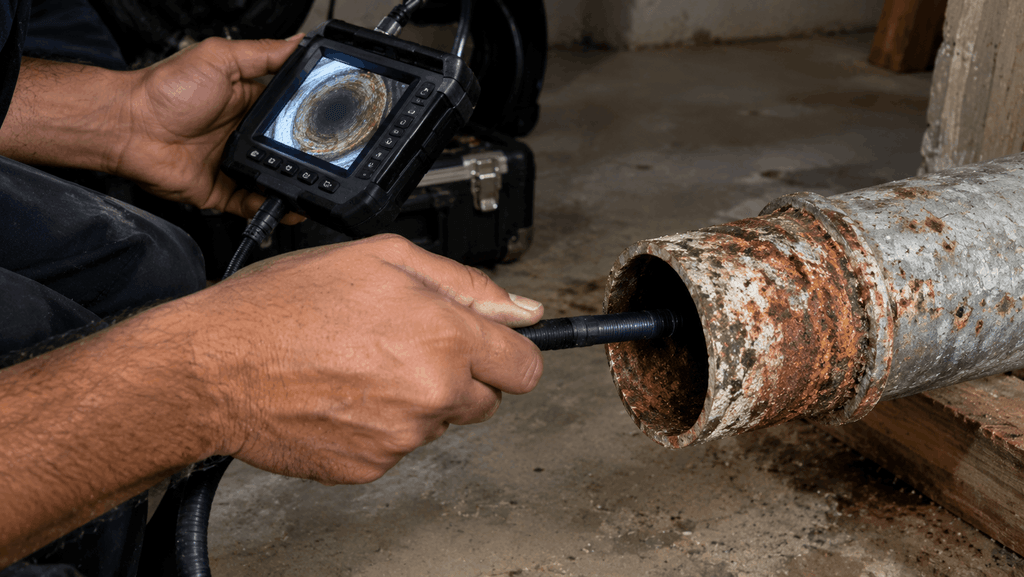
8. Can a plumber tell scale from corrosion without cutting the pipe open? Often, yes – symptom pattern, water discoloration, exposed pipe condition, and inspection tools provide real clues, though the right method depends on the piping’s location and type.
9. Does rusty water mean the problem is in my home or the city supply? Either is possible. El Paso Water identifies rusting galvanized household plumbing as the typical cause, but a main break or hydrant use can also temporarily affect distribution-system water – persistent discoloration deserves a different response than a brief utility event.
10. When is pipe replacement more practical than removing buildup? Once the pipe has significant deterioration, repeated leaks, severe corrosion, or compromised structural condition – removing scale can restore a restricted opening, but it can’t rebuild corroded metal.
Know What’s Actually Happening Inside Your Pipes
Low flow, rusty water, or recurring leaks don’t all come from the same cause. Paso Plumbing (TX License #12051) can inspect the affected plumbing to determine whether mineral buildup, corrosion, a hidden leak, or another condition is behind the problem – and whether cleaning, pipe repair, or repiping actually fits. Call (915) 200-8525 or request an estimate.
Sources: U.S. Geological Survey – Water Science School, “Hardness of Water” (usgs.gov); El Paso Water – Water Quality FAQ and Lead Awareness program (epwater.org); U.S. EPA copper action level, 1.3 mg/L (part of the Lead and Copper Rule); Paso Plumbing company information as published on pasoplumbing.com.