
A water heater leaking from the bottom is often a sign that the tank itself has rusted through, which usually means it needs to be replaced. But when you see a water heater leaking from bottom seams or the floor pan, not every puddle is a failed tank. The water can also come from a loose drain valve, the temperature and pressure relief valve, a leak higher up that runs down the side, or simple condensation. Turn off the power or gas and the cold water supply first, then find where the water is really coming from.
In El Paso, most water heaters sit in garages, hall closets or laundry rooms. A leak there can soak drywall, flooring and baseboards fast, so it pays to act the same day.
First Steps: Make It Safe
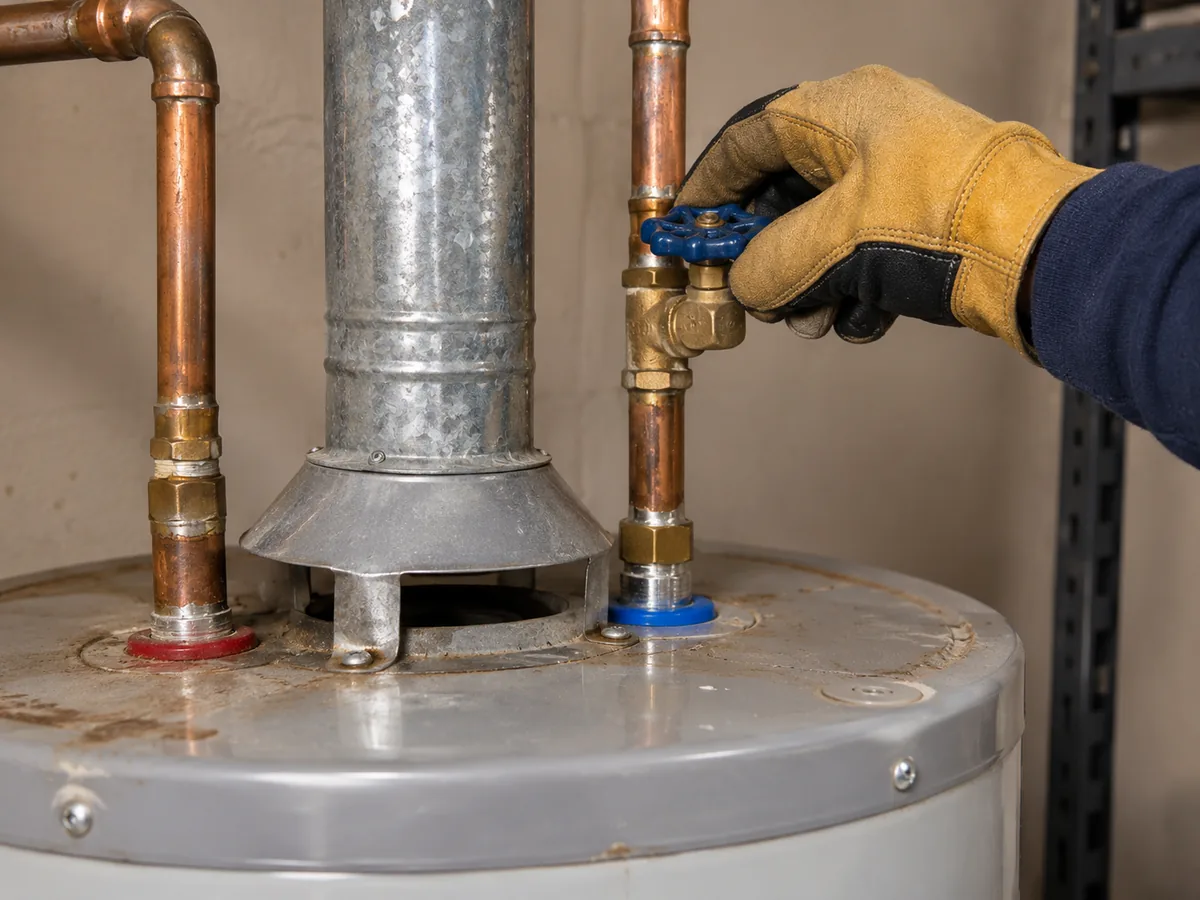
- Turn off the heat. For a gas heater, turn the gas control knob to “Off.” For an electric heater, switch off its breaker.
- Shut off the water. Close the cold water valve on the pipe at the top of the tank. If that valve fails, use the main shut-off. Our guide to the main water shut-off valve shows where it usually is in El Paso homes.
- Protect the area. Move boxes, rugs and anything that can soak up water. Put down towels and a pan or bucket.
- Let it cool. The water inside can be scalding, so give it time before you touch any fittings.
Should I turn off my water heater if it is leaking?
Yes. Water heater maker A.O. Smith says to shut off the power or gas and close the cold water supply before you inspect a leak. This protects you from burns and stops more water from filling the tank.
Step 1: Rule Out Condensation
Condensation is water that forms on a cold surface. It can collect on a tank when cold water enters, especially on a gas heater whose burner has just started. It usually shows up as light dampness and goes away once the water heats up.
A real leak keeps coming back, grows over time, or leaves rust stains on the floor. If you wipe the area dry and it is wet again within an hour or two, you likely have a leak.
Step 2: Check the Drain Valve
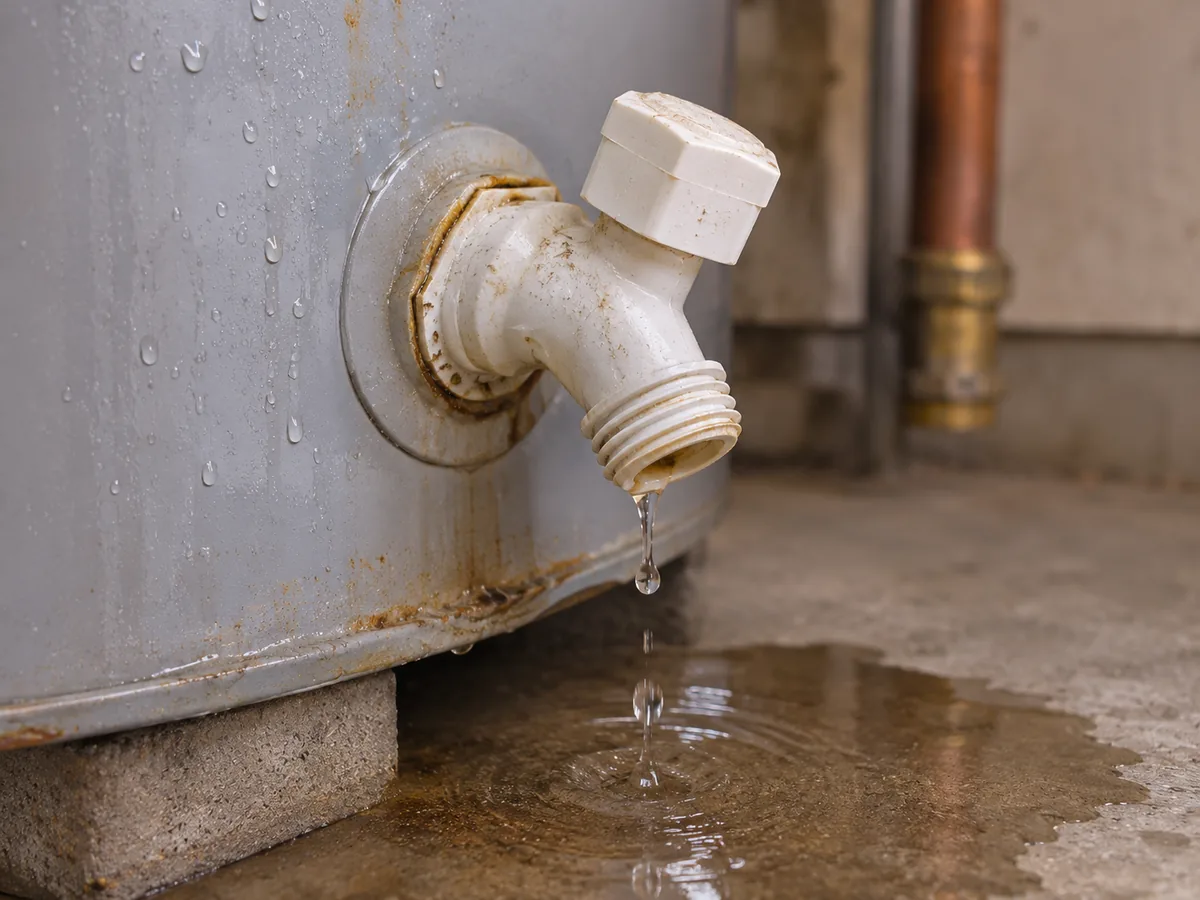
The drain valve is the small spigot near the bottom of the tank. It is used to flush sediment, and it can work loose or wear out. Plastic drain valves are common on newer heaters and can crack.
Look closely at the valve. If water drips from the spout or around its threads, the valve is the problem. Snugging it a little may help, but a worn valve should be replaced. This is a fairly small repair, not a reason to replace the whole heater.
Step 3: Check the Relief Valve and Its Pipe
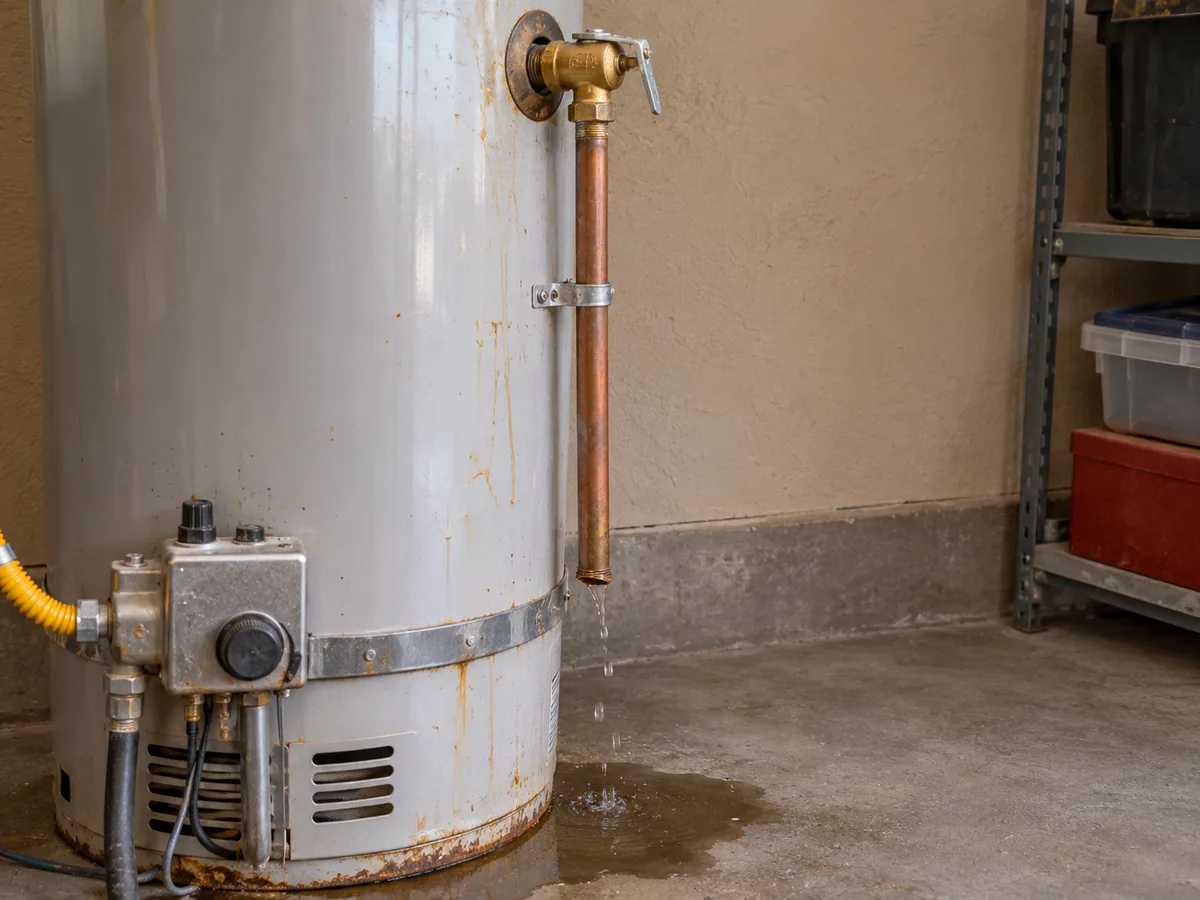
The temperature and pressure relief valve, often called the T&P valve, is on the top or side of the tank. A pipe runs from it down toward the floor. If water drips from the end of that pipe, it can look like a leak at the bottom.
A T&P valve that leaks may be worn out. It can also be doing its job because the water is too hot or the pressure is too high. A.O. Smith says these leaks are often caused by excess temperature or pressure, and that a lower thermostat setting or a properly sized expansion tank can help.
Is it normal for the relief valve to drip a little?
An occasional small drip can happen after the tank heats. A steady drip or a stream is not normal. It means the valve is failing, the water is too hot, or your home’s water pressure is too high. Have it checked, and never cap or plug that pipe.
Step 4: Look Higher Up
Water from a loose fitting at the top of the tank can run down the side and pool at the bottom. Check the cold inlet, the hot outlet, and any flexible connectors. A damp line on the jacket from top to bottom often gives it away. Tightening or replacing a connector usually fixes it.
Step 5: Check the Tank Itself
If the drain valve, T&P valve and top fittings are all dry, the water is likely coming from the tank. A.O. Smith calls a base leak “often the first indication of a serious problem,” usually a corroded tank. Signs include:
- Water seeping from under the jacket or the burner area
- Rust on the bottom of the tank or the floor
- Rusty or cloudy hot water
- Popping sounds from sediment
Our hard water speeds this up. El Paso Water describes local water as moderately hard to hard, and the minerals settle at the bottom of the tank where corrosion often starts.
Can a leaking water heater tank be repaired?
No. Once the steel tank itself leaks, there is no safe, lasting repair. The heater needs to be replaced. Valves and fittings can be repaired, which is why finding the exact source matters.
Where Is the Water Coming From?
| Where you see water | Likely cause | Usual fix |
|---|---|---|
| Light dampness that dries | Condensation | Nothing, watch it |
| Drip from the drain valve | Loose or worn drain valve | Tighten or replace valve |
| End of the relief valve pipe | Bad T&P valve, high heat or pressure | Replace valve, lower heat, add expansion tank |
| Streak down the side from the top | Loose fitting or connector | Tighten or replace connector |
| Seeping from under the tank | Corroded tank | Replace the water heater |
Can You Still Use It?
You should not keep using a leaking water heater. A.O. Smith says even small leaks can cause water damage and mold. If the tank is failing, it can also let go suddenly.
You can usually keep cold water running in the rest of the house by closing only the water heater’s cold supply valve.
Prevent the Next Leak
- Flush the tank once a year to clear sediment. See our guide on how to flush a water heater.
- Check the anode rod yearly. A.O. Smith says it typically lasts 3 to 5 years.
- Test the T&P valve once a year.
- Install a drain pan under heaters in closets or upstairs spaces.
- Keep the thermostat at 120°F or lower.
If your heater is older and showing other warning signs, read our post on the signs your water heater is going out.
When to Call a Plumber
Call a pro if the water comes from the tank, the T&P valve keeps leaking, you cannot find the source, or the floor or wall is already wet. In El Paso, a new tank water heater usually costs about $1,050 to $2,450 installed.
Paso Plumbing has 30 years in the trade and answers 24/7 across El Paso, Horizon City, Socorro and the Fort Bliss area. We will find the source and give you the price before any work starts. Learn more about our water heater repair and replacement service, or call (915) 200-8525.
Frequently Asked Questions
How long will a water heater last once it starts leaking?
There is no safe way to know. A leaking tank can drip for weeks or fail all at once. Plan to replace it right away.
Is a water heater leaking from the bottom dangerous?
It can cause water damage, mold and burns from hot water. A gas heater with water around the burner should be shut off until it is checked.
How much does it cost to fix a leaking water heater?
A new drain valve or connector is a small repair. If the tank leaks, the heater must be replaced, which usually costs about $1,050 to $2,450 installed in El Paso.
Why is my electric water heater leaking from the bottom?
Common causes are a loose drain valve, a leaking element gasket, water running down from the T&P valve, or a rusted tank.
Why is my gas water heater leaking from the bottom?
It may be condensation, a drain valve, the T&P valve pipe, or a corroded tank. Turn off the gas and check each one.
Can high water pressure cause a water heater to leak?
Yes. High pressure strains the tank and can make the T&P valve open. A pressure check can rule this out.
What is an expansion tank?
A small tank on the water heater’s cold line that absorbs water as it heats and expands. It can reduce pressure on the T&P valve.
Will homeowners insurance pay for water heater leak damage?
Many policies cover sudden water damage but not the worn-out heater itself. Read your policy or call your agent.
Should I drain my water heater if it is leaking?
If the tank is leaking, draining it can limit damage. Turn off the heat and cold water first, and let it cool.
Do I need a drain pan under my water heater?
A drain pan is a smart choice anywhere a leak could damage the home, like closets or attics. Your plumber can add one when replacing the heater.