
Drain snaking uses a mechanical cable to clear a local clog – hair, debris, or a trapped object. Hydro jetting uses pressurized water to scour grease, sludge, and buildup from a wider stretch of pipe. Neither one repairs a damaged pipe. The right choice depends on what’s blocking the line, where it sits, and the pipe’s condition – not on which method is cheaper or more powerful.
A clogged drain doesn’t always call for the same fix. Paso Plumbing looks at the blockage type, its location, and the pipe’s condition before recommending snaking, hydro jetting, or a camera inspection first.
Key takeaways:
- Snaking often works well for local clogs – hair, debris, some foreign objects
- Hydro jetting is usually the better fit for grease, sludge, and buildup coating the pipe wall
- A drain snake can use different cutter heads – it’s not just “punching a hole” through every clog
- Pipe condition matters, especially before high-pressure cleaning
- A camera inspection earns its cost when a clog keeps returning or the cause isn’t clear
- Neither method repairs a collapsed, badly damaged, or failed pipe – that calls for pipe repair
How Each Method Actually Works
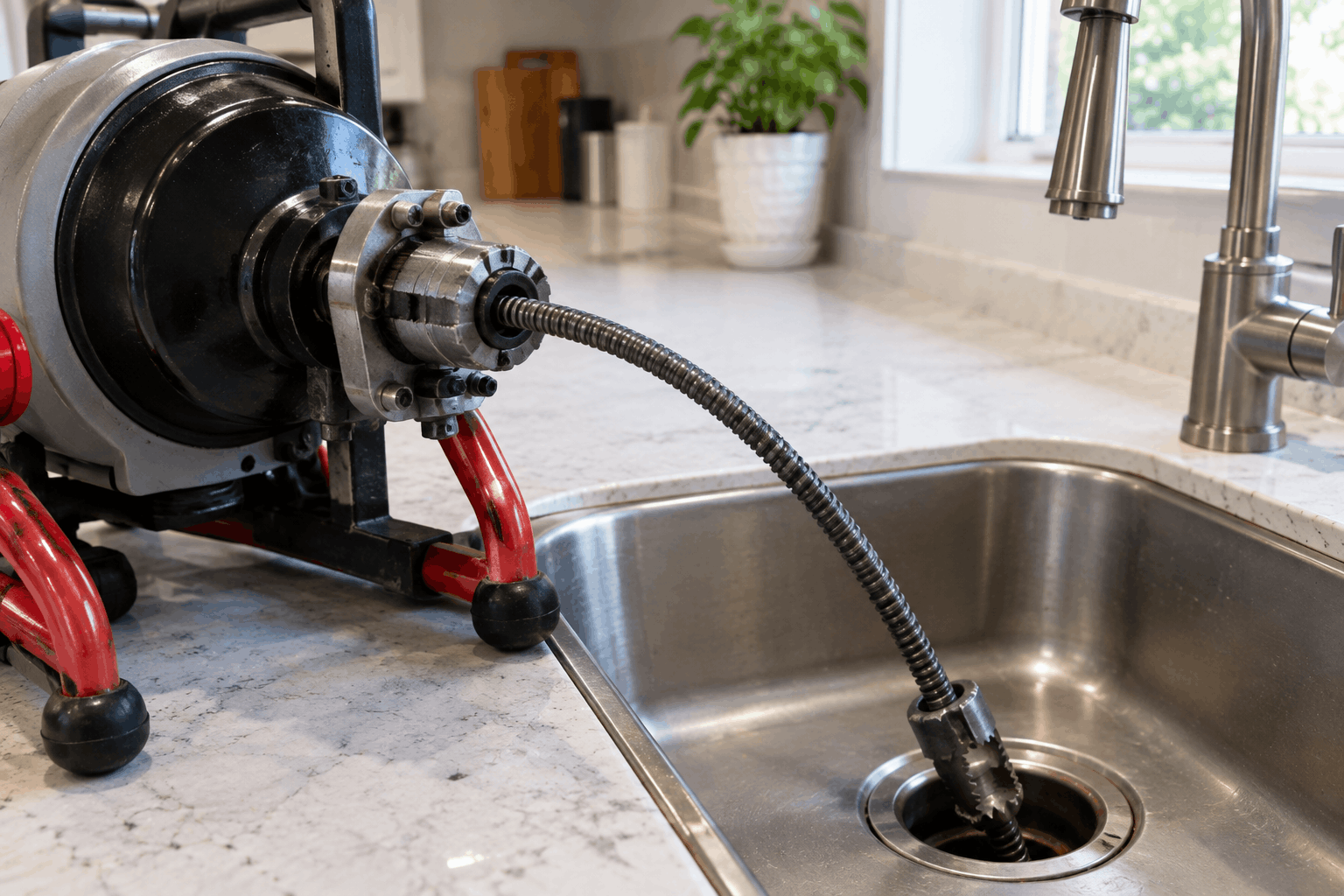
Drain snaking feeds a flexible cable through the pipe to the clog. Depending on the cutter or grabbing head attached, it can break apart soft debris, cut through some blockages, or pull material back out – a professional cable machine with the right head does more than a basic hand snake ever will. It tends to work well for a clog that sits in one spot: hair, soft debris, or a foreign object close to the fixture.
Hydro jetting sends pressurized water through a special nozzle that moves through the line, loosening grease, sludge, and buildup and carrying it out. Because the water works along a wider stretch of pipe wall rather than at a single point, it’s generally the better fit when the problem is spread through the line – not sitting in one place.
| Factor | Drain Snaking | Hydro Jetting |
| How it works | Mechanical cable and cutter | Pressurized water and nozzle |
| Best fit | Local blockage | Wider pipe-wall buildup |
| Hair | Often a strong fit | Usually more than needed |
| Foreign object | Can retrieve it | Usually not the first choice |
| Grease | Depends on buildup and cutter | Often the better fit for broad buildup |
| Tree roots | Special cutters can help | Can help in suitable lines |
| Pipe condition | Still matters | Needs close attention |
| Repairs pipe damage | No | No |
Which Method Fits Your Type of Clog?
Hair and soap debris – a local clog near a shower, tub, or bathroom sink. A snake with the right head grabs, cuts, or breaks through it; hydro jetting can move this material too, but it’s often more than a simple hair clog needs.
Grease and sludge – grease coats kitchen and drain lines instead of forming one solid plug, and food residue sticks to that coating. This is where hydro jetting usually earns its cost, since it cleans a wider section of the pipe wall instead of working at one point.
Foreign objects – a trapped object usually needs to be pulled back out, not pushed farther down. A mechanical cable with a retrieval head is typically the better first option; hydro jetting isn’t built for recovering something solid.
Mineral scale – deposits can narrow the pipe and create a rough surface that catches more debris. El Paso’s water runs hard – the City of El Paso’s own water quality report puts average hardness at roughly 10 grains per gallon, largely from the Hueco Bolson aquifer – which makes scale a real factor to weigh alongside whatever else is causing the clog, though it’s rarely the only cause.
Tree roots – roots enter through cracks, joints, or damaged sections. Mechanical root cutters and hydro jetting can both remove root material in suitable situations, but neither repairs the opening that let the roots in – repeated root problems point toward a sewer line inspection or repair, especially in older El Paso neighborhoods where clay or cast-iron laterals are more common.
Is Hydro Jetting Always the Better Choice?
No. It’s more thorough for buildup spread through the line, but a local hair clog, soft blockage, or trapped object is often easier and cheaper to handle with a snake – and using more power than a clog needs adds cost without improving the result. The better method is the one that matches the actual problem, not the one that sounds stronger.
What If the Drain Keeps Clogging After Snaking?
A drain that clogs again after snaking may have more than a simple blockage – the cable restored flow, but grease, scale, or a deeper obstruction could still be sitting in the line. If the same drain slows again soon after service, or several fixtures start backing up together, another round of snaking usually isn’t the right next step. That’s the point to confirm the cause – with a camera inspection or a different cleaning approach – rather than repeat the same fix and pay for it twice.
Can Hydro Jetting Damage Older Pipes?
Age alone doesn’t make jetting unsafe – condition does. A sound older line, even cast iron or clay, can typically handle professional cleaning; a cracked, badly corroded, or already-weak pipe may need a different approach, or pipe repair first. Because pipe materials age differently, a camera inspection is the way to confirm what’s actually safe before high-pressure cleaning is used on a line you’re unsure about.
When Does a Camera Inspection Come First?
Inspection earns its cost when the cause of a clog isn’t clear, the problem keeps coming back, several fixtures are affected, roots are suspected, or the pipe’s condition is unknown. Not every clog needs this step – an obvious local blockage may just need snaking – but when a camera can change the decision about what happens next, it’s worth doing before you pay for the wrong method twice.
What Does It Cost?
Pricing depends on the clog’s location, pipe access, line length, and whether a camera inspection is needed first – not just which method you pick. As a general reference point (national ranges reported across Angi/HomeAdvisor-sourced industry data, not a quote for your specific job):
| Service | Typical National Range |
| Basic snaking, single fixture | $100–$275 |
| Main line snaking | $175–$600 |
| Hydro jetting | $350–$1,600, depending on access and severity |
| Camera inspection | $175–$350 |
These are general market ranges, not Paso Plumbing’s posted pricing – the only way to get an accurate number for your situation is a real quote, since access, pipe material, and severity all move the price. Request an estimate and we’ll give you an actual number before any work starts.
The cheapest option isn’t always the best value: if a method doesn’t match the actual cause, the clog can return and you end up paying for a second visit on top of the first.
Can You Do This Yourself?
A basic hand snake can help with a small, local clog. Professional cable machines use stronger motors and different cutter heads, and hydro jetting uses high-pressure water that needs proper control – neither is a reasonable DIY substitute. DIY becomes a bad idea once the clog keeps returning, more than one fixture is affected, sewage is backing up, or the pipe’s condition is unknown – the risk isn’t just failing to clear it, it’s pushing the problem farther down the line or damaging weak plumbing. If it’s an active backup, that’s an emergency call, not a DIY project.
Choosing the Right Method
| Situation | Likely First Step | Why |
| Hair or soft debris, one fixture | Drain snaking | A cable reaches and removes a local blockage |
| Trapped foreign object | Drain snaking | May need to be pulled back out |
| Heavy grease or sludge | Hydro jetting | Cleans buildup across more of the pipe wall |
| Recurring buildup | Camera inspection first | Confirms the cause before choosing a method |
| Roots in the sewer line | Inspection plus suitable cleaning | Blockage and pipe condition both matter |
| Older or unknown pipe | Camera inspection first | Condition changes what’s safe |
| Collapsed or badly damaged pipe | Pipe repair | Cleaning can’t fix structural failure |
The rule is simple: identify the problem first, then pick the method. Neither snaking nor hydro jetting should get chosen just because it’s cheaper, stronger, or more familiar.
A Few More Questions
Can a drain snake remove tree roots? Yes – professional cable machines can use root-cutting heads on some sewer lines. The limit is that cutting the roots doesn’t repair the crack or joint that let them in, so they can grow back without a proper repair.
Is hydro jetting worth it for a one-time clog? Usually not. A simple local blockage is often easier and cheaper to clear with a snake. Hydro jetting earns its cost when the problem involves wider buildup, repeated clogs, or grease and sludge spread through the line – not a single, isolated blockage.
Need Help Choosing?
Paso Plumbing (TX License #12051) can look at what’s actually causing the blockage and tell you honestly whether snaking, hydro jetting, an inspection, or a repair is the right call – not just sell you the more expensive option. Call (915) 200-8525 or request an estimate, and if it’s more than drain cleaning, we’ll also handle drain cleaning and sewer line service under one visit.
Sources: City of El Paso water chemical analysis report (hardness data, epwater.org); national pricing ranges compiled from multiple Angi/HomeAdvisor-sourced industry cost guides (not Paso Plumbing’s own posted pricing – confirm actual cost with a direct quote); Paso Plumbing company information as published on pasoplumbing.com.