
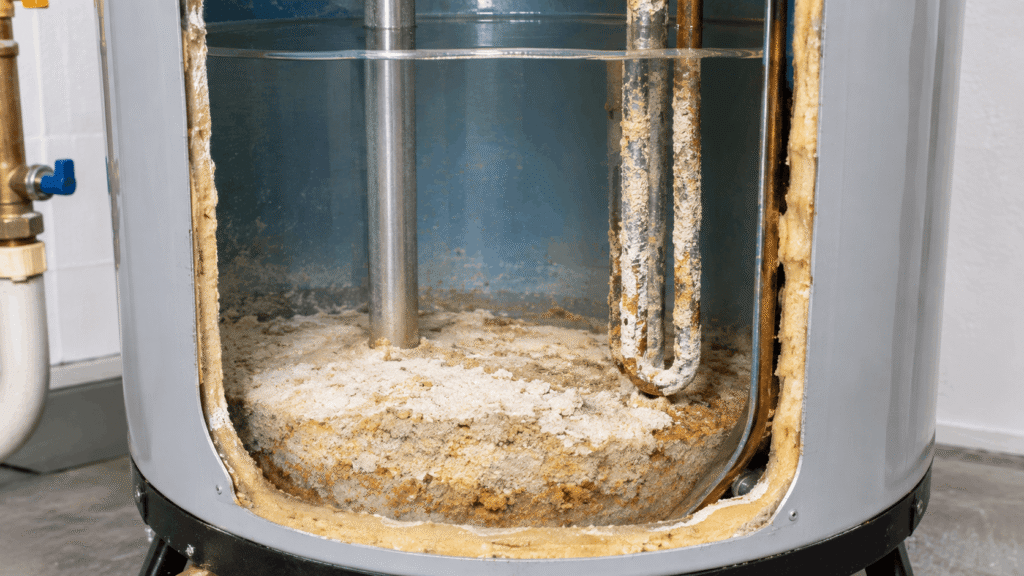
El Paso Water describes the city’s supply as moderately hard to hard, and when that water is heated, dissolved calcium and magnesium can separate out and form scale or sediment inside a water heater. Tank heaters usually collect sediment near the bottom or on heating elements; tankless units develop scale inside the heat exchanger. Left alone, either one can slow recovery, raise energy use, and shorten the unit’s life – but the same symptoms can also come from an unrelated component failure, so diagnosis matters more than assumption.
Tank and tankless heaters don’t collect deposits in the same places, so the signs and maintenance needs differ. Paso Plumbing helps El Paso homeowners tell the difference between hard-water buildup, normal maintenance needs, and an unrelated heater problem before recommending a fix.
Key takeaways:
- El Paso Water’s own FAQ describes the city’s supply as moderately hard to hard, from calcium and magnesium content
- Heating that water lets minerals separate out and form sediment or scale inside the heater
- Tank heaters often collect sediment near the bottom; electric models can also scale on the heating elements
- Tankless heaters develop scale inside the heat exchanger, which can restrict flow and heat transfer
- Popping noises, slower recovery, less hot water, or reduced flow can point to buildup – but can also come from other heater problems entirely
- Maintenance needs depend on water quality, heater type, usage, and the manufacturer’s own guidance, not one universal rule
Why Does El Paso’s Water Create Scale in Water Heaters?
El Paso Water’s own FAQ page describes the local supply as moderately hard to hard, driven mainly by dissolved calcium and magnesium. Neither mineral is unusual in drinking water, but heat changes their behavior – as water gets hotter, some of that mineral content separates out and forms solid deposits on heated surfaces or settles inside the tank.
This builds gradually, not all at once. In a storage heater, mineral solids can settle near the tank bottom or collect on heating elements. In a tankless unit, scale forms inside the heat exchanger, where water passes across hot surfaces.
Scale isn’t the same as sediment. Scale is a hard mineral layer bonded to a surface – a heating element or heat exchanger. Sediment is loose material that settles, usually near the bottom of a storage tank. Hard water contributes to both, but they affect a water heater differently.
Where Does Buildup Actually Form?
Bottom of a storage tank – mineral solids settle after separating from heated water. As the layer grows, it sits between the heat source and the stored water, which can reduce heat transfer and contribute to slower recovery or the popping and rumbling sounds tank heaters are known for.
Electric heating elements – scale can coat the element directly, acting as a barrier between it and the surrounding water so heat doesn’t transfer as easily. How much builds up depends on water quality, usage, temperature, and maintenance history.
Tankless heat exchanger – instead of tank-bottom sediment, scale forms inside the narrow water passages. Navien’s own guidance notes that hard-scale calcium carbonate buildup in a heat exchanger reduces heat-transfer efficiency and can block water flow – which is why tankless manufacturers build annual descaling into their maintenance recommendations.
How Does This Play Out in a Tank Heater vs. a Tankless Unit?
In a tank heater, sediment settling at the bottom or scale coating the elements makes heat work harder to reach the water – cycles run longer, recovery slows, and energy use climbs. Rheem’s own guidance identifies sediment buildup as a factor that reduces water heater efficiency over time and recommends flushing the tank annually to remove it. Gas and electric units are affected slightly differently: sediment collects above the burner-heated bottom in a gas unit, while scale forms directly on the elements in an electric one. Heavy buildup can also cause popping or rumbling – though a noise alone isn’t proof of hard-water damage by itself.
In a tankless unit, there’s no tank-bottom sediment, but scale inside the heat exchanger and narrow water passages can restrict flow and reduce heat transfer. Signs include lower hot-water flow, unstable temperatures, and more frequent service calls – none of which confirm scale on their own; have the unit inspected before assuming hard water is the sole cause. Navien recommends descaling a tankless heater at least once a year, more often in harder water or with heavier household use.
| What You Notice | Possible Hard-Water Link | What Else Could Cause It |
| Popping or rumbling (tank heater) | Sediment collected near the bottom | Normal operating sounds or another issue |
| Water takes longer to heat | Scale or sediment reducing heat transfer | Failed element, burner problem, high demand |
| Hot water runs out sooner | Heavy sediment affecting usable capacity | Undersized heater, damaged dip tube, faulty element |
| Lower hot-water flow (tankless) | Scale restricting the heat exchanger | Valve, inlet filter, fixture, or plumbing restriction |
| Temperature swings more than usual | Scale affecting tankless heat transfer | Sensor, burner, thermostat, or flow issue |
| White, chalky deposits at fittings | Mineral-rich water leaving visible scale | Doesn’t show how much buildup exists inside the unit |
The useful question isn’t “do I have hard water” – everyone in El Paso does, to some degree. It’s does this specific symptom match mineral buildup, or is something else in the heater actually causing it?
Are Older El Paso Homes More Exposed to This?
Not automatically, but age adds a layer to the picture. El Paso has a large stock of older housing, including officially designated historic districts like Sunset Heights, Manhattan Heights, Austin Terrace, and Ysleta – per the City of El Paso’s own list of locally designated historic districts. In a home that old, the water heater may carry a longer service history, older plumbing connections, or an unclear maintenance record, and hard-water scale built up over decades can be harder to separate from ordinary age-related wear. The neighborhood’s age doesn’t diagnose the heater – the unit’s actual condition and maintenance history are the more useful clues, whatever the house’s build year.
Can Hard Water Shorten a Water Heater’s Life – and Raise Costs?
Yes, when buildup is left inside the unit long-term. Scale and sediment reduce heat transfer, put heating components under more stress, and raise the risk of overheating or corrosion in some systems – Rheem lists hard water and skipped maintenance among the factors that can shorten a water heater’s service life. That reduced heat transfer is also why energy bills tend to climb alongside it: the unit runs longer to reach the same temperature.
The effect isn’t identical in every home – it depends on heater type, usage, temperature setting, and maintenance history. A well-maintained heater can handle El Paso’s water for years; a neglected one with heavy scale can fail well ahead of schedule. It’s more useful to watch the heater’s actual condition than to assume a fixed number of years – or a fixed percentage on your bill – has been lost to hard water.
Flushing vs. Descaling – and When Neither Is Enough
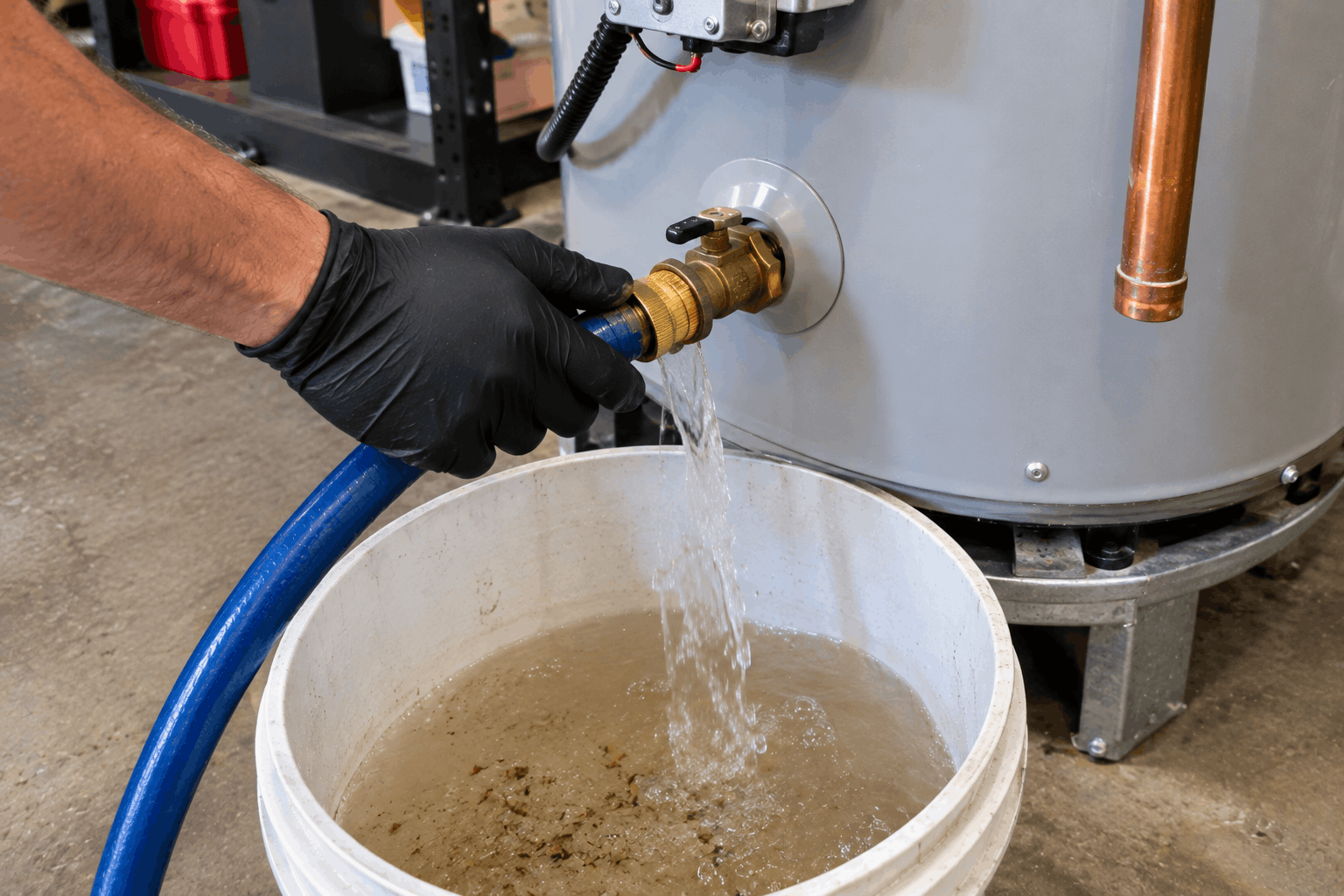
Tank flushing clears loose sediment out through the drain valve – it reduces what’s settled at the bottom, but it won’t remove hard scale already bonded to heating surfaces, and it can’t repair a worn or failed component.
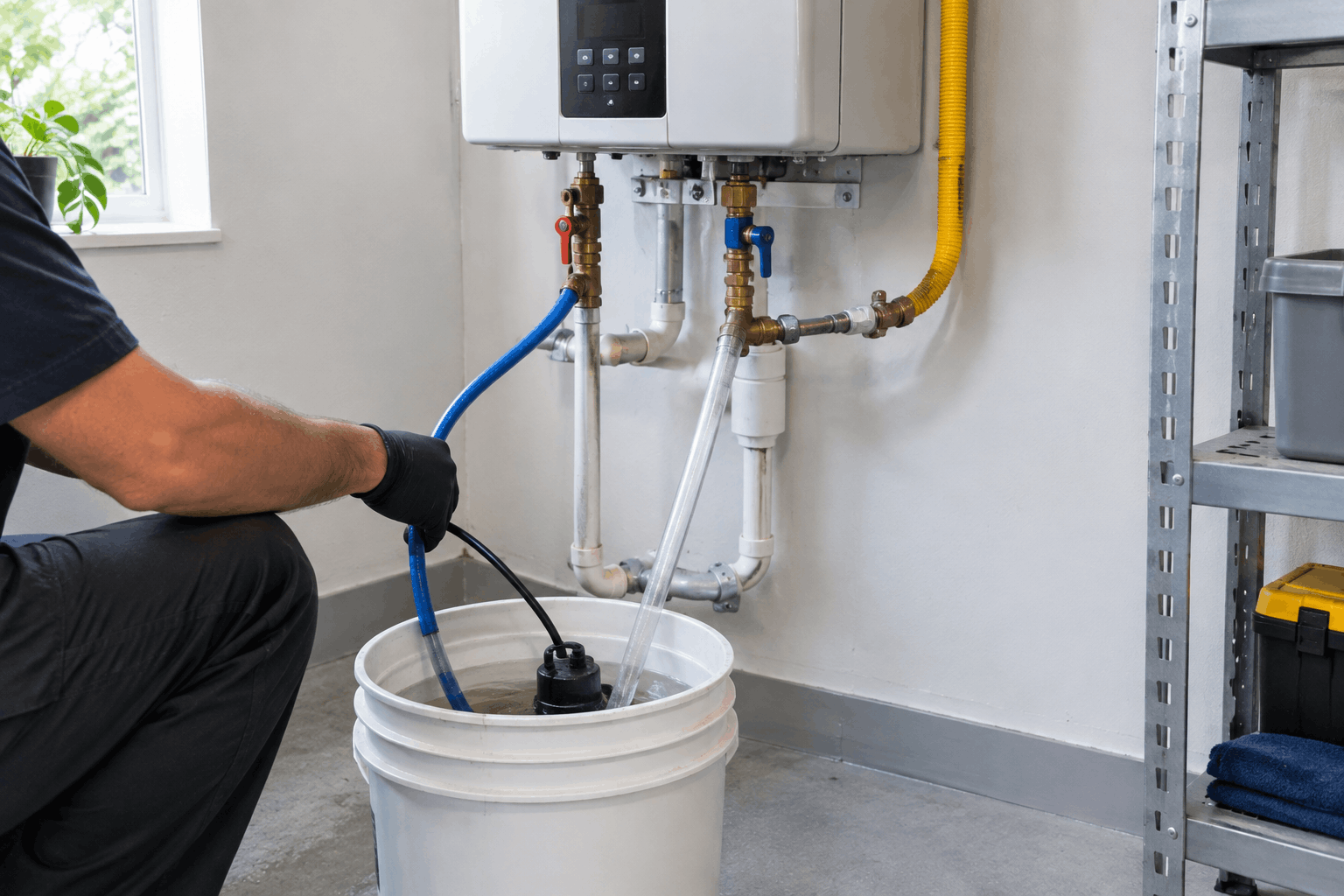
Tankless descaling circulates an approved cleaning solution through the heat exchanger and narrow water passages to dissolve mineral deposits – a different procedure for a different kind of buildup, with the exact method and schedule varying by model. Follow the manufacturer’s guidance for your exact unit rather than assuming one flushing or descaling interval fits every heater; water hardness, design, usage, and maintenance history all change how fast deposits form.
Neither one fixes a failed component. If the tank is leaking, corrosion is advanced, an element or burner has failed, or the heat exchanger is damaged, cleaning alone won’t solve it – that’s a repair or replacement decision based on the unit’s actual condition, not on hard water alone.
Do You Need a Water Softener?
Not every El Paso home does. A softener reduces calcium and magnesium before water reaches the heater, lowering the chance of scale – but El Paso Water’s own guidance is clear that it does not recommend installing water softeners for drinking water, so it shouldn’t be treated as the only answer. Regular tank flushing, tankless descaling, or a scale-control system matched to your specific equipment are the other options worth weighing against a whole-house softener, depending on your water use and the heater you actually have.
What Should You Check First?
- Visible leaks, rust, corrosion, or white mineral deposits around fittings
- Whether the problem is low flow, slow recovery, unusual noise, or unstable temperature
- The heater’s age and recent maintenance history
- The model number, so you can check the manufacturer’s specific maintenance guidance
- Whether it affects only hot water or both hot and cold – which points away from the heater itself
- For a tankless unit, any error codes or repeated flow problems
Rheem’s own guidance likewise recommends checking visible leaks, model information, warranty status, and maintenance history before scheduling service – those details narrow down the problem before anyone touches a wrench.
When Is It Time to Call Someone?
Have the heater checked when hot-water performance keeps getting worse, unusual noise continues, temperatures become unreliable, or a leak appears – especially if flushing or descaling doesn’t resolve it, or the maintenance history is unknown. Water pooling around the tank body or visible corrosion deserve prompt attention, since the cause may involve more than mineral buildup – reach out here and we’ll help sort out whether it’s maintenance, repair, or replacement. If you’re seeing active leaking or water pooling around the unit right now, that’s an emergency, not a next-week appointment.
A Few More Questions
Does a tankless water heater avoid hard-water problems entirely? No – it avoids the tank-bottom sediment storage heaters get, but mineral scale can still form inside the heat exchanger. Manufacturers like Rheem and Navien both build flushing, descaling, and water-treatment guidance into their tankless documentation specifically to control it.
Can sediment make my hot water run out faster? It can, especially when buildup interferes with heat transfer in a tank unit – but a short hot-water supply can just as easily come from high household demand, a failed heating element, an undersized heater, or another component issue entirely.
Get the Right Water-Heater Help in El Paso
If hard-water buildup or another issue is affecting your hot water, Paso Plumbing (TX License #12051) can separate mineral buildup from a genuine component failure and help you choose maintenance, repair, or replacement based on the heater’s actual condition – not a guess. If corroded fittings or scale have spread into nearby pipes as well, we’ll flag that during the same visit. Call (915) 200-8525 or request an estimate.
Sources: El Paso Water – Frequently Asked Questions (water hardness and water-softener guidance, epwater.org); Rheem – “Water Heater Lifespan: When to Repair vs. Replace” and heat pump maintenance guidance (rheem.com); Navien – PeakFlow scale prevention guidance and tankless maintenance notice (navieninc.com); City of El Paso – Historic Preservation FAQ, list of locally designated historic districts (elpasotexas.gov); Paso Plumbing company information as published on pasoplumbing.com.