
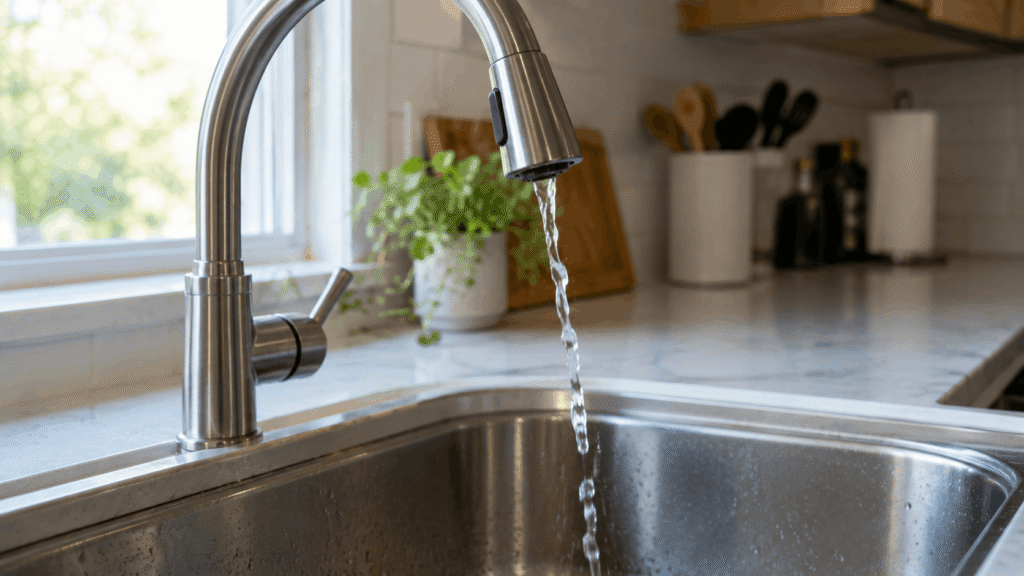
Yes – hard water can reduce flow at a faucet when mineral scale narrows the aerator or another small passage inside the fixture. El Paso Water describes the local supply as moderately hard to hard, so this is a realistic local cause. But a weak stream doesn’t automatically mean hard water or low household pressure – one weak faucet usually points to a local restriction, while several weak fixtures at once suggests something broader.
Before you troubleshoot, keep these in mind:
- Hard-water scale can restrict small faucet openings
- One weak faucet usually points to a local fixture issue
- Several weak fixtures suggest a broader plumbing or pressure problem
- Sediment and debris can clog an aerator right alongside mineral scale
- Hot-only or cold-only weak flow helps narrow down the cause
- A clean aerator doesn’t rule out a cartridge, valve, or supply-line restriction
- Weak flow and low water pressure are related, but they’re not the same problem
How Hard Water Reduces Faucet Flow
Hard water carries dissolved calcium and magnesium that collect on surfaces and inside narrow passages as water repeatedly moves through and dries around small fixture openings. An aerator is especially vulnerable – its screen and small openings sit directly in the water path, and scale doesn’t need to block it completely to change how much water comes through. As deposits build, the open area shrinks, weakening the stream, making it uneven, or reducing output altogether.
Visible scale on the outside of a fixture doesn’t prove hidden pipes carry the same buildup – a local faucet restriction and a pipe-wide restriction are two different conditions, and it’s worth checking which one you actually have before assuming the worse case.
Low Flow Isn’t the Same as Low Pressure
Flow is how much water actually moves through the outlet – an aerator clogged with scale or debris can reduce that even when the plumbing system behind it has completely normal pressure. Pressure is the force pushing water through the system as a whole, and a true pressure problem usually shows up at more than one fixture.
This distinction saves you from unnecessary troubleshooting: if every other faucet works fine, checking the one affected fixture makes more sense than assuming the whole home has a pressure problem.
| What You Notice | More Likely Direction | First Useful Check |
| One faucet is weak, others normal | Local fixture restriction | Aerator or faucet path |
| Both hot and cold are weak | Shared outlet or faucet path | Aerator first |
| Only hot water is weak | Hot-side restriction | Hot valve, supply line, or faucet path |
| Only cold water is weak | Cold-side restriction | Cold valve, supply line, or faucet path |
| Several fixtures are weak | Broader plumbing or pressure issue | Compare fixtures throughout the home |
| Flow dropped after plumbing work | Sediment or debris may have moved | Inspect the aerator |
One faucet only: the problem is more likely within that faucet or its local supply path – an aerator, cartridge, shutoff valve, or supply connector matters more here than a whole-house pressure theory.
Hot or cold only: focus on that side’s supply. A restricted hot valve or connector can affect hot flow while cold stays normal, and the same logic runs in reverse.
Both sides weak at once: look at what they share – the aerator, the outlet path, or another common internal passage.
Check the Aerator First
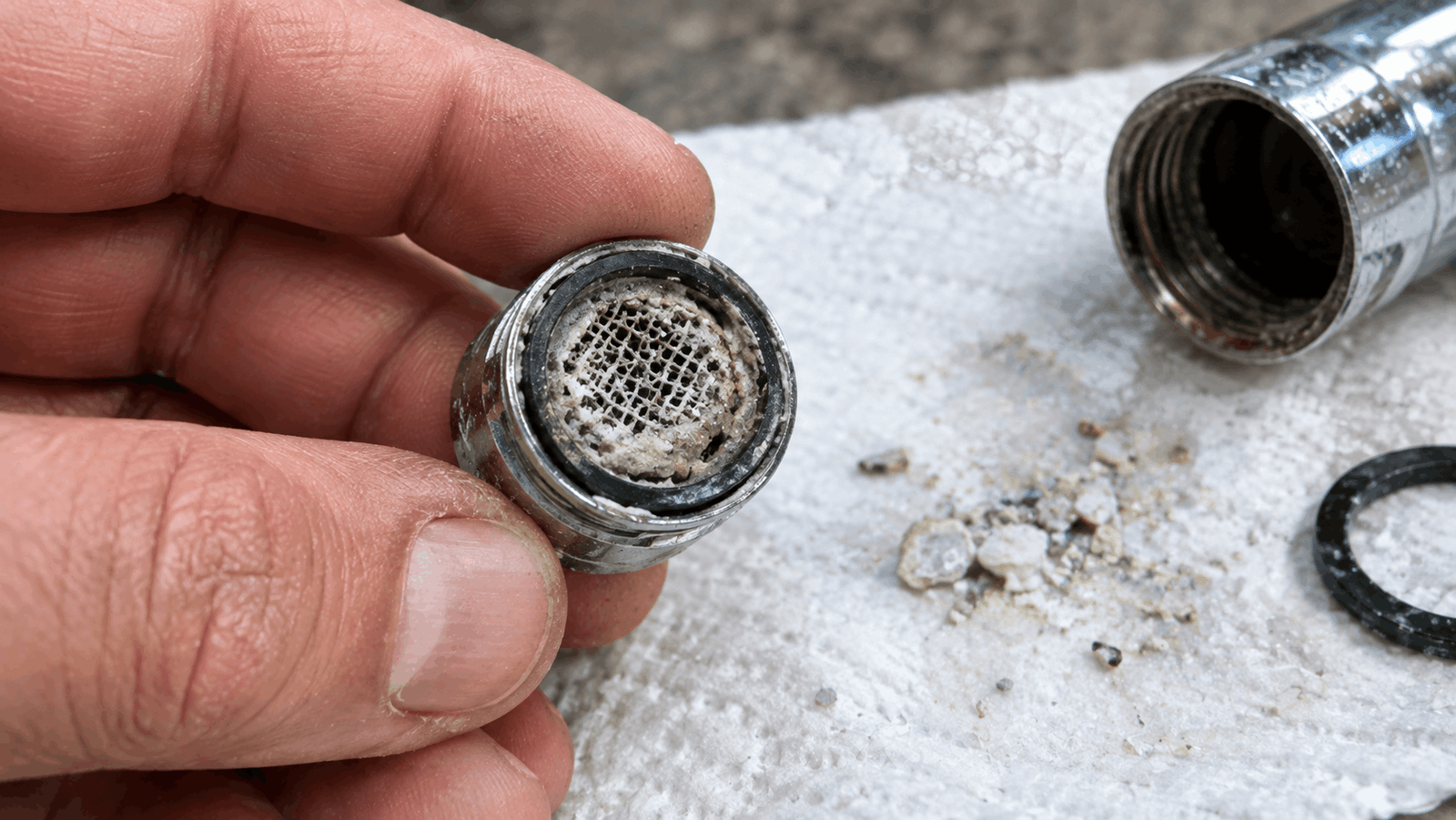
The aerator’s small screens and openings can collect mineral scale, sediment, grit, and other debris – hard water is one possible cause, but not the only one. Scale usually builds gradually as hardness minerals collect over time; sediment can show up more suddenly, especially right after water service or plumbing work nearby. Both can clog the same aerator, so what you find inside shouldn’t automatically get labeled hard-water scale.
If cleaning or replacing the aerator restores normal flow, that was the whole problem. If the stream stays weak, the restriction is probably deeper in the faucet or supply path – repeatedly cleaning an already-clear aerator won’t fix a restricted cartridge, valve, or line.
What If the Aerator Is Already Clean?
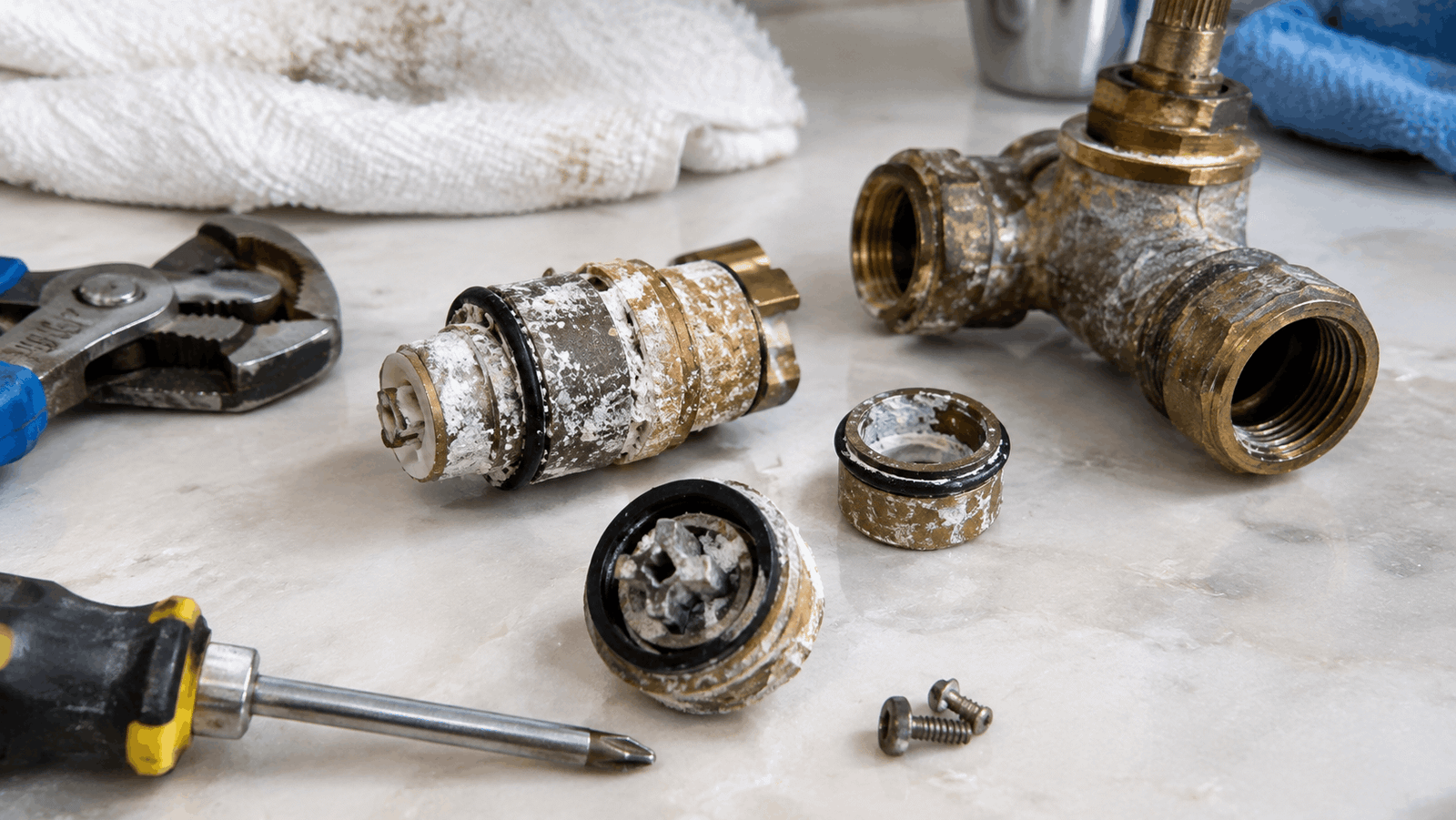
Cartridge or internal path. A cartridge controls how water moves through the fixture – mineral deposits, debris, wear, or a damaged part can restrict it even with a clear aerator. This becomes more likely if the stream stays weak after checking the outlet, especially if the handle also feels stiff or behaves differently on one temperature setting – usually resolved with a faucet repair or cartridge replacement.
Shutoff valve. The valves below the sink control how much reaches the faucet – one that’s partly closed or internally restricted reduces flow on that side, especially worth checking if the weak flow started right after the valve was touched during other work.
Supply line. A kinked, debris-filled, or restricted flexible line between the valve and the faucet can reduce flow on whichever side is affected.
Pull-down kitchen faucets. The spray head, hose, and internal diverter are additional places a restriction can form – if the main faucet body is clear but the spray head stays weak, look downstream in that assembly specifically.
Why El Paso’s Hard Water Matters Here
El Paso Water’s own FAQ describes the local supply as moderately hard to hard, from calcium and magnesium content – which makes mineral scale a realistic contributor to buildup around aerators, faucet outlets, and other small passages citywide. That context is worth keeping in mind when a faucet gradually loses flow and visible deposits are present.
It shouldn’t become the automatic diagnosis, though. A weak faucet can just as easily come from sediment, a partly closed valve, a restricted supply connector, or another fixture-specific issue – the symptom pattern still matters more than the city-wide hardness description on its own.
When the Problem Is Bigger Than One Faucet
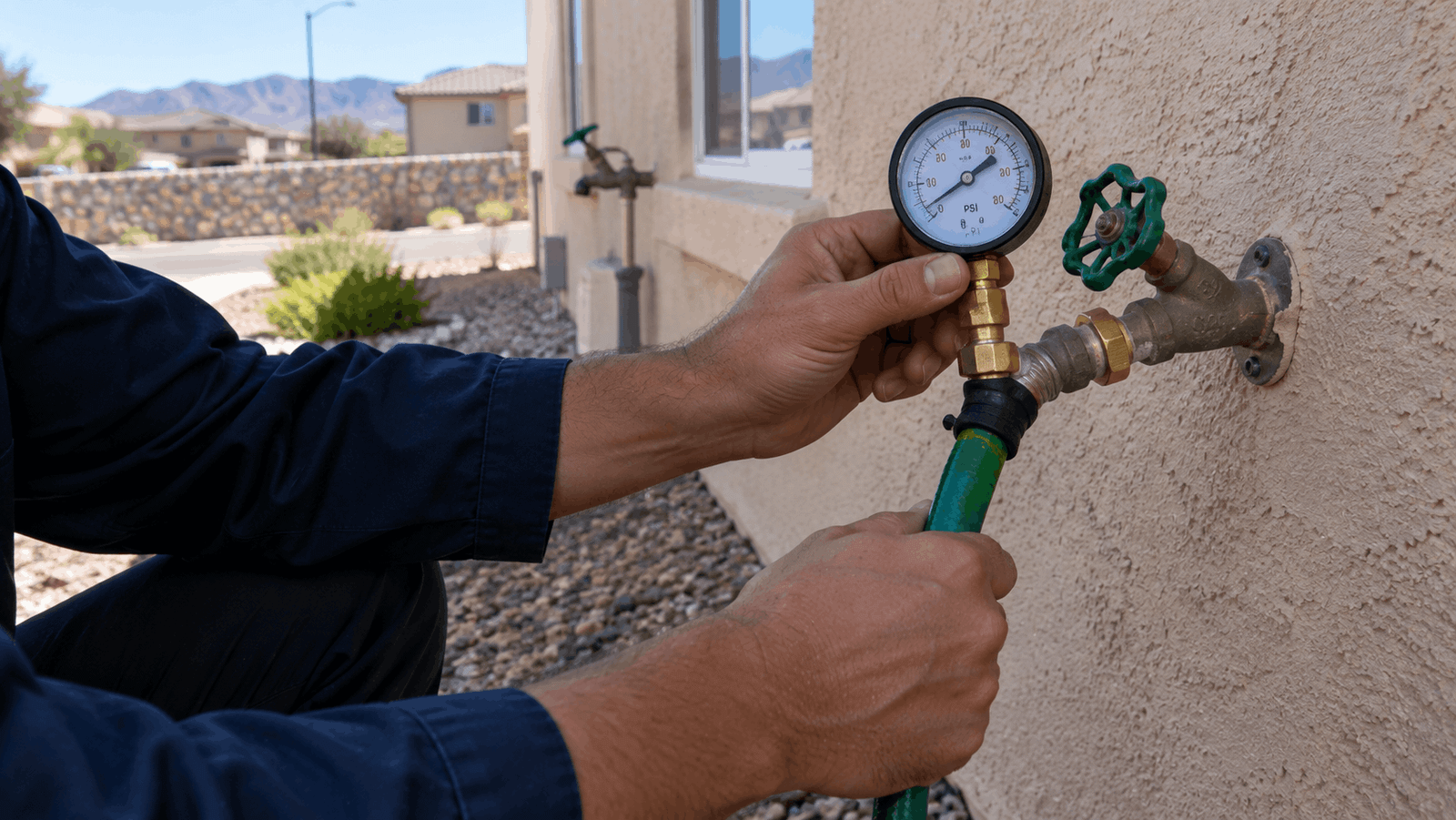
A single weak faucet usually points to that fixture or its local supply path – but if several fixtures lose flow at the same time, that can mean a main valve restriction, a pressure regulator problem, a hidden leak, or another system-wide condition. Hard water contributes to plumbing scale over time, but several weak fixtures at once shouldn’t get blamed on mineral buildup without more evidence – that pattern deserves a real plumbing inspection rather than another round of aerator cleaning.
The distinction is simple: one weak outlet gets a local check first. Multiple affected fixtures call for a wider look at the system.
What Should You Do Next?
Start with the pattern, not the assumption that hard water is responsible. If cleaning or replacing a clogged aerator restores flow, routine maintenance is enough. If the aerator’s clear but the faucet stays weak, the cartridge, shutoff valve, supply line, or another internal passage likely needs attention. When several fixtures are affected, move past faucet troubleshooting entirely and consider a broader plumbing or pressure issue.
Frequently Asked Questions
1. Can hard water clog one faucet while others work normally? Yes – fixture design, use, and local buildup differ enough that one aerator can scale up faster than another. Normal flow elsewhere makes a local restriction more likely than a whole-house pressure problem.
2. Why is only hot water weak at one faucet? It usually points toward the hot-side shutoff valve, supply connector, or cartridge passage. If cold flow is normal, a shared aerator is less likely to be the sole cause.
3. What if both hot and cold are weak at the same faucet? Look at what they share – the aerator, the common outlet path, or another internal part restricting both supplies after they enter the fixture.
4. Why is flow still low after cleaning the aerator? The restriction likely sits deeper – a clogged cartridge, partly closed valve, kinked supply line, or blocked spray head can all keep flow weak even with a clean aerator.
5. Can sediment and hard-water scale clog the same aerator? Yes – finding material in the screen doesn’t automatically prove hard water caused all of it; grit and debris often collect right alongside mineral scale.
6. Why did flow drop after plumbing work nearby? Turning water off and on can dislodge loose sediment or debris that then settles in the nearest narrow passage – often the aerator, soon after the work is done.
7. Can hard water reduce flow without lowering home water pressure? Yes – deposits can narrow a local faucet opening while pressure in the rest of the system stays completely normal. That’s reduced flow at the outlet, not a true pressure loss.
8. Does visible white scale mean pipes inside the wall are clogged too? No – it only confirms mineral deposits are forming at that exposed spot. It doesn’t prove hidden pipes carry the same buildup or any meaningful restriction.
9. Can a partially closed shutoff valve make weak flow worse? Yes – a partly closed or internally restricted valve limits what reaches the fixture, and if the aerator also has scale, both restrictions stack together into a weaker stream.
10. How do I know if the problem is local or whole-house? Compare fixtures. One weak faucet with normal flow elsewhere points to that faucet’s local supply path; similar weakness at multiple fixtures means it’s time to look at the broader plumbing or supply system.
Get Persistent Faucet Flow Checked
If a faucet stays weak after the aerator is clear, or several fixtures start losing flow at once, the problem may need more than routine cleaning. Paso Plumbing (TX License #12051) can inspect the affected fixture and its supply path to find what’s actually restricting flow – call (915) 200-8525 or request an estimate.
Sources: El Paso Water – Frequently Asked Questions (water hardness classification, epwater.org); Paso Plumbing company information as published on pasoplumbing.com.