
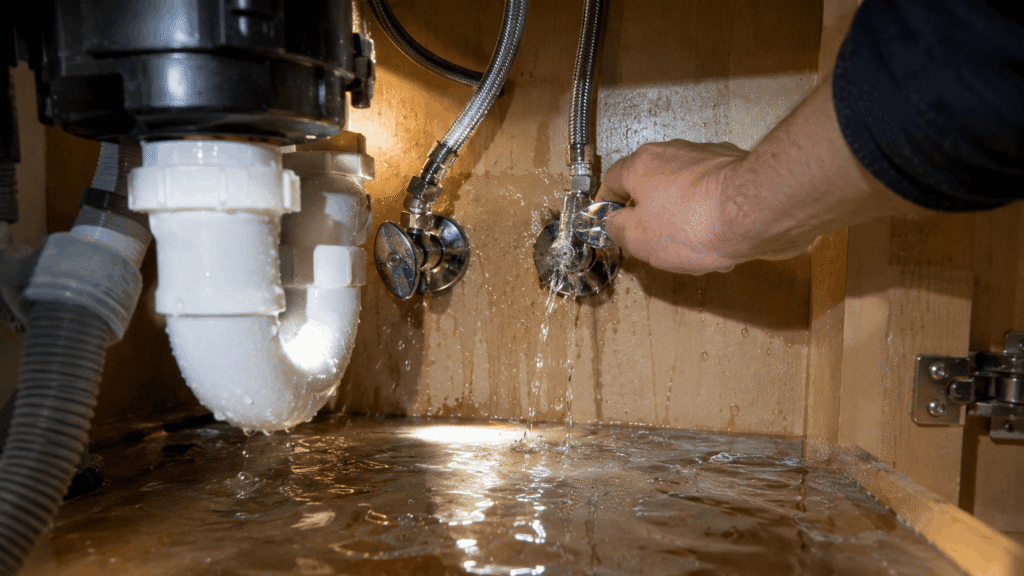
Before the plumber arrives: keep people away from sewage, gas, or wet electrical hazards; stop or isolate the water only if you can do it safely; and stop using the affected fixture rather than testing whether it’s cleared. The goal isn’t to repair anything yourself – it’s to keep the situation from getting worse and to have clear details ready when Paso Plumbing arrives.
What Should You Do First?
Check safety before touching anything. Standing water near outlets, appliances, or an electrical panel is a different risk than a simple leak. Sewage, a gas odor, very hot water, or a wet, sagging ceiling are all reasons to keep people away from the area entirely – before you touch any valve.
Find the source if it’s safe to look. Is it limited to one toilet, sink, water heater, or pipe – or are several fixtures involved? That tells you whether a local shutoff is enough or the main supply needs attention.
Stop the water only where you can reach and operate the valve safely. A fixture valve may handle a leak at one sink or toilet. A larger or unknown leak may call for the home’s main shutoff instead.
Stop using the fixture – don’t test it. Repeated flushing during a toilet overflow, or continued fixture use during a sewer backup, adds more water to a system that’s already unable to drain.
Have these details ready for the plumber: what happened, where it appeared, which fixtures are affected, whether the water’s been shut off, and whether sewage, electrical exposure, or a gas odor is involved.
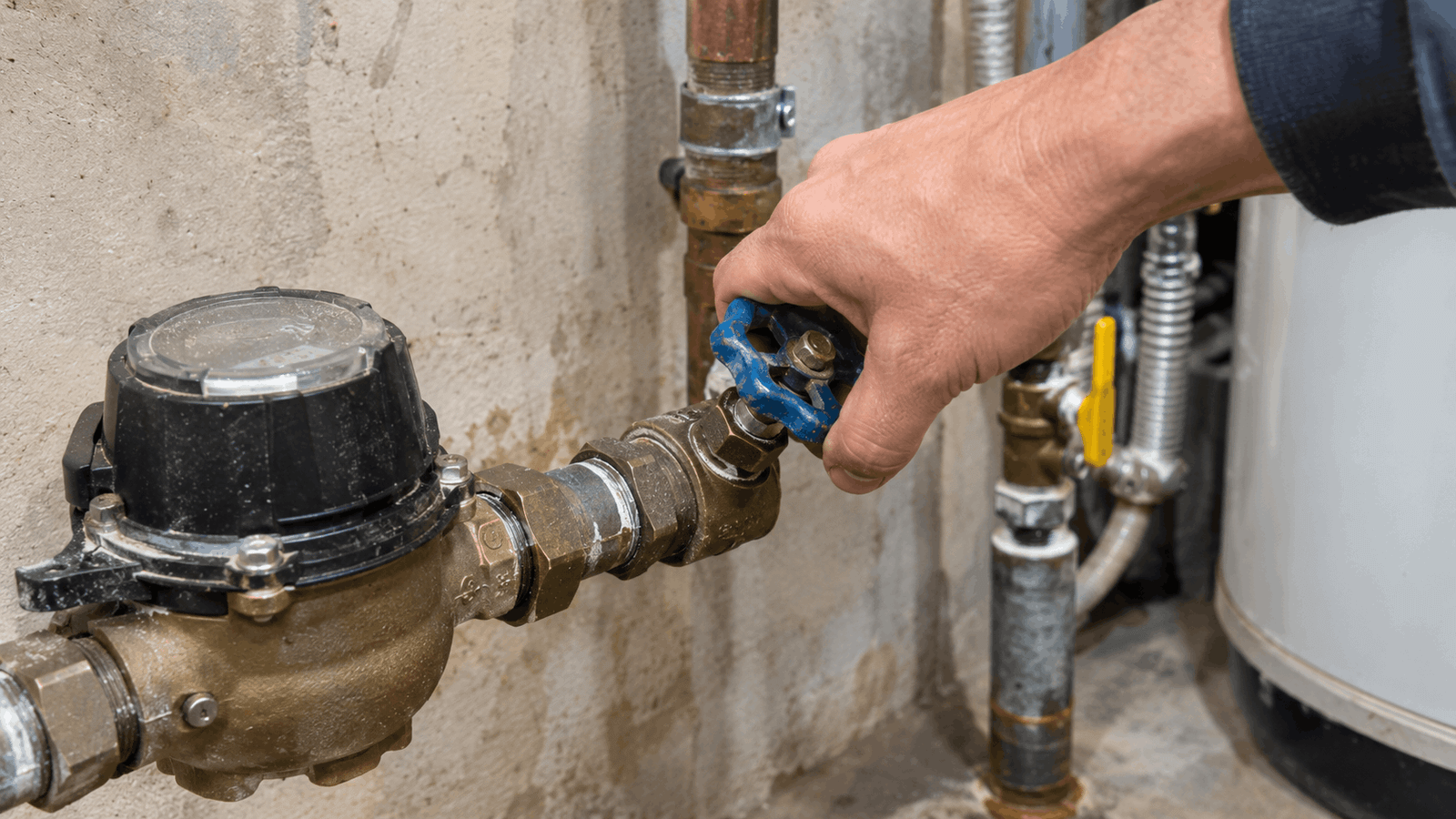
Choosing the Right Shutoff for the Leak
A fixture valve – the ones near most toilets and sinks – can isolate a problem limited to that one fixture without cutting water to the rest of the property. A main shutoff is the better call for a burst supply pipe, an unknown source, or water that keeps spreading – it’s a bigger step, but appropriate when you can’t isolate the problem locally.
Never walk through standing water or into an unsafe area just to reach a shutoff – personal safety comes before stopping property damage, every time. And don’t force a stuck valve: an old or corroded shutoff can fail under excessive pressure, turning one problem into two. If it won’t move safely, tell the plumber the source hasn’t been isolated yet – that’s useful information on its own.
Should I shut off the whole house for every plumbing emergency? No. If the problem is limited to one fixture and its valve works safely, isolating that fixture is usually enough. The main shutoff makes more sense when the source can’t be isolated, a supply pipe has failed, or water keeps spreading.
Match the Action to the Emergency
| Emergency | First Safe Priority | Avoid |
| Burst pipe or major leak | Isolate the water supply | Continuing to use water |
| Overflowing toilet | Stop water to the fixture | Flushing again |
| Sewer backup | Stop using sinks, toilets, showers, appliances that drain | Adding more wastewater |
| Water heater leak | Keep clear of unsafe electrical or gas components | DIY gas or electrical work |
| Water near electricity | Stay out of the wet area | Walking through water to reach a breaker |
| Gas odor | Leave and contact the gas utility or emergency services | Switches, flames, or investigating it yourself |
A burst pipe keeps releasing water as long as the line is pressurized – isolate it if you safely can, and don’t keep other fixtures running while it’s active. An overflowing toilet shouldn’t be flushed again to “test” it – that just adds more water to a bowl that can’t drain; isolate the fixture’s supply valve if it’s accessible. A sewer backup means stopping all use of sinks, toilets, showers, and washing machines, since continued use feeds more volume into a line that’s already struggling. A water heater leak involves both water and an energy source – don’t open panels, relight equipment, or touch wiring while waiting for help.
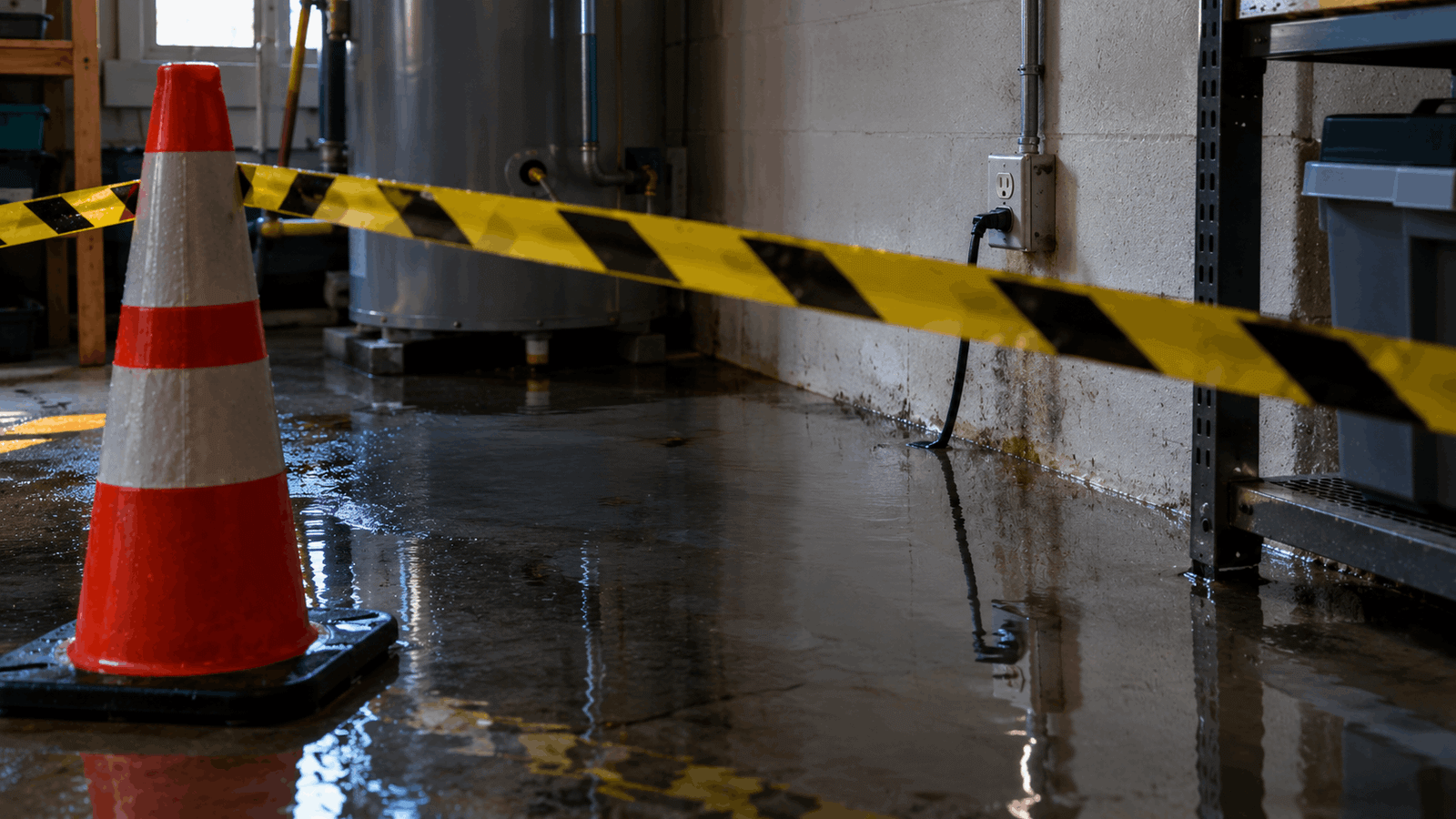
Staying Safe Around Electricity, Sewage, and Gas
Water and electricity. Water near an outlet, appliance, or breaker panel is an electrical hazard on top of the plumbing problem. Don’t step into standing water to reach electrical controls – the American Red Cross is explicit that you shouldn’t touch electrical equipment while wet or standing in water. If the panel can’t be reached without entering water, that’s a job for a qualified professional, not a reason to risk it.
Sewage. Wastewater is different from a clean supply leak – it can carry harmful pathogens, so people and pets should stay away and avoid direct contact. Public health guidance consistently treats sewage exposure as a real hazard, not just an unpleasant mess, which is why stopping fixture use matters more here than almost anywhere else.
Gas odor. This needs a different response than an ordinary plumbing leak: leave the area and contact your gas utility or emergency services from a safe location. Don’t investigate the source, light anything, or flip switches that could spark – leaving immediately, not troubleshooting, is the correct first move.
The priority order is simple: property cleanup can wait when sewage, electricity, or gas creates a safety hazard. Get people clear first – the plumber or another qualified professional takes over the technical work once the area is safe.
Limiting Water Damage Before It Spreads
Once the source is stopped and the area is safe: contain what’s already out with towels or buckets for a clean-water leak (not a repair, just containment); move belongings – boxes, rugs, electronics – away from the wet area, since water travels farther than it looks; dry accessible clean-water areas if there’s no electrical or sewage hazard; and leave the structure alone – don’t cut into drywall, lift flooring, or open walls chasing a hidden leak. Unnecessary demolition can cause more damage before the actual source is even confirmed – that’s exactly what professional leak detection is built to find without guesswork.
Mistakes to Avoid
- Don’t keep flushing an overflowing toilet to check if it’s cleared
- Don’t add more water to a sewer backup by running other fixtures
- Don’t use chemical drain cleaner on a serious or unknown backup – if the line stays blocked, the chemical can sit in standing water or inside the pipe and create an exposure risk for whoever works on it later. If you already used some, tell the plumber exactly what and where – it changes how they approach the drain safely.
- Don’t force a stuck shutoff valve – an old or damaged one can break
- Don’t walk through standing water to reach an outlet or panel
- Don’t open walls or ceilings hunting for a hidden leak yourself
- Don’t attempt temporary repairs – dismantling pipes or touching gas/electrical components while waiting isn’t a shortcut, it’s a new problem
- Don’t repeatedly restore water to an isolated leak just to check on it – that can restart it
Recording Details Before the Plumber Arrives
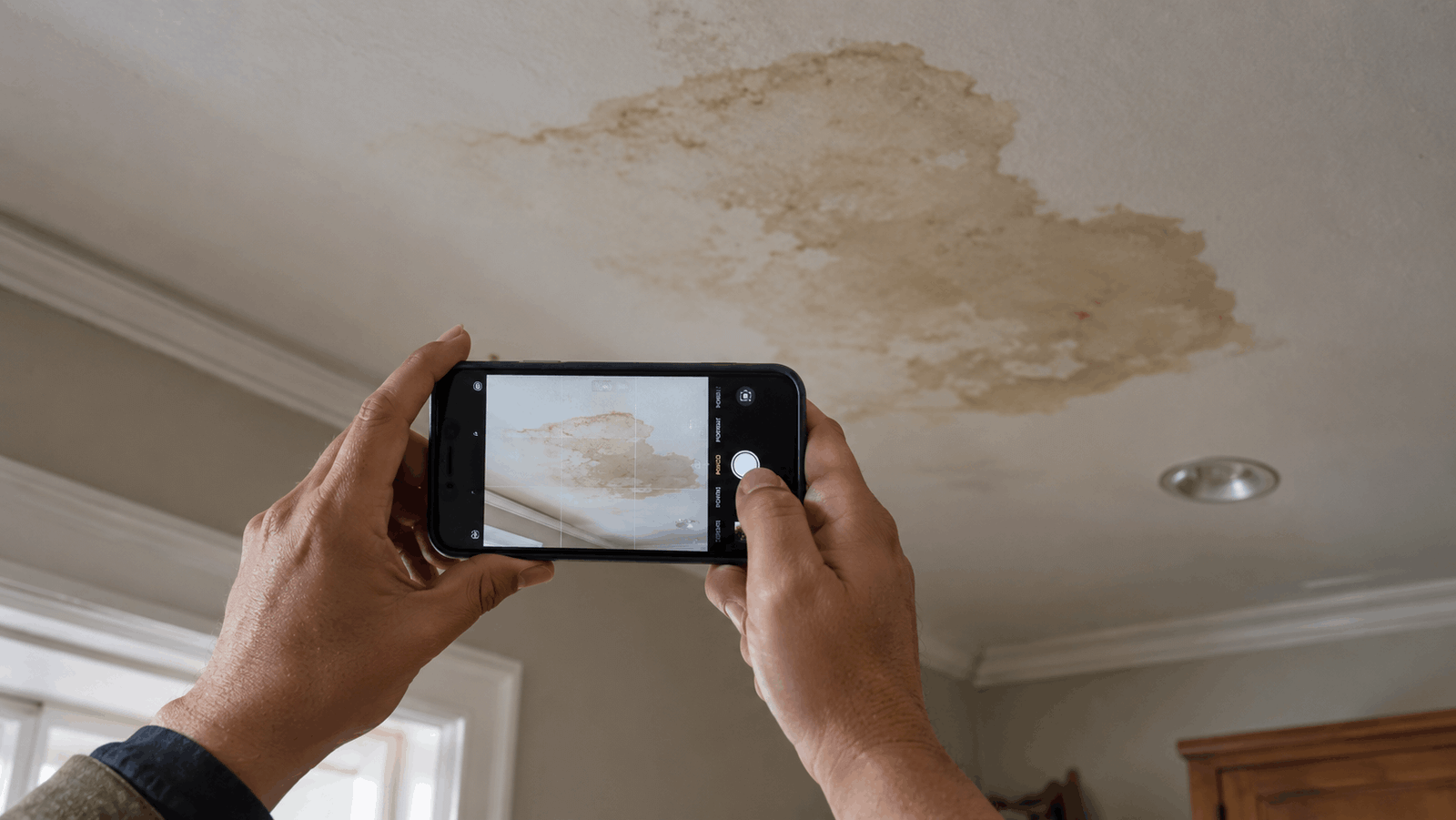
Note where it started (wet ceiling, under a sink, sewage at a floor drain, moisture near the water heater), which fixtures are affected versus still working normally, when it started and whether it changed quickly or gradually, and – if it’s safe – photos or a short video of the water’s spread, discoloration, or any error codes. Also worth noting: whether water was shut off and which valve, any unusual sounds, changes in flow or pressure, a previous repair in the same spot, and any drain product already used. This isn’t a diagnosis – it just preserves details that may not be visible by the time the plumber gets there.
Checking for a Hidden Leak in El Paso Yourself
You can use your water meter as a basic first clue: turn off every fixture, appliance, and irrigation line, then check whether the meter still shows movement. If it does, water may be moving somewhere in the system even with nothing running. Closing the home’s main shutoff and watching the meter again can further narrow whether the loss is on the property side or along the service connection – a distinction El Paso Water’s own guidance on leak detection walks through as well.
This is a screening clue, not a diagnosis – meter movement doesn’t tell you which pipe or fitting failed, and it’s not a reason to open floors, walls, or concrete yourself. If the issue looks like it’s on the utility side rather than your private plumbing, El Paso Water – not a plumber – is the right first call.
Can my water meter help confirm a hidden leak? Yes – if all known water use is stopped and the meter still moves, that points to water flowing somewhere on the property. It supports a hidden-leak check, but it can’t identify the exact damaged pipe or fitting by itself; that’s what professional leak detection is for.
Frequently Asked Questions
1. What if I can’t find the main water shutoff? Don’t start opening walls or forcing unfamiliar valves. Check the common accessible spots where the main service enters the property, and if the leak can’t be isolated safely, tell the plumber immediately that water is still flowing.
2. Should I turn the water back on before the plumber arrives? Usually not, once a serious leak has been safely isolated – restoring pressure can restart it and send water into walls, floors, or cabinets that are already affected. Leave it off unless a professional tells you otherwise.
3. Can I use other fixtures after one leaking fixture is shut off? Sometimes – if that fixture is fully isolated with its own valve and the rest of the plumbing works normally. Stop if drainage problems, sewage backup, or unexplained pressure changes show up anywhere else.
4. What should I do if water is coming through the ceiling? Stay clear of a ceiling that’s wet, bulging, or sagging – water may be pooling above it, and wiring may be nearby. Don’t puncture or open it yourself; report the location and any active dripping to the plumber.
5. Should I cancel the plumber if the leak stops on its own? No. A leak that stops temporarily can still come from a damaged pipe, a loose connection, or an intermittent failure. Tell the plumber it stopped and what happened right before – the cause still needs investigating.
6. What if the leak seems to be between the meter and the house? That’s a service-line question, which may fall to El Paso Water rather than a private plumber depending on exactly where it sits. Note any meter activity, wet ground, or visible water outside and mention it when you call – location determines who’s responsible.
7. What should a renter do during a plumbing emergency? Take safe steps to limit immediate damage, then contact the landlord or emergency maintenance contact as soon as possible. Avoid opening walls, replacing parts, or authorizing major work without approval.
8. Should I tell the plumber about previous problems in the same area? Yes – a prior leak, recurring clog, or earlier repair in that spot is a useful context. Give the facts you actually know rather than guessing at a cause.
9. Can I use a wet/dry vacuum during a plumbing emergency? Only in a clean-water area with no electrical or sewage hazard, used safely. Never run electrical cleanup equipment in standing water near wiring, outlets, or appliances – and sewage-contaminated water needs different handling entirely.
10. What if the problem gets worse while I’m waiting? Call back and update the plumber – faster flow, new fixtures backing up, sewage appearing, or a new safety hazard can change what response is actually needed.
Let the Plumber Take Over
Once the immediate hazard is controlled and the area is accessible, the diagnosis and permanent repair are where Paso Plumbing (TX License #12051) takes over – we’ll inspect the problem, determine what actually failed, and recommend the next step based on the real condition of your plumbing, not a guess made under pressure. Call (915) 200-8525 any time, or request an estimate for anything that can wait.
Sources: American Red Cross – flood and electrical safety guidance (redcross.org); El Paso Water – leak detection and outage guidance (epwater.org); Paso Plumbing company information as published on pasoplumbing.com.