
A kitchen faucet dripping from the spout usually has a worn cartridge, a bad rubber seal or washer, or mineral buildup that keeps the valve from closing all the way. In El Paso, hard water is a big part of the story. Minerals scratch and crust up the small parts inside the faucet, so they wear out faster than they would in a soft-water city. Most drips can be fixed by replacing a cartridge or seal, but an older faucet with heavy scale is often worth replacing.
A drip seems small, but it adds up. The EPA WaterSense program says a faucet dripping at one drip per second can waste more than 3,000 gallons a year.
Where Is It Dripping From?
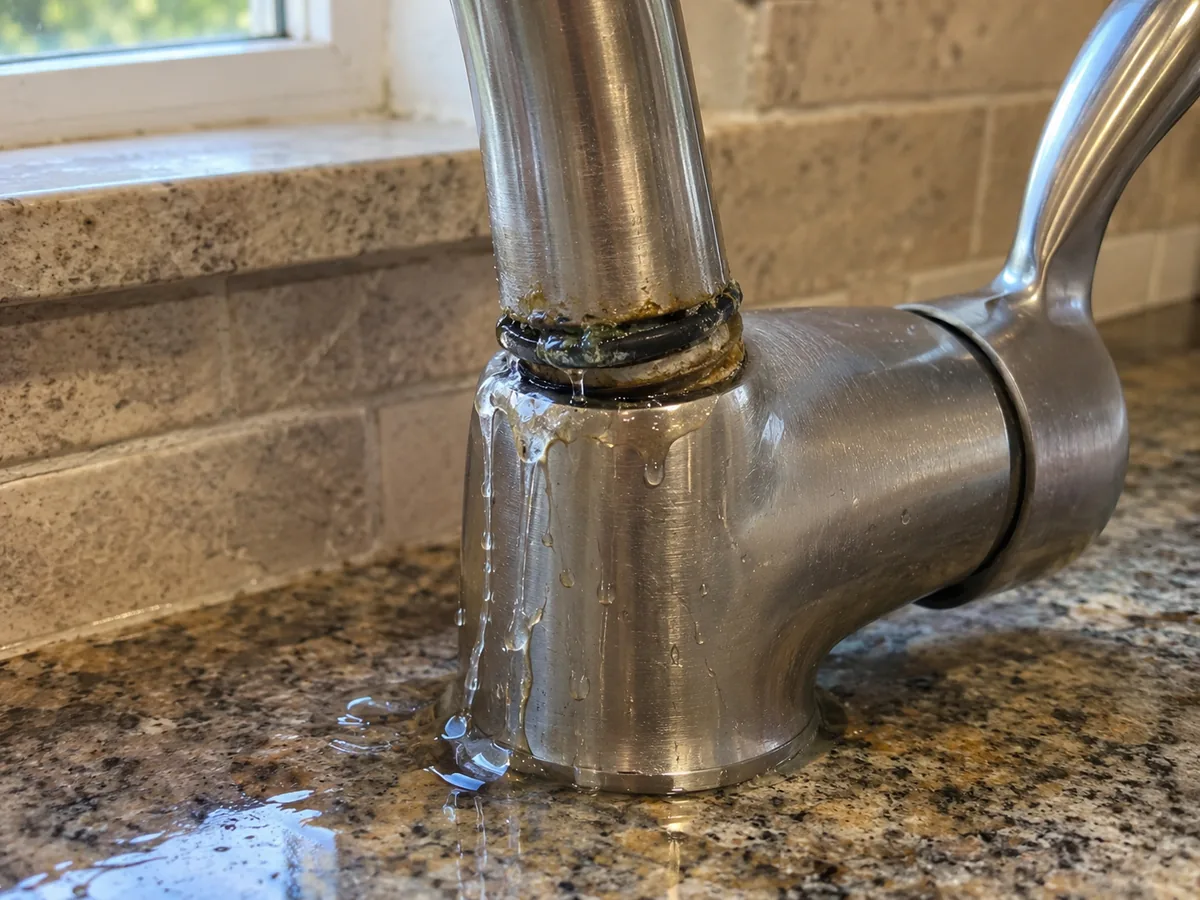
| Where you see water | Likely cause |
|---|---|
| From the spout when it is off | Worn cartridge, washer or valve seat |
| Around the base of the spout | Worn O-rings |
| Under the sink | Loose supply line, connector or sprayer hose |
| From the handle | Worn cartridge seal or loose handle |
| From the pull-down sprayer head | Worn hose or sprayer seal |
Knowing where the water comes from tells you which part to fix.
Common Causes
1. A worn cartridge
Most modern kitchen faucets use a cartridge inside the handle that controls flow and temperature. Over time, its seals wear down and it no longer shuts off fully. Swapping the cartridge is the most common fix for a single-handle faucet.
2. Worn washers or valve seats
Older two-handle compression faucets use rubber washers that press against a seat. When the washer hardens or the seat gets rough, water slips past.
3. Worn O-rings
These rubber rings seal the spout to the faucet body. When they wear out, water leaks around the base of the spout, especially when you swing it.
4. Mineral buildup
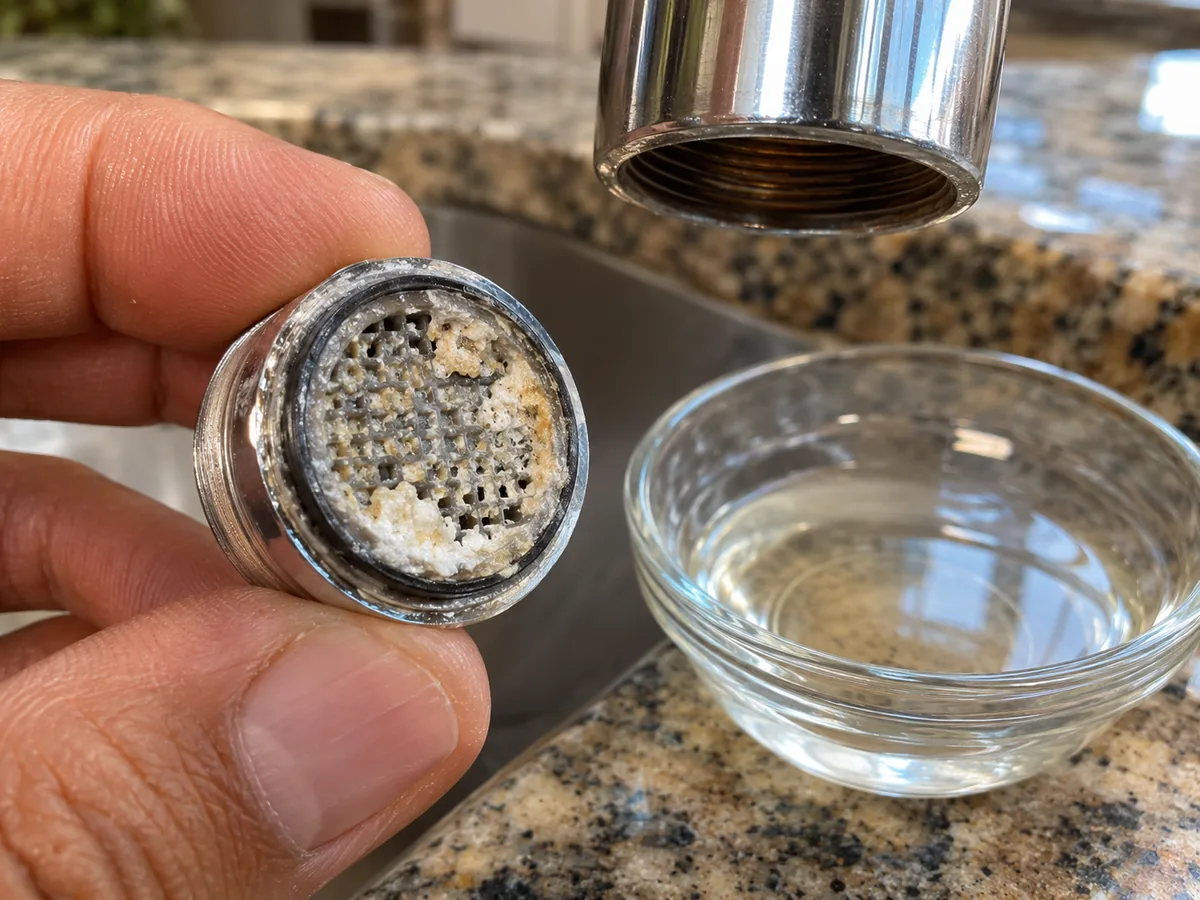
El Paso Water describes local water as moderately hard to hard. Calcium and magnesium leave scale on cartridges and seats, which keeps them from sealing and can make handles stiff. You may see the same white crust on the aerator. Our post on white crust on faucets and showerheads covers how to clean it.
5. High water pressure
Pressure that is too high pushes water past seals and wears parts faster. If several fixtures drip or toilets run often, have your pressure checked.
Why is my faucet dripping even though the handle is all the way off?
The part that stops the water, usually the cartridge or the washer and seat, is worn or crusted with minerals. Turning the handle harder will not help and can damage it further.
How to Fix a Dripping Single-Handle Faucet
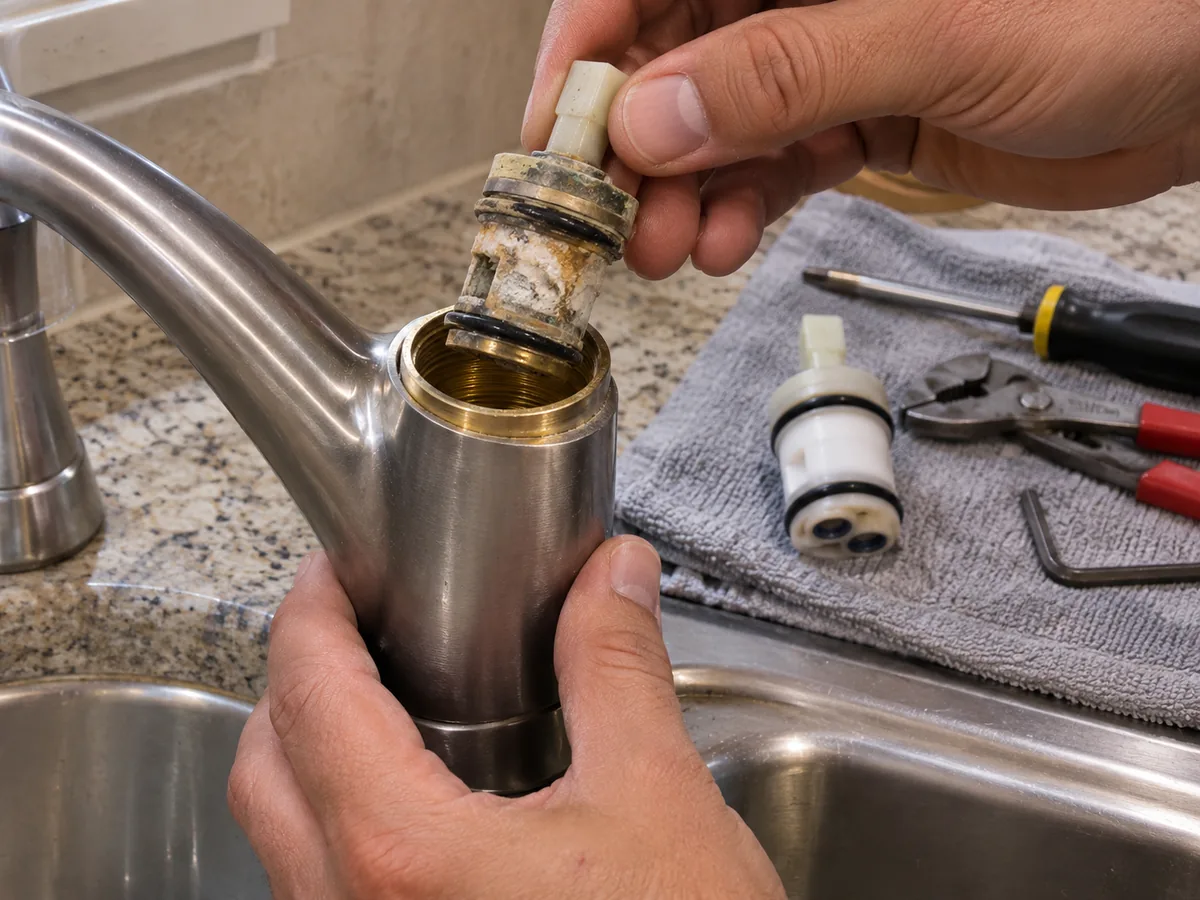
- Turn off the hot and cold valves under the sink, then open the faucet to drain pressure.
- Plug the drain so small parts do not fall in.
- Pop off the decorative cap and remove the handle screw.
- Take off the handle and remove the retaining clip or nut.
- Pull out the old cartridge. Take it with you to buy an exact match.
- Install the new cartridge facing the same way, then put everything back together.
- Turn the water back on slowly and test.
Check your faucet maker’s warranty first. Many major brands offer long warranties on parts for the original buyer and may send a new cartridge at little or no cost.
Can I fix a leaky faucet myself?
Often, yes. A cartridge or washer swap is a common DIY job. It gets harder when parts are seized with scale or the faucet brand is hard to identify. If the shut-off valves under the sink will not turn, call a plumber before you force them.
Repair or Replace?
- Repair if the faucet is fairly new, the brand is known, and parts are easy to get.
- Replace if it is old, heavily scaled, has more than one leak, or parts are hard to find.
A new faucet is also a good time to replace stiff shut-off valves and old supply lines under the sink.
What is the most common cause of a dripping faucet?
A worn cartridge or washer. In hard-water areas like El Paso, mineral buildup speeds up that wear.
Keep It From Coming Back
- Clean the aerator every few months with vinegar.
- Do not crank the handle hard to stop a drip.
- Have your water pressure checked if many fixtures leak.
- Think about whole-house water treatment if scale is a constant problem. Our guide on hard water plumbing in El Paso explains the options.
Fixing drips is one of the easiest ways to lower your water bill.
What It Costs in El Paso
A faucet repair or replacement in El Paso usually runs about $120 to $475, depending on the faucet, the parts and whether the shut-off valves under the sink are seized by hard-water scale. These are typical local ranges, not a quote.
Paso Plumbing has 30 years in the trade and repairs and installs kitchen faucets across El Paso, Horizon City, Socorro and the Fort Bliss area. You get the price before any work starts. See our faucet repair and sink installation service or call (915) 200-8525.
Frequently Asked Questions
How much water does a dripping faucet waste?
The EPA says one drip per second can waste more than 3,000 gallons a year.
Why does my kitchen faucet drip after I turn it off?
A little water left in the spout can drain out for a few seconds. A steady drip means a worn part.
How long do faucet cartridges last?
Many last several years, but hard water can shorten that.
Can hard water cause a faucet to leak?
Yes. Mineral scale keeps seals from closing and wears parts faster.
How do I know which cartridge my faucet needs?
Find the brand and model, or take the old cartridge to the store to match it.
Why is my faucet leaking at the base of the spout?
The O-rings are likely worn. Replacing them usually stops the leak.
Is a dripping faucet an emergency?
No, but fixing it soon saves water and prevents bigger wear.
Can I stop a drip by tightening the handle?
No. That can damage the cartridge or seat and make it worse.
Should I replace or repair an old kitchen faucet?
If it is heavily scaled, has several leaks, or parts are hard to find, replacing it often makes more sense.
How do I clean mineral buildup from my faucet?
Soak the aerator in white vinegar, then scrub with an old toothbrush and rinse.