
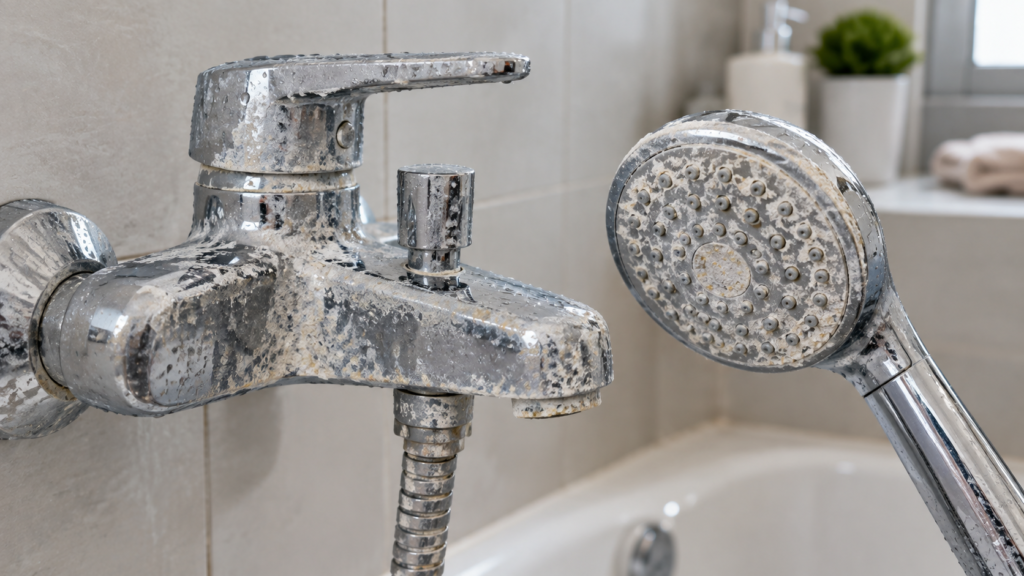
El Paso Water describes the city’s supply as moderately hard to hard, and that calcium and magnesium content leaves mineral deposits – scale – wherever water sits, evaporates, or squeezes through a small opening. Aerators, showerheads, cartridges, and valves usually show it first, before it ever reaches a full pipe. Hard water rarely explains a leak, a clog, or whole-house low pressure on its own – the fixture affected and how the problem developed matters more than “we have hard water” by itself.
Hard-water problems usually start small: a faucet loses flow, a showerhead sprays unevenly, white crust builds around a fixture. Scale can also collect inside narrow openings where it’s harder to see. Paso Plumbing helps El Paso homeowners tell normal mineral buildup apart from a deeper plumbing problem – the location of the symptom is what actually narrows it down.
Key takeaways:
- El Paso Water’s own FAQ describes the local supply as moderately hard to hard
- Small openings – aerators, shower nozzles, cartridges, fill valves – usually show restriction before larger pipes do
- Weak flow at one fixture isn’t the same thing as low water pressure throughout the house
- Older plumbing can make mineral restriction more noticeable, but age alone doesn’t prove hard-water damage
- Hard water contributes to drain buildup alongside hair, grease, and food waste – it’s rarely the sole cause
- The fixture affected and how quickly the problem developed matter more than assuming hard water explains everything
Why Hard Water Leaves Mineral Scale in El Paso Plumbing
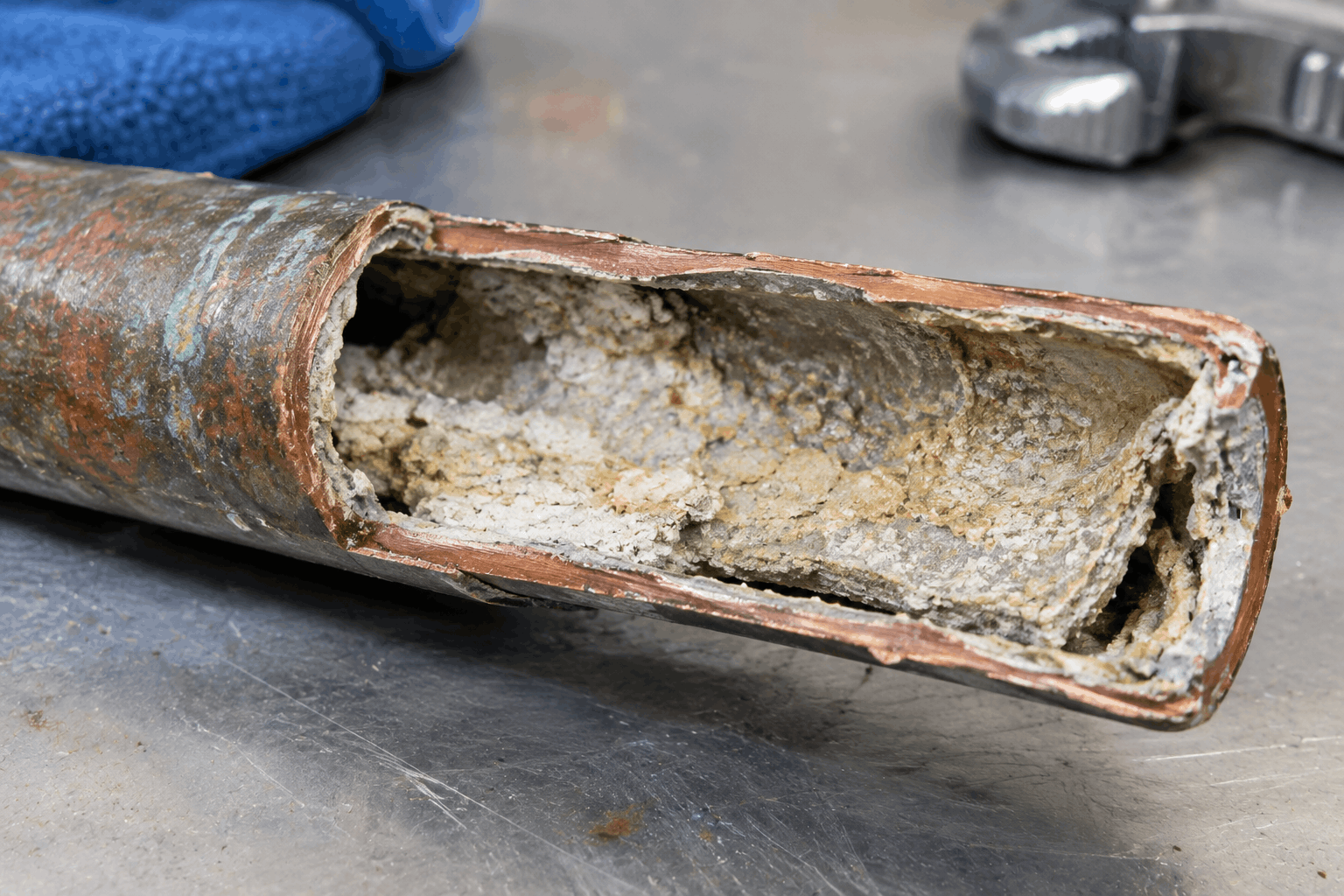
Hard water carries dissolved calcium and magnesium that pass through your plumbing invisibly – until some of it separates out and collects on a surface. The U.S. Geological Survey’s own explanation of water hardness confirms this mechanism directly: when hard water is heated or simply sits and evaporates, calcium carbonate can form solid deposits that clog pipes and reduce water pressure over time, the same way narrowing affects any pipe.
Deposits build wherever water evaporates, sits, or squeezes through a small opening – faucets, aerators, showerheads, valves, and pipe interiors can all develop a hard layer commonly called scale or limescale. It’s a slow process: each new deposit narrows a passage slightly and leaves a rougher surface for more minerals and residue to catch on. White or chalky crust around a fixture connection is the easy-to-see version of this – it confirms minerals are being left behind, but it doesn’t tell you how much buildup exists deeper in the system.
15 Ways Hard Water Can Affect Your Plumbing
1. Pipe scale. Mineral scale collects along the inside walls of supply pipes, reducing the open space over time. How much depends on pipe material, diameter, water use, and how long deposits have been allowed to build.
2. Reduced flow. A narrower opening means less water passing through at once – this can show up as weak flow at specific fixtures without meaning your whole-house water pressure has dropped.
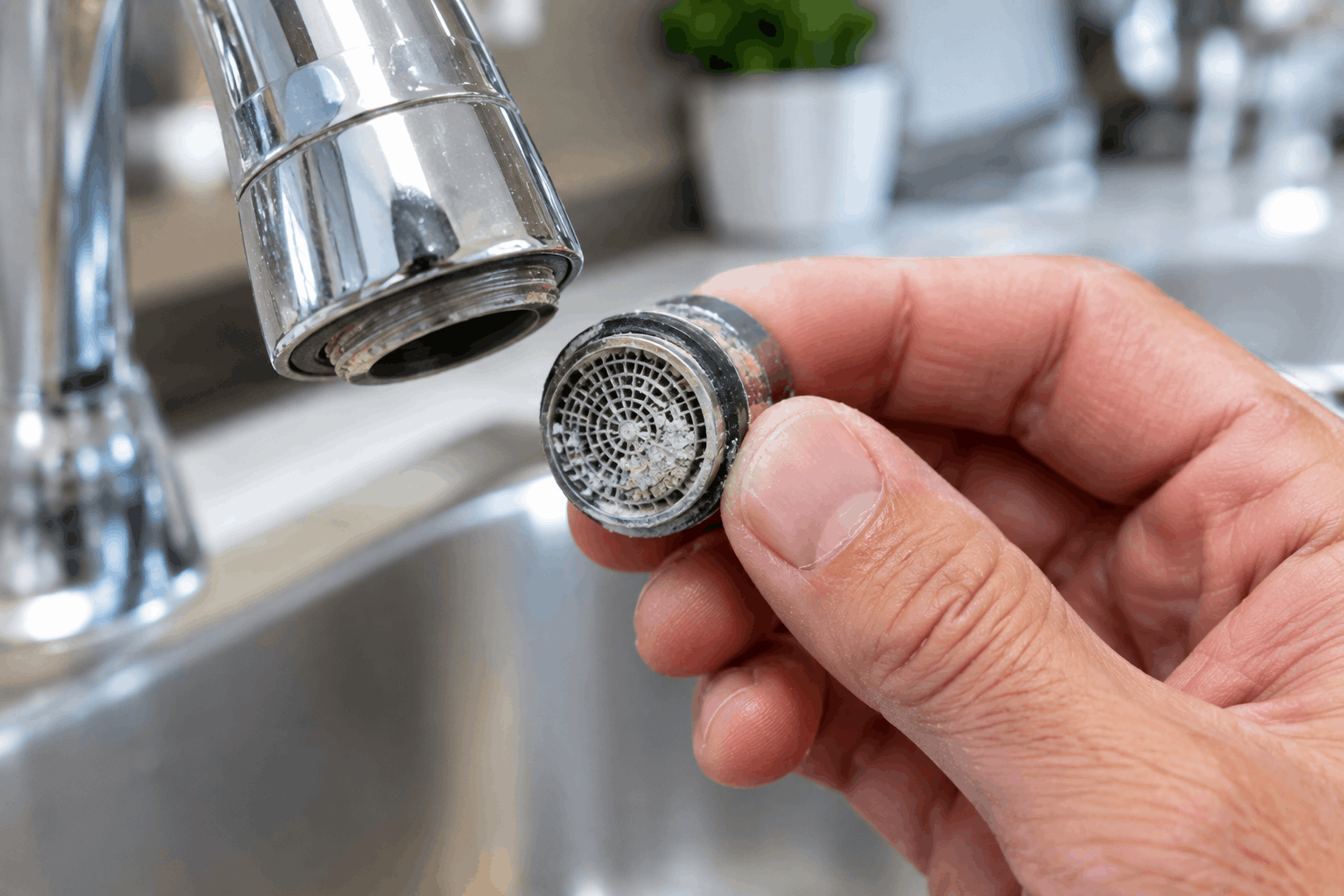
3. Aerator buildup. Faucet aerators have very small openings, so scale shows up here early – a partly blocked screen leaves the faucet with a weaker, uneven, or sideways stream. This is almost always a local restriction, not proof the whole system has low pressure, and it’s usually a quick fix during a faucet repair visit.
4. Shower nozzles. Deposits collect around the small holes in a showerhead – some holes block while others stay open, changing the spray pattern and reducing effective flow.
5. Faucet cartridges. Minerals collect around a cartridge’s moving parts – the handle gets harder to turn, flow gets less smooth. A worn cartridge can look identical, so the part’s actual condition matters alongside mineral buildup.
6. Shower valves. Mixing and pressure-balance valves rely on small moving parts to control flow and temperature – deposits can interfere with that movement, though worn cartridges or other issues can cause the same symptom.
7. Toilet valves. A fill valve uses narrow passages to refill the tank after each flush – deposits can restrict those openings and slow the refill, though worn valve parts or supply debris can look identical. A toilet repair usually resolves this either way.
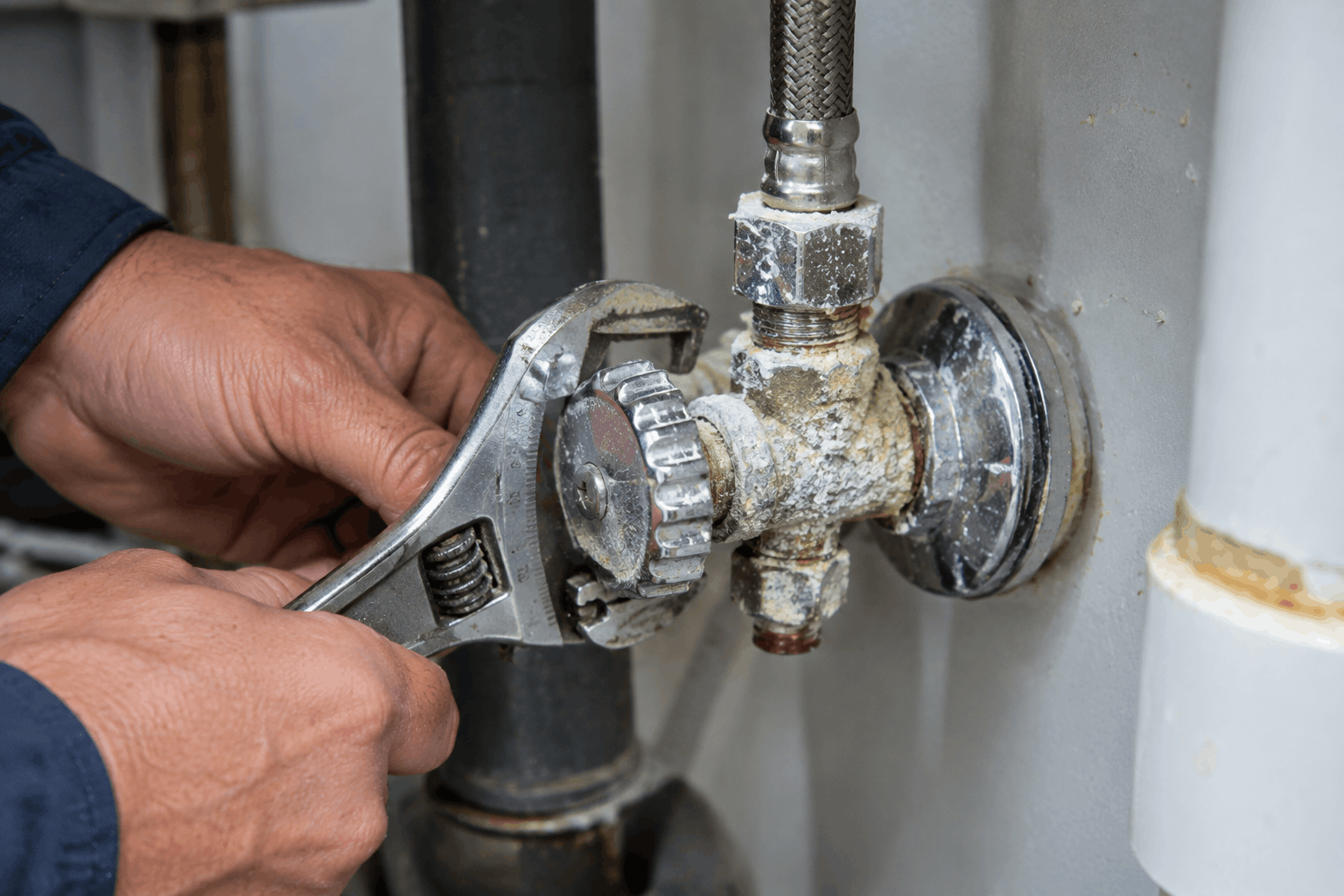
8. Shutoff valves. Scale can collect around internal moving parts, especially on a valve that hasn’t been operated in a while – it may feel stiff or resist moving, particularly alongside existing age-related wear.
9. White crust. Water reaching the outside of a fitting evaporates and leaves calcium and magnesium behind – visible confirmation that minerals are present, though it doesn’t reveal how much buildup exists inside the plumbing itself.
10. Soap scum. Calcium and magnesium react with soap to leave a stubborn film on sinks, tubs, and shower surfaces – different from hard scale, though the two often show up together, and more of it can wash toward bathroom drains over time.
11. Drain residue. Hard water isn’t usually the only reason a drain slows – mineral residue and soap scum coat parts of a drain and give hair or debris more to catch on, but grease, food waste, and other causes still matter. If a drain keeps backing up regardless, drain cleaning addresses the whole picture, not just the mineral share of it.
12. Older pipes. Older metal plumbing may already carry corrosion or rough internal surfaces before mineral deposits add to the problem. Older El Paso areas such as Sunset Heights, Manhattan Heights, and Ysleta – three of the City’s officially designated historic districts – may have homes with varied plumbing histories, so the pipe’s actual condition matters more than the neighborhood’s age.
13. Small passages. The same amount of scale takes up a much bigger share of a narrow opening than a large one – which is why an aerator or small valve loses flow while the main supply pipe still works fine.
14. Commercial use. Restaurants, offices, and multifamily buildings move more mineral-bearing water through fixtures every day, giving deposits more opportunity to form – the actual maintenance need still depends on usage and fixture design.
15. More maintenance overall. Hard water raises how often aerators, showerheads, cartridges, and valves need attention – the goal isn’t replacing parts just because hard water exists, but addressing buildup before it becomes a larger restriction.
Low Water Flow or Low Water Pressure? They’re Not the Same
A faucet or shower can have weak flow even when your home’s overall water pressure is completely normal – scale inside an aerator, showerhead, cartridge, or small valve opening limits what reaches that one fixture. That’s a local restriction, not a whole-house issue.
If several fixtures lose strength at the same time, the cause more likely sits upstream – a restricted supply pipe, a pressure-regulator problem, a leak, or another issue affecting more of the house. Hard water can contribute to some of these, but it shouldn’t be assumed before the location of the problem is clear.
| What You Notice | More Likely Issue | Possible Hard-Water Link |
| One faucet has weak flow | Aerator or cartridge restriction | Strong possibility |
| One shower sprays unevenly | Nozzle or showerhead buildup | Strong possibility |
| Toilet refills slowly | Fill-valve restriction | Possible |
| Several fixtures lose flow | Wider supply restriction | Needs diagnosis |
| Whole house has low pressure | Main supply, regulator, leak, or another issue | Not automatically hard water |
What Hard Water Does Not Automatically Explain
Leaks. Hard water doesn’t prove a slab leak, hidden pipe leak, or sudden break has occurred – those usually trace back to corrosion, damaged joints, ground movement, or pressure problems, which need their own leak detection rather than a hard-water assumption.
Sewer problems. Sewer lines carry wastewater, so their common failures look different from scale in pressurized supply plumbing – roots, damaged pipe, poor slope, or waste buildup are usually the more relevant causes for a recurring sewer-line issue, even though mineral residue can add to some drain-side buildup along the way.
Fixture failures. A slow toilet, a weak faucet, or a sticking valve doesn’t automatically mean hard water caused it – worn parts, debris, or a damaged component can create the exact same symptom, so the part’s actual condition matters as much as the presence of hard water.
Why Older El Paso Homes Need a Different Look
Older homes can carry a mix of pipe materials, old fixture parts, previous repairs, and years of accumulated mineral buildup – which is exactly why diagnosis matters more here, not less. Weak flow or a stiff valve could come from hard-water scale, ordinary wear, corrosion, or more than one of those at once.
Areas such as Sunset Heights, Manhattan Heights, Ysleta, and parts of Mission Valley include homes with long plumbing histories – but that doesn’t mean these neighborhoods automatically carry worse hard-water damage. It means the age and condition of the actual plumbing should be checked before assuming one cause, hard water included. A galvanized pipe, for example, may already carry internal corrosion scale; mineral deposits add to that restriction, but hard water shouldn’t get blamed for the full condition of an old pipe. Worth checking: pipe material, visible corrosion, fixture age, prior repairs, whether one fixture or several are affected, how fast the problem developed, and whether cleaning improves flow at all.
How to Reduce Hard-Water Buildup
Many problems start at easy-to-reach fixture parts, and regular cleaning can head off heavier restriction before it sets in:
- Clean faucet aerators
- Remove scale from showerhead nozzles
- Check slow-filling toilet valves
- Wipe mineral crust from fixture surfaces
- Inspect stiff shutoff valves
- Watch for repeated flow changes at the same fixture
If an aerator or showerhead keeps re-scaling, cleaning restores flow for a while; a cartridge or valve with heavy internal buildup may need actual service rather than surface cleaning – the right step depends on where the restriction sits.
On water softeners: some homeowners consider a softener or another scale-control system once buildup becomes a repeated concern, but it should match your specific water use, plumbing condition, and goals – not get treated as a default requirement. El Paso Water’s own FAQ confirms the city’s supply as moderately hard to hard, which makes buildup a real maintenance factor, but two homes on the same street can still have very different plumbing materials, fixture ages, and maintenance histories – so the right answer isn’t identical for every property.
When Is It More Than a Cleaning Problem?
Surface scale on a faucet or showerhead usually just needs cleaning if the fixture still works normally – that’s different from buildup inside a valve, pipe, or cartridge where flow or movement is already restricted. Cleaning has real limits: a worn cartridge, a damaged fill valve, a corroded shutoff valve, or another failed part needs repair or replacement whether or not mineral deposits are also present.
Signs it’s beyond cleaning:
- Flow stays weak after the aerator is cleaned
- A valve remains hard to turn
- A toilet still fills slowly after basic maintenance
- Several fixtures show reduced flow at once
- Visible corrosion around older metal plumbing
- The same fixture problem keeps returning
- A pipe appears heavily restricted
Heavy buildup inside older supply piping is a different problem from scale on a showerhead – surface cleaning can’t reach a restriction deep inside a line. That calls for checking the pipe material, the location of the restriction, and how much of it there actually is before deciding between pipe repair or repiping.
What to Check Before Blaming Hard Water
- Where does it show up? One fixture points local; several fixtures point deeper into the system.
- What are the visible clues? White deposits, weak or uneven flow, blocked nozzles, a stiff handle, a slow-filling toilet, a hard-to-move valve – these support a hard-water diagnosis, but don’t prove it alone.
- Hot, cold, or both? If it’s only hot water, the cause may sit in the water heater rather than the rest of the plumbing – see the [Heater Clue] below.
- How long has it been going on? Scale develops slowly. A sudden change points toward a failed part, debris, a leak, or a pressure issue instead.
Heater clue: if weak flow or temperature problems only show up on the hot side, the water heater itself is the more likely source – hard water affects tank and tankless units differently than it affects the rest of your plumbing, which is exactly what our water heater repair page walks through in more detail.
When Should You Have the Plumbing Checked?
Have it looked at when the same fixture keeps losing flow after cleaning, several faucets or toilets start showing problems at once, you notice corrosion or leaking connections, or a sudden drop in flow or a new leak appears without warning – sudden changes point to something other than ordinary mineral buildup. Paso Plumbing (TX License #12051) can inspect the affected part and separate surface scale from a worn component, older pipe restriction, or another plumbing condition – call (915) 200-8525 or request an estimate and we’ll help you figure out which one it actually is.
Protect Your Plumbing From Ongoing Mineral Buildup
If hard-water deposits keep affecting faucets, showers, toilets, valves, or your water heater’s performance, Paso Plumbing can help identify exactly where the restriction starts – a proper inspection separates simple mineral buildup from worn parts, older pipe problems, or a water heater issue that actually needs repair. Get in touch here and we’ll walk you through it.
Sources: El Paso Water – Frequently Asked Questions (water hardness classification, epwater.org); U.S. Geological Survey – Water Science School, “Hardness of Water” (scale formation mechanism, usgs.gov); City of El Paso Historic Preservation FAQ (historic district list, elpasotexas.gov); Paso Plumbing company information as published on pasoplumbing.com.