
Quick answer: The main difference in commercial vs residential plumbing is scale and risk. Commercial buildings use larger pipes, heavy-duty fixtures and equipment like backflow assemblies, grease interceptors and commercial water heaters. They follow stricter code, permit and testing rules, and downtime costs money. A business needs a plumber with commercial experience, proper insurance and the ability to work around business hours.
Pipes are pipes, right? Not quite. The water heater in a house serves one family. The water heater in a restaurant feeds a dish machine, prep sinks and hand sinks for hours without a break. A clog at home is an inconvenience. A clog in an office tower or a busy taqueria can close the doors. If you own or manage a business in El Paso, knowing the commercial vs residential plumbing differences helps you plan maintenance, budget for repairs and pick the right plumber.
The Main Differences at a Glance
- Scale. Commercial buildings have more fixtures, longer runs, bigger mains and, in many cases, several floors.
- Use. Restrooms, kitchens and equipment run all day, often by dozens or hundreds of people. Parts wear out much faster.
- Equipment. Backflow assemblies, grease interceptors, flushometers, floor drains, booster heaters and pumps are standard in commercial buildings and rare in homes.
- Rules. Commercial work involves more permits, inspections, utility programs and health rules.
- Downtime. A home repair can happen on a Tuesday afternoon. A business repair often has to happen before opening or after closing.
- Maintenance. Commercial systems need a schedule. Waiting for something to break costs more in lost business than the repair itself.
Is Commercial Plumbing Harder Than Residential?
It is more complex. Commercial systems are larger, carry more load, involve more code requirements and equipment, and repairs often have to be planned around customers, tenants and inspections.
That does not mean every commercial job is big. Replacing a flush valve diaphragm in an office restroom is quick. The difference is in what surrounds the job: access to mechanical rooms, building rules, after-hours scheduling, permits and the cost of having a restroom or kitchen out of service.
Pipes and Materials
Homes in El Paso commonly use copper or PEX for water lines and PVC or ABS for drains. Commercial buildings use many of the same materials, but in larger sizes and heavier grades. Cast iron is still common for drains in commercial buildings because it is quiet and holds up well. Main water lines are larger to feed many fixtures at once.
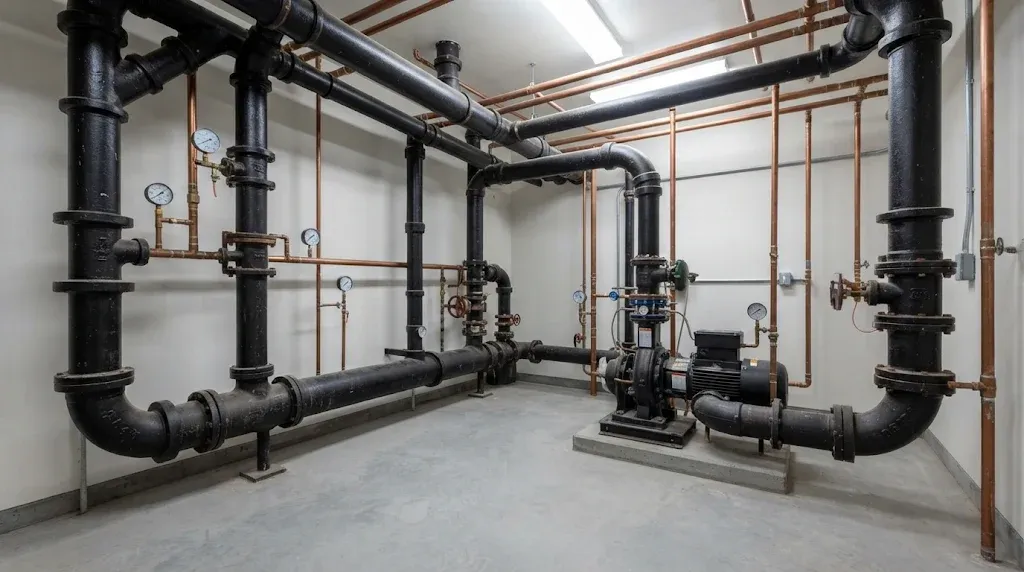
Multi-story buildings add more parts. Booster pumps push water to upper floors when city pressure is not enough. Pressure reducing valves protect lower floors from too much pressure. Drain stacks and vents have to be sized for the load from every floor. Our article on apartment plumbing problems shows how shared stacks spread problems from one unit to many.
Fixtures and Equipment You Mostly See in Commercial Buildings
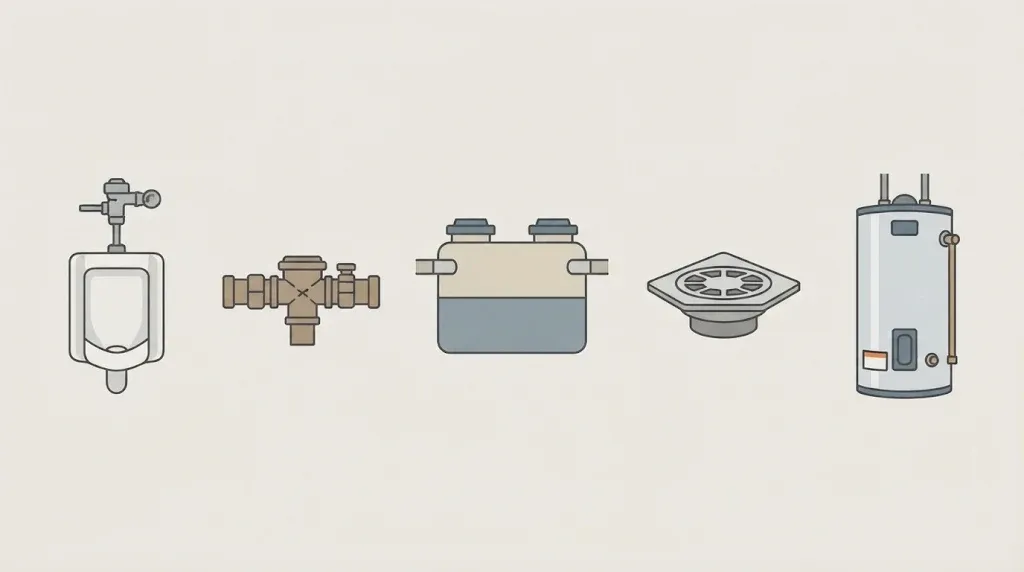
- Flushometers. Commercial toilets and urinals flush straight from the supply line. When they fail, they run nonstop. Our guide on what to do when a urinal won’t stop running explains the fix.
- Backflow assemblies. Required wherever a business could contaminate the public water supply. El Paso Water requires a yearly test. See our guide to backflow testing in El Paso.
- Grease interceptors. Restaurants need grease control equipment that is pumped and maintained on schedule.
- Sand and lint interceptors. El Paso Water’s commercial requirements call for sand traps in many car washes and laundries. Facilities with fewer than four washing machines are exempt.
- Floor drains and trap primers. Kitchens, restrooms and mechanical rooms have floor drains. Trap primers keep water in the trap so sewer gas stays out.
- Commercial water heaters and booster heaters. These are sized by gallons per hour and BTU, not tank size. Our article on a restaurant running out of hot water explains how sizing works.
- Mixing valves. Many businesses store water hot and temper it down for hand sinks to prevent scalding.
Codes, Permits and Inspections in El Paso
Both homes and businesses follow the plumbing code adopted by the City of El Paso, based on the International Plumbing Code with local changes. Commercial projects usually face more of it.
- Permits and inspections. New work, remodels, tenant buildouts and many repairs in commercial spaces need City of El Paso permits and inspections.
- El Paso Water rules. Businesses fall under El Paso Water’s cross-connection control program and, for food service, its fats, oils and grease rules.
- Health inspections. Restaurants and food businesses are checked for hot water at hand sinks, proper sanitizing temperatures, air gaps and drainage.
- Accessibility. Commercial restrooms often must meet ADA requirements for fixture heights, grab bars and clearances.
- Fire sprinklers. Many commercial buildings have sprinkler systems with their own backflow assemblies and testing.
Licensing: What Texas Requires
Texas does not issue a separate commercial plumbing license. The Texas State Board of Plumbing Examiners (TSBPE) licenses tradesman, journeyman and master plumbers. A plumbing company has to work under a Responsible Master Plumber, who must carry at least $300,000 in commercial liability insurance.
For a business owner, that means the license alone does not tell you whether a plumber knows commercial work. Ask about their experience with your type of building and equipment, and check the license at tsbpe.texas.gov.
Can a Residential Plumber Do Commercial Work?
Legally, a licensed Texas plumber can work on both. In practice, commercial jobs call for experience with larger systems, commercial equipment, permits and after-hours scheduling, so ask before you hire.
Many plumbing companies, including ours, handle both. Homeowners can see our residential plumbing services, and businesses can see our commercial plumbing services in El Paso.
Downtime and Scheduling
In a home, a two-hour water shutoff is an annoyance. In a restaurant, a medical office or an apartment complex, it affects customers, patients or tenants. Commercial plumbers plan work to keep that impact small:
- Scheduling before opening, after closing or on weekends
- Isolating one restroom or one wing instead of the whole building
- Notifying tenants ahead of a planned shutoff
- Keeping common parts on the truck so repairs finish in one visit
Maintenance Matters More in Commercial Buildings
Heavy use wears out parts faster, and failures cost more. A planned maintenance schedule catches small problems before they shut you down. A typical commercial plan includes:
- Yearly backflow testing for every assembly
- Grease interceptor pumping on a set schedule, plus kitchen line jetting
- Water heater flushing and inspection, more often in El Paso’s hard water
- Restroom checks for running flush valves, leaks and slow drains
- Camera inspections of main lines in older buildings or after repeat backups
Restaurants can use our restaurant plumbing maintenance checklist as a starting point.
Why Does Commercial Plumbing Cost More?
Larger parts, heavier equipment, permits, harder access and after-hours scheduling add cost. Planned maintenance usually costs far less than emergency repairs and lost business during a shutdown.
It also helps to compare costs the right way. A commercial repair may cost more than a similar home repair, but the cost of a closed kitchen or an unusable restroom for a day is often higher than the plumbing bill.
How to Choose a Commercial Plumber
Ask these questions before you hire:
- Is your license active, and who is your Responsible Master Plumber?
- Can you send a certificate of insurance?
- Have you worked on buildings like mine, such as restaurants, offices, medical or multifamily?
- Do you answer emergency calls 24/7, and do you charge more at night?
- Can you schedule work outside my business hours?
- Do you have jetting and camera equipment, and can you coordinate backflow testing?
- Will I get a written price before work starts?
Commercial Plumbing Services in El Paso
Paso Plumbing handles commercial plumbing for restaurants, offices, retail stores, medical offices and apartment complexes across El Paso, Horizon City and Socorro. We repair and replace commercial water heaters, flush valves and fixtures, jet and camera drain lines, and coordinate backflow testing, with emergency service around the clock. Call (915) 200-8525.
Commercial vs. Residential Plumbing FAQs
What is the difference between commercial and residential plumbing?
Commercial plumbing serves businesses and larger buildings, with bigger pipes, heavy-use fixtures, backflow assemblies and grease interceptors. Residential plumbing serves homes with smaller, simpler systems and fewer rules.
What does a commercial plumber do?
A commercial plumber installs, repairs and maintains plumbing in businesses and larger buildings, including restrooms, kitchens, water heaters, drain lines, backflow assemblies and grease interceptors, often outside business hours.
Does Texas have a commercial plumbing license?
No. Texas licenses plumbers by level, not by building type. Companies must operate under a Responsible Master Plumber who carries at least $300,000 in commercial liability insurance.
Do commercial plumbing repairs need a permit in El Paso?
Many do, especially new installations, remodels, water heater replacements and tenant buildouts. Small repairs like a new flush valve part usually do not. Your plumber should know which need one.
Why do commercial buildings use cast iron drain pipes?
Cast iron is quiet, durable and handles heavy use well, which matters in offices, hotels and multi-story buildings. Many older El Paso commercial buildings still have original cast iron drains.
How often should a business have its plumbing inspected?
At least once a year for most businesses. Restaurants, medical offices and apartment complexes with heavy use often benefit from quarterly checks of drains, water heaters and restrooms.
Can I use residential fixtures in my business?
Some small offices do, but busy restrooms and kitchens wear out residential fixtures quickly. Code, health and accessibility rules may also require commercial-grade fixtures in many spaces.
What plumbing does a restaurant need that a home does not?
Restaurants need grease interceptors, floor drains, hand sinks, a three-compartment sink, backflow protection, air gaps on equipment and a commercial water heater sized for the dish machine.
Is commercial plumbing work done after hours?
Often, yes. Commercial plumbers schedule planned work before opening, after closing or on weekends to keep businesses running. Emergencies are handled whenever they happen, day or night.
Why is planned maintenance important for businesses?
Commercial plumbing gets heavy daily use, and failures can close a business. Scheduled maintenance finds worn parts, buildup and leaks early, when repairs are smaller and easier to plan.
The Bottom Line
Commercial vs residential plumbing differs in scale, equipment, rules and the cost of downtime. Businesses have larger pipes, heavy-duty fixtures, backflow assemblies, grease control and commercial water heaters, plus more permits and inspections. In Texas, every licensed plumber can do both, so ask about commercial experience, insurance and after-hours scheduling, and keep a maintenance plan in place.