
Here is how to winterize a swamp cooler: turn off its power and water, drain the water line and the pan, clean out the mineral scale, unhook the pump, and cover the unit. Then close the vent inside your home. The most important step is draining the water line, because a full line can freeze and burst on the first cold night.
Swamp coolers, also called evaporative coolers, are a big part of life in El Paso. They work great in our dry heat. But when fall comes, many people forget about the cooler on the roof. That small water line can turn into a leak in your attic or ceiling.
Why Winterizing Matters in El Paso
Our winters are mostly mild, so it is easy to skip this job. But El Paso does get hard freezes. In February 2011, the city stayed below freezing for 78 hours in a row, says the National Weather Service. A full cooler line is one of the first pipes to freeze in a cold snap like that.
Winterizing also helps your cooler last longer. Our water is moderately hard to hard, so minerals build up in the pan and on the pads all summer. Fall is the best time to clean them, while the scale is still soft.
When should you shut down a swamp cooler in El Paso?
Shut it down once nights start to cool and you no longer need it, usually in October or early November. Do it before the first freeze. A good rule is to finish the job before Thanksgiving.
What You Need
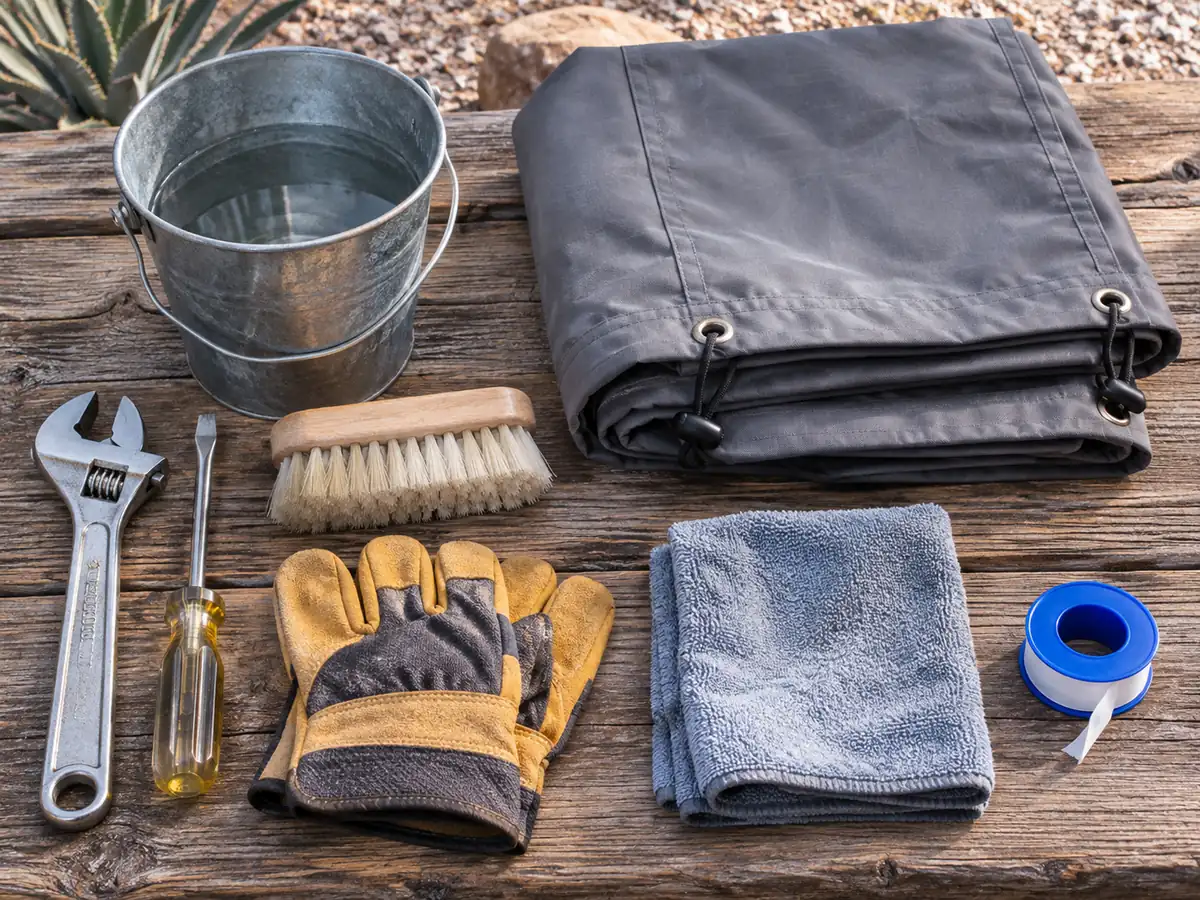
- A wrench or pliers
- A bucket and some old towels
- A shop vac or sponge
- White vinegar for mineral scale
- A stiff brush or plastic scraper
- A cooler cover that fits your unit
- A ladder, and someone to hold it
Safety first. Roofs are slippery and high. If you are not comfortable on a ladder or roof, call a pro.
Step 1: Turn Off the Power
Unplug the cooler or turn off its breaker. Never work on the pump or motor with the power on.
Step 2: Shut Off the Water Supply
Find the valve that feeds water to the cooler. It is often a small valve on a pipe in the attic, garage, laundry room, or near the water heater. Turn it off.
Not sure which valve it is? Follow the thin copper or plastic line from the cooler back into the house. If your home has no separate valve, you can add one. It is a small job that saves a lot of trouble.
Step 3: Drain the Water Line
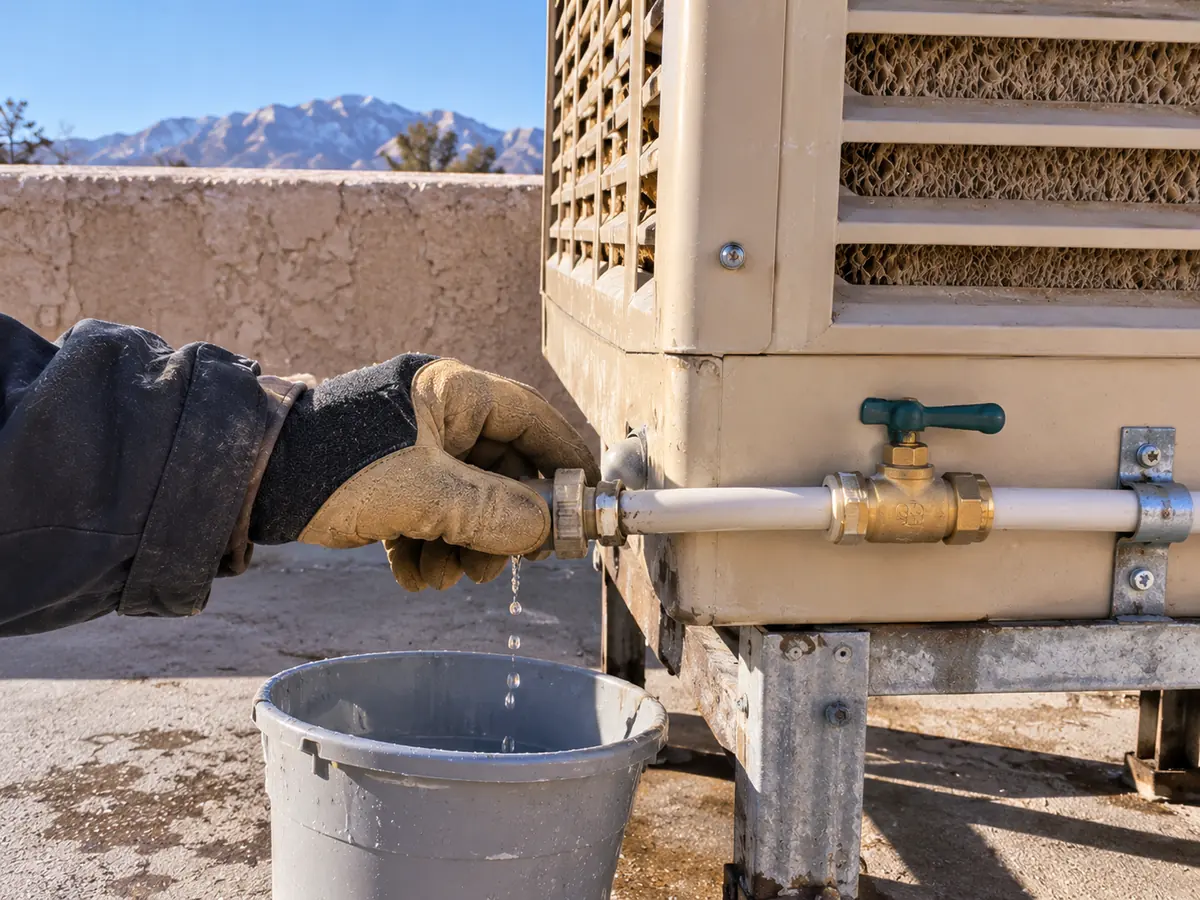
This is the step most people miss. Unhook the water line at the cooler and let it drain. Find the low point in the line and make sure it is empty. Some people blow out the line to clear any water left inside.
A full line can freeze, split, and then leak when it thaws. If that happens inside your attic, the water can soak your ceiling.
What happens if you do not drain the swamp cooler line?
The water inside can freeze and crack the line or the valve. You may not notice until spring, when you turn the water back on and it sprays or drips. Sometimes the leak shows up as a stain on the ceiling. Draining the line takes a few minutes and avoids that repair.
Step 4: Drain and Clean the Pan
Open the drain plug at the bottom of the cooler pan and let the water out. Then scrape out the mineral crust. White vinegar helps loosen hard scale. Rinse and dry the pan well.
Check the pan for rust or small holes. If it looks worn, coat it with a sealer made for cooler pans.
Step 5: Clean or Replace the Pads
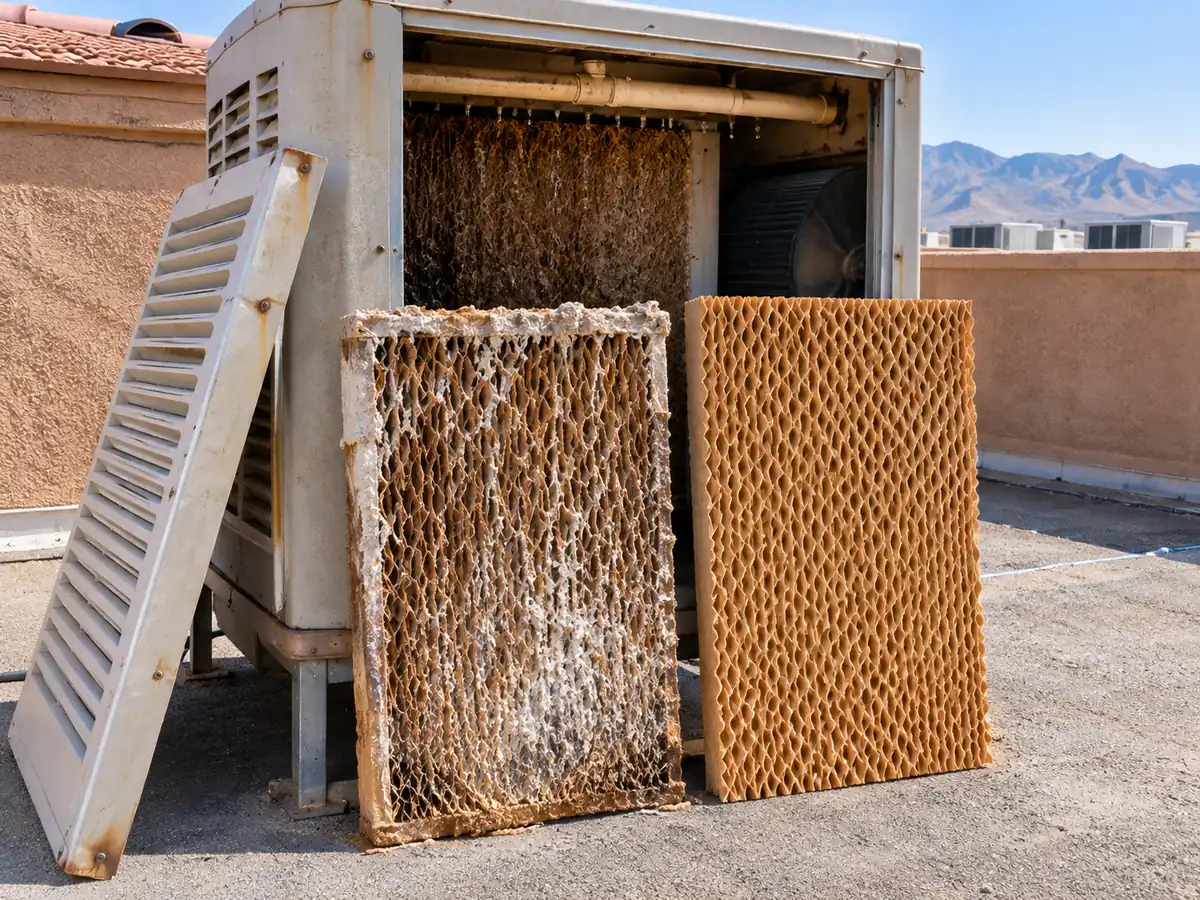
Take a close look at the pads. Thin fiber pads with heavy mineral crust should be replaced. Thicker rigid pads can often be washed down in the fall while the buildup is still soft.
Step 6: Unhook the Pump and Check the Float
Unplug the pump and lift it out of the pan, or set it where it can dry. Look at the float valve. If it sticks, it can let water run nonstop next summer.
Water use is a good reason to check it. In nearby Las Cruces, a cooler on a 1,500 square foot home uses about 12,457 gallons a season, according to the New Mexico Office of the State Engineer. A stuck float or open bleed line makes that number much higher. If your bill jumped this summer, our post on a high water bill in El Paso can help you find the cause.
Step 7: Cover the Cooler
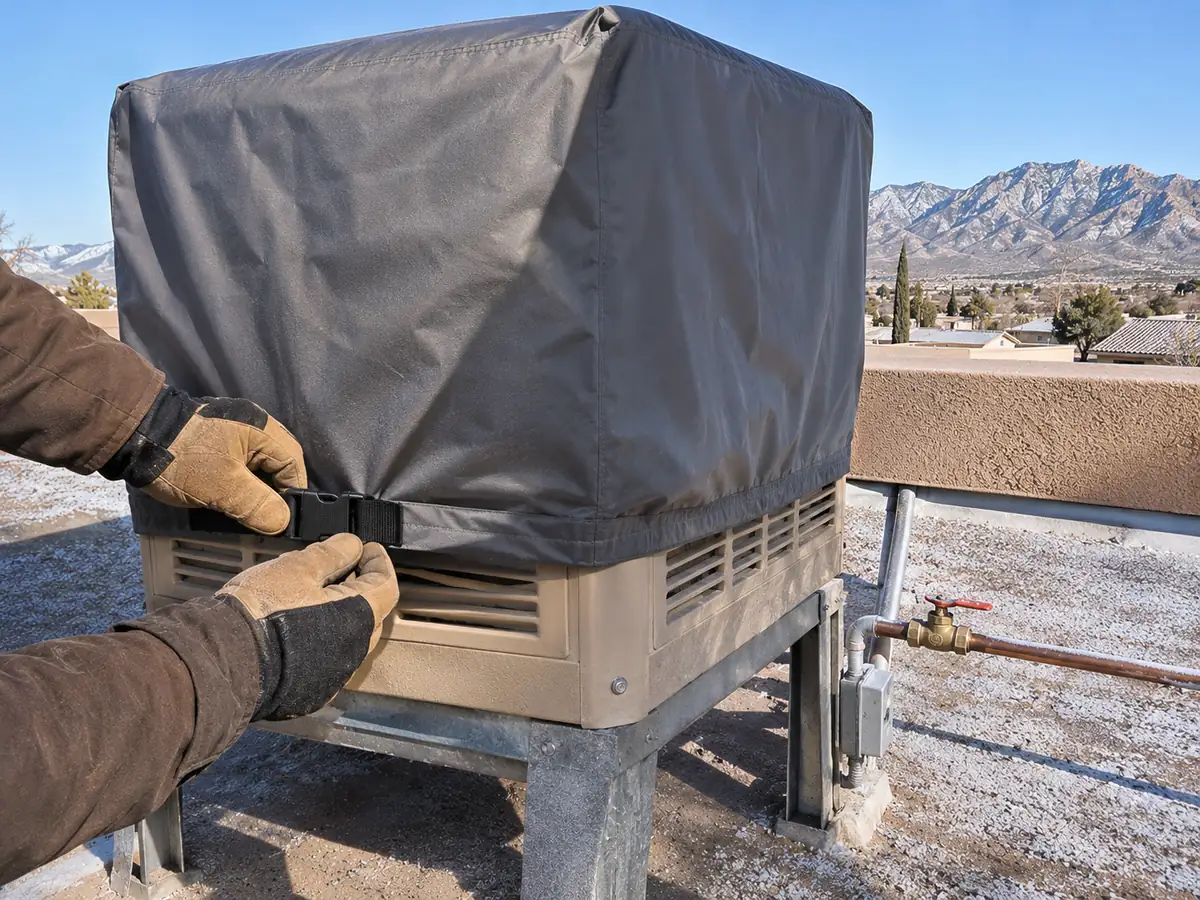
Put a cover over the outside of the cooler. This keeps out cold air, dust, and birds. A good cover also helps your heating bill, because it stops warm air from leaking out through the duct.
Step 8: Close the Vent Inside
Close the cooler damper or vent inside your home. Many people also put a cover over the ceiling vent from the inside. This stops cold drafts in winter.
Should you cover the cooler vent from inside the house?
Yes. Even with an outside cover, cold air can leak down through the duct. An inside vent cover blocks that draft and helps your heater work less.
How to Winterize a Swamp Cooler: Quick Checklist
| Step | Done? |
|---|---|
| Power off | |
| Water supply valve off | |
| Water line drained | |
| Pan drained and cleaned | |
| Pads cleaned or replaced | |
| Pump unhooked, float checked | |
| Outside cover on | |
| Inside vent closed |
Starting the Cooler Again in Spring
When spring comes, reverse the steps. Hook up the line, open the valve slowly, and look for drips at every joint. A line that froze over the winter often leaks right away. Fix any leak before you run the cooler.
When to Call a Plumber
Call a pro if:
- You cannot find the cooler’s water valve
- The line or valve is leaking
- There is a water stain on your ceiling
- You want a new shut-off valve added for the cooler
Paso Plumbing has 30 years in the trade and works on homes across El Paso, Horizon City, Socorro and the Fort Bliss area. We repair and replace cooler water lines and valves as part of our pipe repair service. For more winter tips, read our guide on how to prevent frozen pipes. Call (915) 200-8525 any time.
Frequently Asked Questions
Do I have to winterize my swamp cooler every year?
Yes. It only takes about an hour and helps prevent leaks, rust, and a cold draft through the vent.
Can I leave water in my swamp cooler over winter?
No. Standing water can freeze, crack the pan, and grow scale and rust. Drain the pan and the line every fall.
How do I find the water line for my swamp cooler?
Follow the small copper or plastic tube from the cooler back into the house. It often ties into a pipe in the attic, garage, laundry room, or near the water heater.
What kind of water line does a swamp cooler use?
Most use a thin 1/4-inch copper or plastic line. Plastic lines can crack in the sun over time, so check them each year.
Should I remove the swamp cooler pads for winter?
You can. Clean or replace them in the fall, then let them dry. Many people put in new pads in spring.
Do I need a cover for my swamp cooler?
Yes. A cover keeps out cold air, dust, and pests. It also helps lower your heating bill.
Can a frozen swamp cooler line leak into my ceiling?
Yes. If the line runs through the attic and splits, water can soak the insulation and ceiling. Drain it before the first freeze.
How much does it cost to fix a cracked swamp cooler line?
It depends on where the line runs and how much needs to be replaced. Paso Plumbing gives you the price before any work starts.
How do I clean mineral buildup from a swamp cooler pan?
Drain the pan, scrape off the loose crust, and soak the hard spots with white vinegar. Rinse and dry it well.
When should I turn my swamp cooler back on?
Most people start it again in April or May, once nights stay warm. Check the line for leaks when you first open the valve.