
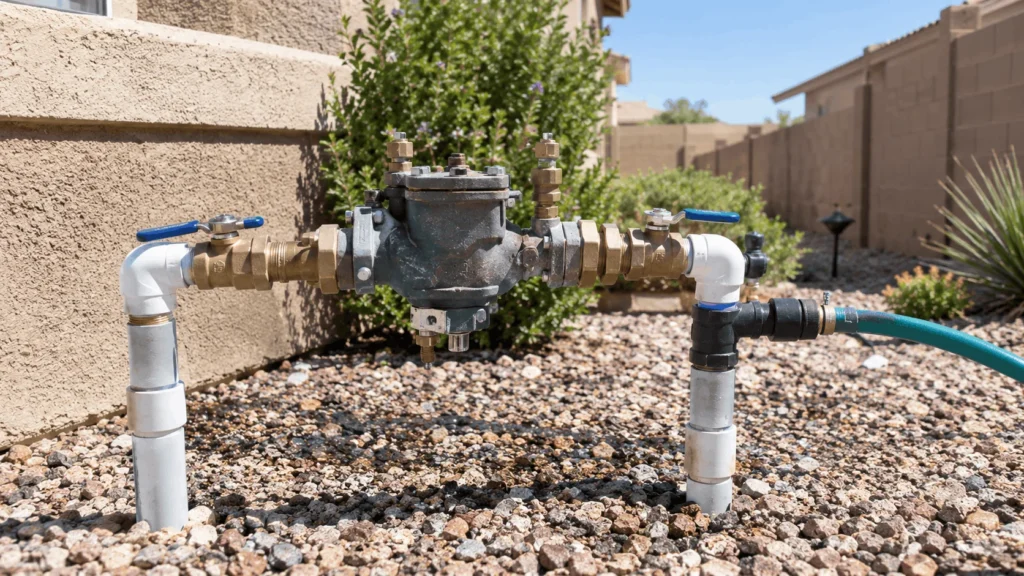
A backflow preventer is a device or air gap that stops water from flowing backward into your drinking-water supply. El Paso Water exempts single-family homes used only for residential purposes from its assembly requirement, but Texas rules require lawn sprinkler systems to connect through a backflow assembly, and other properties are evaluated individually.
Key points:
- What is a backflow preventer? A mechanical assembly (or physical air gap) that blocks reverse flow from a possible contamination source into the potable supply.
- Back-siphonage (supply pressure drops) and backpressure (your plumbing pressure rises above supply pressure) are the two causes of backflow.
- A cross-connection – a real or potential link between drinking water and another source – is what creates the risk.
- “Exempt” at the meter does not mean “never needed”: a home sprinkler system is a separate question.
What Is a Backflow Preventer?
Water normally flows from the utility toward your fixtures. A backflow preventer keeps it that way. El Paso Water describes a backflow prevention assembly (BPA) as a testable, mechanical device that uses valves to keep contaminated water from flowing backwards, and says it should be installed on the customer’s plumbing as close to the meter as possible.
What is a backflow preventer on a sprinkler system? It’s the assembly that separates your sprinkler piping – which can hold stagnant water, soil, fertilizer, or chemicals – from your home’s drinking water, so that a pressure change can’t pull that water backward into the supply.
How Does Backflow Happen?
Per El Paso Water, backflow comes from two conditions.
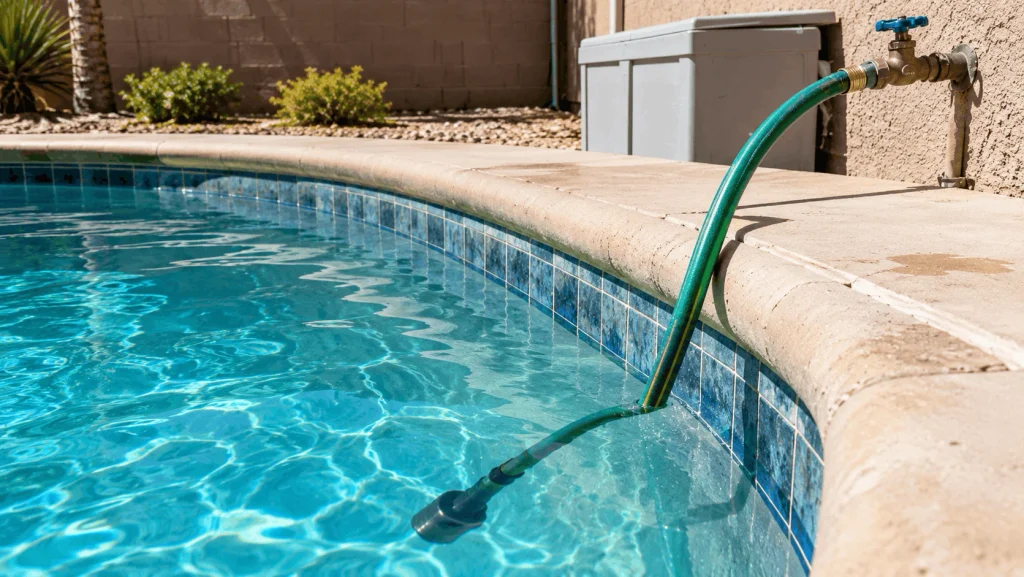
Back-siphonage is reverse flow caused by supply pressure falling below the pressure in a private plumbing system – a main break or heavy fire-hydrant use nearby can do it. A hose left submerged in a pool or bucket is the classic pathway.
Backpressure is the opposite: heating systems, elevated tanks, and other pressure-producing equipment push pressure in the customer’s plumbing above the supply pressure, so water can move toward the supply instead of away from it.
What Is a Cross-Connection?
A cross-connection is a point where the potable system is connected, or could be connected, to a non-potable source that could introduce contaminants. The Texas Commission on Environmental Quality’s consumer guide to backflow prevention lists three common home examples: a garden hose left running in a swimming pool or attached to an insecticide sprayer, a private well plumbed into the home’s supply, and a lawn sprinkler system. The question is never just whether another plumbing connection exists – it’s whether that connection gives unwanted substances a route into the drinking water.
When Does a Home Need Backflow Protection?
Irrigation and sprinklers. The same TCEQ guide states that its regulations require all lawn sprinkler systems to be connected through a backflow-prevention assembly. Sprinkler lines can hold stagnant water and whatever is in it, which is exactly what protection is meant to keep out. The right device depends on the installation and assessed hazard – don’t assume every sprinkler setup uses the same one.
Pools, wells, and other sources. Pools, private wells, auxiliary water sources, and systems that inject chemicals can all create cross-connections. What matters is whether the plumbing creates a pathway for reverse flow.
Property type. Single-family homes, multifamily properties, and commercial or specialized facilities are evaluated differently, based on water use, plumbing arrangement, and hazard.
What Does El Paso Water Require?
- Single-family homes used solely for residential purposes are exempt from assembly requirements at the service connection. Every other facility is inspected to determine its water use and whether an assembly is required.
- Installation must be done by a licensed plumber to EPWater’s installation requirements, and EPWater inspects the final installation.
- Containment assemblies must be approved by the University of Southern California Foundation for Cross-Connection Control and Hydraulic Research.
- Questions on approval or testing: El Paso Water lists 915-594-5782.
Does every home need a backflow preventer? Not a containment assembly at the meter – El Paso Water exempts single-family homes used solely for residential purposes. But that exemption doesn’t remove the TCEQ requirement that a lawn sprinkler system connect through a backflow assembly, so a home with sprinklers should have one on that system.
What Types of Backflow Preventers Are Used?
El Paso Water allows five device types, chosen by assessed hazard and installation type.
| Type | Simple purpose |
| Air gap | Physical separation between the supply and the receiving source |
| Pressure vacuum breaker (PVB) | Protects against back-siphonage in appropriate installations |
| Double check assembly | Two check valves in series to limit reverse flow |
| Reduced pressure principle assembly | Higher-level protection for applicable higher-risk hazards |
| Reduced pressure principle detector assembly | Specialized or larger applications |
The device should match the hazard rather than a generic list; a licensed professional or the utility determines which fits.
Does a Backflow Preventer Need Testing?
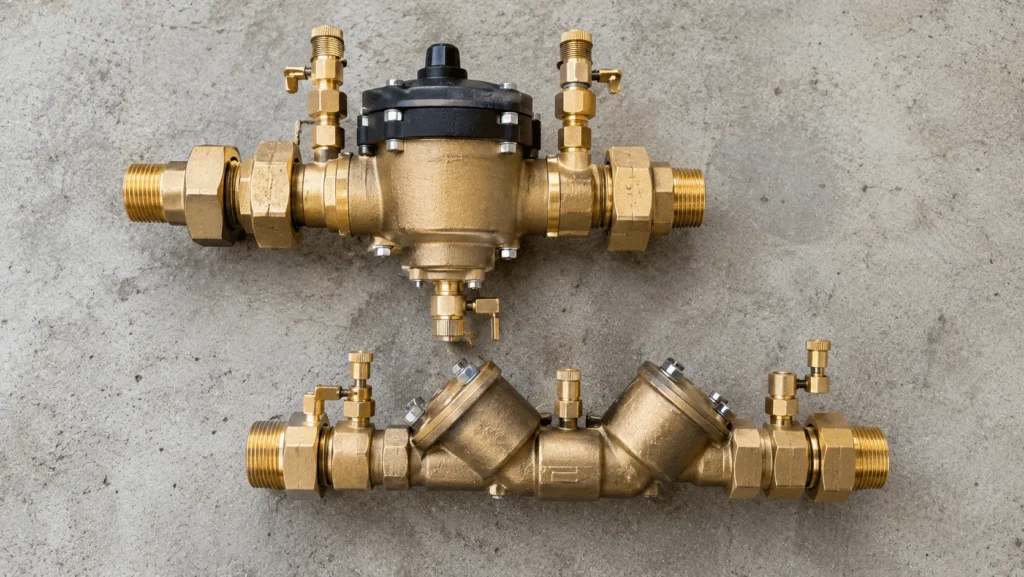
Yes. Like any mechanical device, an assembly can fail. El Paso Water says installed BPAs must be tested annually by a TCEQ-licensed tester and the original test report provided to EPWater. Containment assemblies must also be tested at installation, repair, or relocation, and those on new services must pass before water service is turned on. TCEQ’s guide adds that all assemblies must be tested at installation by a licensed tester, and those protecting against a health hazard annually. A failed assembly needs repair or replacement and a retest before it counts as protection.
What happens if a backflow preventer fails its test? It needs repair or replacement, then another test to verify it works. Until it passes, don’t treat it as protecting your water supply.
What to confirm for a home sprinkler assembly: El Paso Water’s testing language covers all BPAs and containment assemblies. For your specific residential irrigation assembly, confirm the exact annual-test requirement with EPWater at 915-594-5782.
Can an El Paso Backflow Preventer Freeze?
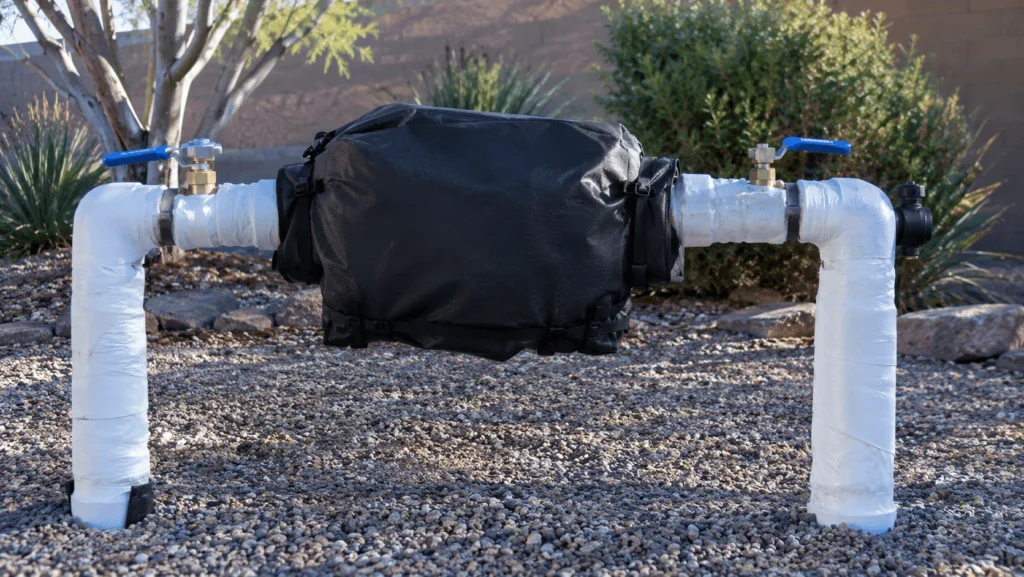
It rarely freezes in El Paso, but it does happen, and an above-ground assembly on an irrigation system is exposed. Frozen water can crack internal parts or the body and cause water loss. El Paso Water’s winterization steps: turn the sprinkler controller off; locate the above-ground device (it may be hidden behind shrubs); insulate or cover the pipes and device; turn off the isolation valve and open the bleeders with a small flat-head screwdriver. If it freezes or breaks, turn the water off at the meter. Repairs are the customer’s responsibility, and a licensed plumber may be needed – a burst assembly spraying water is an emergency, and any damaged supply piping around it may need pipe repair.
Can a backflow preventer freeze in El Paso? Yes. Outdoor, above-ground assemblies can freeze in cold snaps, especially on exposed irrigation plumbing. Covering or insulating them and bleeding the assembly beforehand reduces the risk.
Backflow Preventer vs. Sewer Backwater Valve
Is a backflow preventer the same as a sewer backwater valve? No. A backflow preventer protects the drinking-water supply from reverse flow through a cross-connection. A backwater valve addresses reverse flow from the drainage side – a different problem handled with sewer line service.
A Related Pressure Issue Worth Knowing
El Paso Water notes that non-return devices – including check valves, pressure-regulating valves, and in some cases water softeners – can create a closed domestic water system together with your water heater. In a closed system, heated water has nowhere to expand, so pressure can climb. If you see pressure swings or relief-valve discharge, have your water heater and its pressure relief checked along with the assembly.
When Should You Call a Plumber?
Call when you’re unsure whether a cross-connection exists, when your setup may need protection, or when an assembly leaks, freezes, fails a test, or must move because of an irrigation or plumbing change. El Paso Water requires installation by a licensed plumber and inspects the result. Paso Plumbing (TX License #12051) can inspect the plumbing around your assembly and tell you whether you’re looking at a repair, a replacement, or a test-and-certify situation – call (915) 200-8525 or request an estimate.
Sources: El Paso Water – Backflow Prevention (epwater.org); Texas Commission on Environmental Quality – “A Consumer’s Guide to Backflow Prevention in Texas,” GI-411 (tceq.texas.gov); Paso Plumbing company information as published on pasoplumbing.com.