
Here is how to flush a water heater: turn off the gas or power, shut the cold water valve, hook a garden hose to the drain valve, and let the tank drain until the water runs clear. Then close the valve, refill the tank, and turn the heat back on. In El Paso, plan to flush your tank at least once a year, because our hard water leaves more sediment.
That sediment is the gritty, white or tan material that settles at the bottom of the tank. It makes your heater work harder, can cause popping sounds, and can shorten the life of the tank. Flushing clears it out.
Why El Paso Water Heaters Need Flushing
El Paso Water describes our water as moderately hard to hard. That means it carries calcium and magnesium. You can check your own home with our guide on how to test water hardness at home. When water heats up, those minerals drop out and settle in the tank.
Over time, that layer:
- Makes the burner or elements work longer to heat water
- Causes popping or rumbling sounds
- Takes up space, so you get less hot water
- Can clog the drain valve
Water heater maker A.O. Smith says most tank heaters need flushing at least once a year, and more often where water is hard. You can read their maintenance guide here. For more on how minerals affect your heater, see our post on hard water and water heaters.
How often should you flush a water heater in El Paso?
At least once a year. If you hear popping, see sandy bits in your faucet screens, or notice less hot water, flush it every six months. Homes with very hard water or a water heater in a hot garage may need it more often.
What You Need
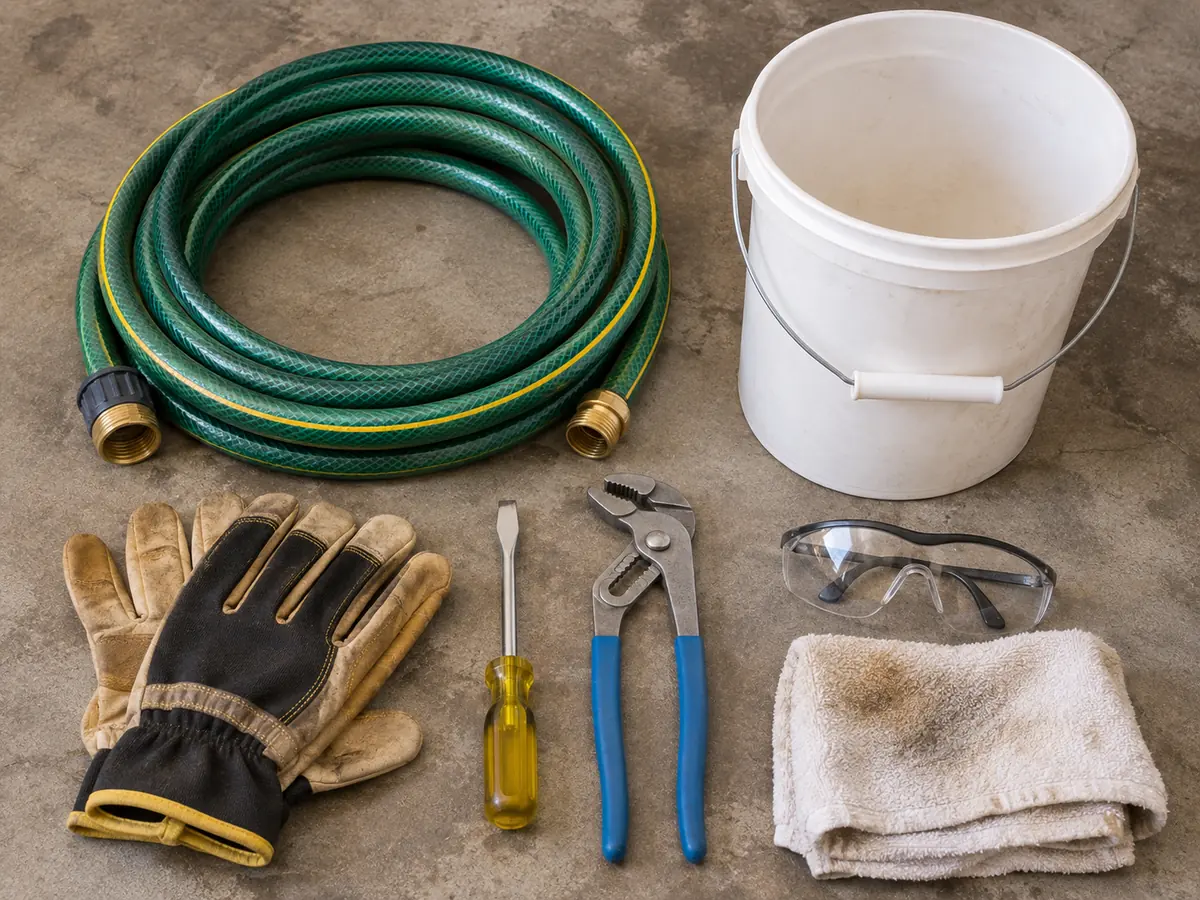
- A garden hose long enough to reach a drain or the yard
- A flathead screwdriver
- A bucket
- Work gloves
- About an hour
Safety first. The water in the tank can be very hot. Let it cool for a few hours, or flush it in the morning before anyone uses hot water.
Step-by-Step: How to Flush a Water Heater
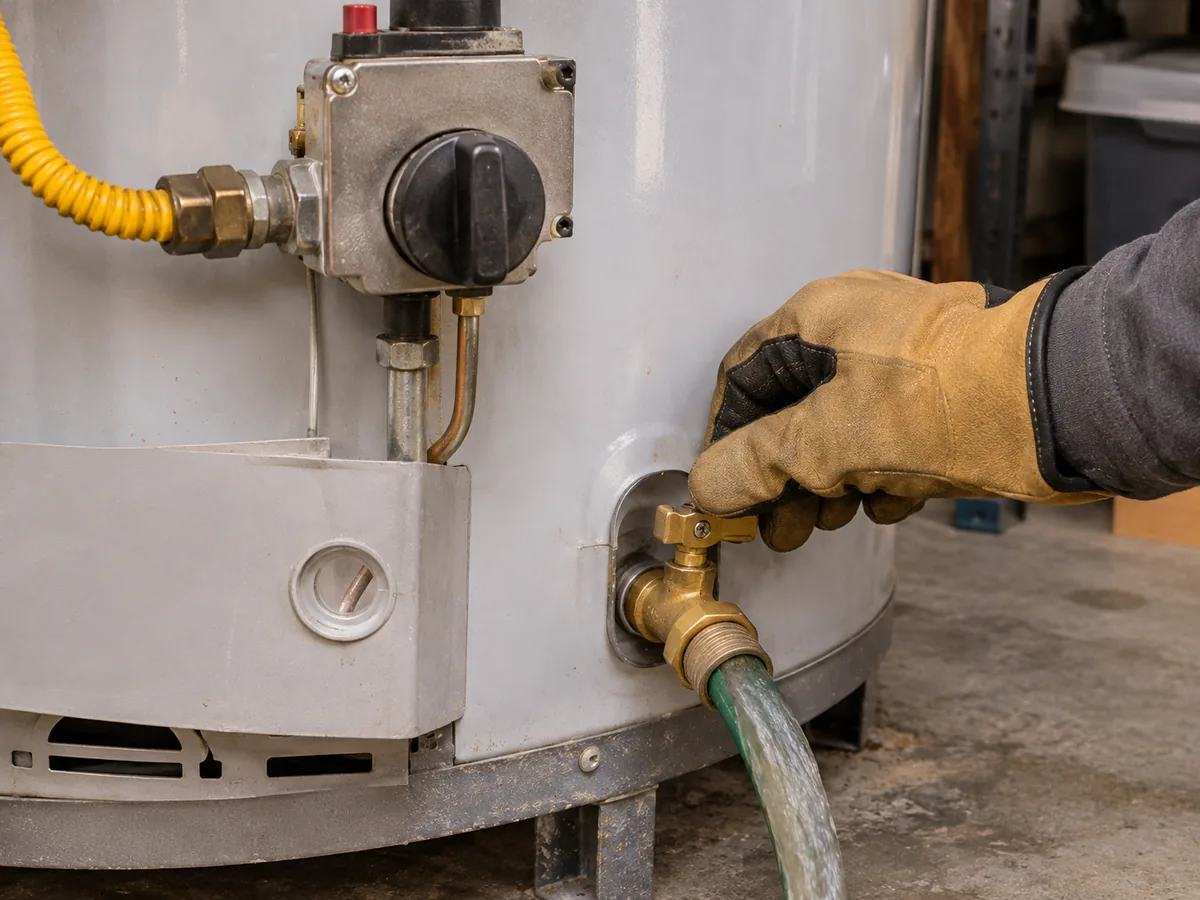
Step 1: Turn off the heat
For a gas heater, turn the gas control knob to “Pilot” or “Off.” For an electric heater, switch off its breaker. Never heat an empty electric tank. It will burn out the elements.
Step 2: Turn off the cold water
Find the cold water valve on the pipe at the top of the tank and turn it off.
Step 3: Hook up the hose
Screw a garden hose onto the drain valve near the bottom of the tank. Run the other end to a floor drain, the driveway, or a spot outside that can handle hot water.
Step 4: Let air in
Open a hot water faucet in the kitchen or a bathroom. This lets air into the tank so it drains faster.
Step 5: Open the drain valve
Open the drain valve by hand or with a flathead screwdriver. Let the tank drain. The first water out may be cloudy or full of grit.
Step 6: Flush with cold water
Once the tank is mostly empty, turn the cold water valve on for a minute, then off again. This stirs up the sediment left at the bottom. Repeat until the water out of the hose runs clear.
Step 7: Close up and refill
Close the drain valve and remove the hose. Turn the cold water back on. Leave the hot faucet open until water flows smoothly with no air. Then close it.
Step 8: Turn the heat back on
For gas, turn the knob back to “On” and relight the pilot if needed, following the label on your heater. For electric, wait until the tank is full, then turn the breaker back on.
What If the Drain Valve Is Clogged?
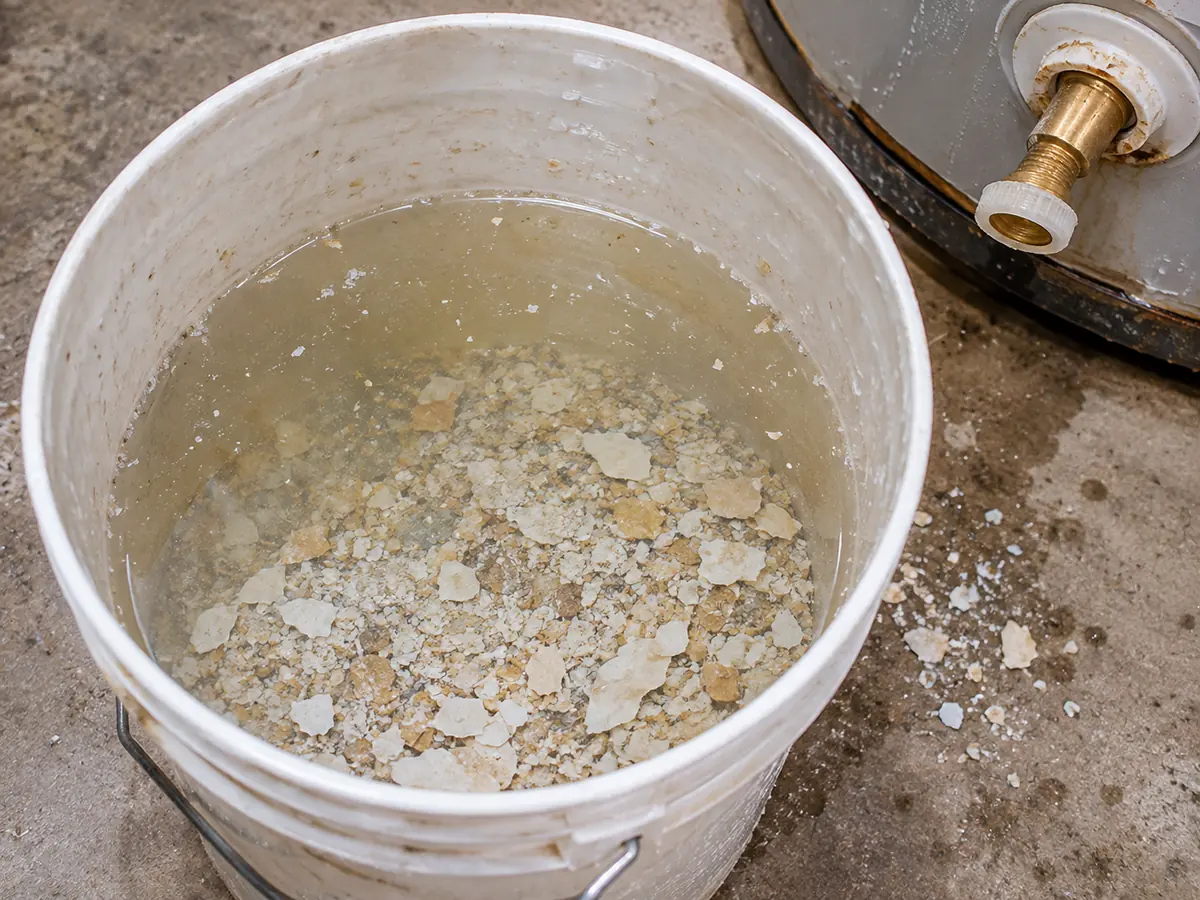
Old tanks in hard-water areas often have so much sediment that the drain valve clogs. If water barely trickles out, do not force it. Plastic drain valves can crack. Close it and call a plumber. A clogged valve is a sign the tank has not been flushed in a long time.
Should you flush an old water heater that has never been flushed?
Be careful. On a tank older than about 8 to 10 years that was never flushed, heavy sediment may be the only thing sealing weak spots. Flushing can start a leak. Have a plumber look at it first. It may be time to plan for a new heater.
Other Yearly Checks
While you are there, do these quick checks. A.O. Smith suggests them once a year:
| Check | What to do |
|---|---|
| Anode rod | Inspect it. Replace it if it is badly worn or shows bare wire. |
| T&P relief valve | Lift the lever briefly to make sure water flows, then let it snap back. |
| Temperature | Set to no higher than 120°F to prevent burns. |
| Leaks | Look for water under the tank or rust at the bottom. |
What is the popping sound in my water heater?
It is usually water trapped under a layer of sediment. As the burner heats the bottom of the tank, that water boils and pops through the minerals. Flushing the tank often stops or reduces the noise.
What About Tankless Water Heaters?
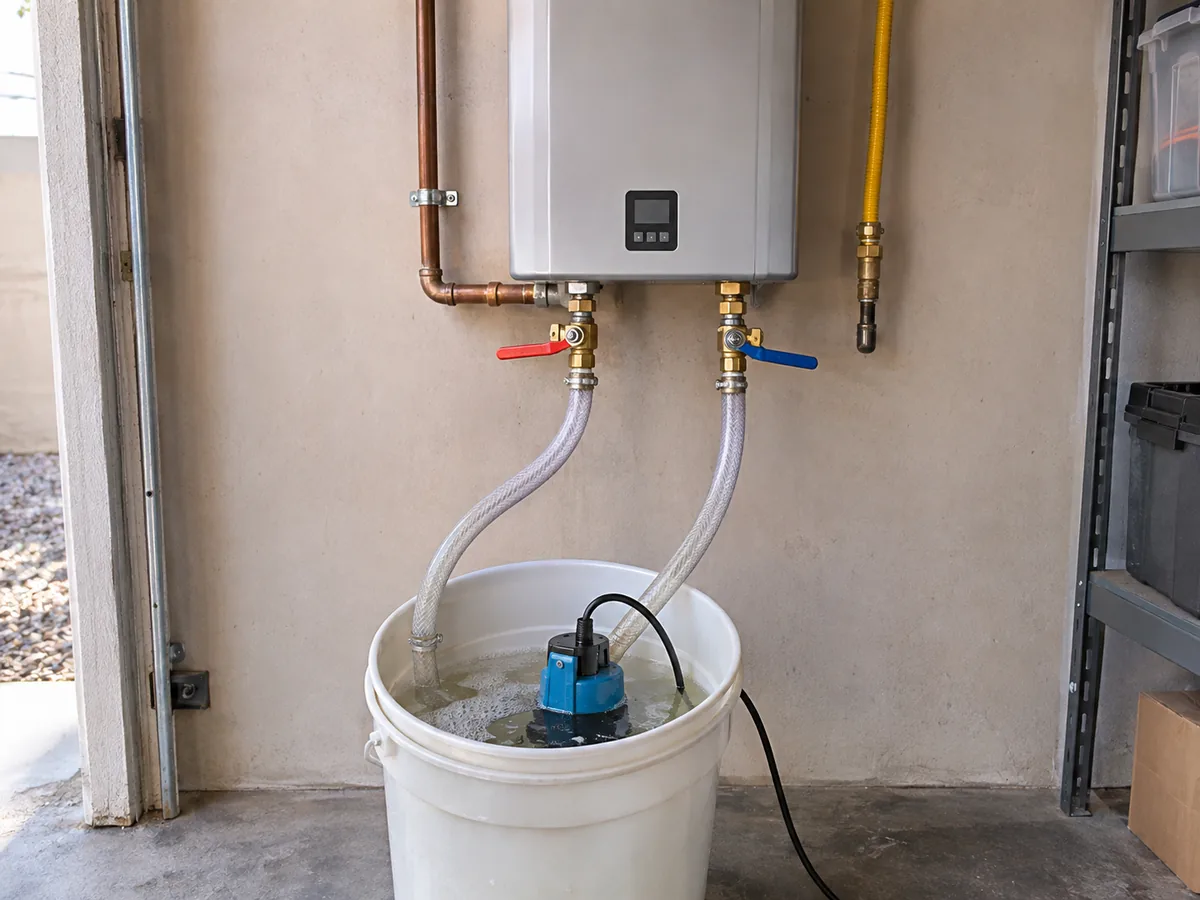
Tankless units do not store water, so they do not collect sediment the same way. But hard water still leaves scale inside. They need descaling instead of flushing. Most makers suggest running a vinegar or descaling solution through the unit with a small pump. Check your owner’s manual for how often.
Should You Flush It Yourself or Call a Pro?
Many homeowners can flush a newer tank on their own. Call a plumber if:
- The drain valve is stuck or clogged
- The tank is old and has never been flushed
- You see rust, leaks, or water under the tank
- The pilot will not relight
- You want the anode rod checked or replaced
A professional flush and inspection in El Paso usually runs about $110 to $200. Paso Plumbing has 30 years in the trade and services water heaters across El Paso, Horizon City, Socorro and the Fort Bliss area. Learn more about our water heater repair and replacement service, or call (915) 200-8525.
Frequently Asked Questions
Can flushing a water heater damage it?
On a newer tank, no. On an old tank that was never flushed, it can sometimes start a leak. Have an older tank checked first.
How long does it take to flush a water heater?
About an hour for most tanks. Heavy sediment can take longer.
Do I need to turn off the gas to flush my water heater?
Turn the gas control to “Pilot” or “Off” so the burner does not fire while the tank is empty.
Will flushing my water heater give me more hot water?
Often, yes. Sediment takes up space and slows heating. Removing it can help.
Why is my hot water cloudy or gritty?
Minerals or sediment from the tank are getting into your pipes. A flush usually helps. Check faucet screens for grit too.
Can I flush my water heater without draining it all the way?
A quick flush with the cold water on can push out some sediment. A full drain does a better job.
What does sediment look like?
It looks like white, tan, or gray grit, flakes, or small stones. In El Paso it is mostly calcium and magnesium.
How do I know if my anode rod is bad?
If it is thin, pitted, or shows bare steel wire, it needs to be replaced. A plumber can check it during a flush.
What temperature should my water heater be set to?
No higher than 120°F for most homes. It saves energy and lowers the risk of burns.
How much does a new water heater cost in El Paso?
A new tank water heater usually costs about $1,050 to $2,450 installed. Paso Plumbing gives you the price before any work starts.