
Here is how to prevent frozen pipes in El Paso: cover any pipe that sits outside or in a cold space, unhook your garden hoses, and keep your home at 55°F or warmer. On the coldest nights, let a faucet drip and open the cabinet doors under your sinks. Do these few things before a hard freeze, and most homes get through winter with no burst pipes at all.
Our winters are mild most of the time. That is exactly why freezes catch people off guard. Many homes here were never built for long cold spells, so a few simple steps go a long way.
Why Pipes Freeze in a Desert City
El Paso does not get many freezing nights. But when a real cold snap hits, it can be harsh. In February 2011, El Paso stayed below freezing for 78 hours in a row. On February 2, the high for the whole day was only 15°F, the coldest daytime high ever recorded here, according to the National Weather Service. Pipes burst all over town.
Here is why local homes are at risk:
- Pipes in outside walls. Many homes run water lines through exterior walls with little insulation.
- Attic and garage lines. Water heaters and pipes in garages or attics get very cold at night.
- Outdoor faucets. Hose bibs on stucco walls are open to the wind.
- Swamp cooler lines. The small water line that feeds a roof cooler freezes fast if it is still full.
- No habit of winter prep. When freezes are rare, people forget to get ready.
Water grows by about 9% when it turns to ice. That push can split a copper pipe or crack a fitting. Often the leak starts when the ice melts and water flows again.
At what temperature do pipes freeze?
Water freezes at 32°F, but pipes usually need colder air for a while before they freeze. Many experts say pipes are most at risk when it drops to about 20°F or below, as Angi explains. Pipes in drafty spots can freeze sooner, so do not wait for 20°F to get ready.
Step 1: Find and Cover Exposed Pipes
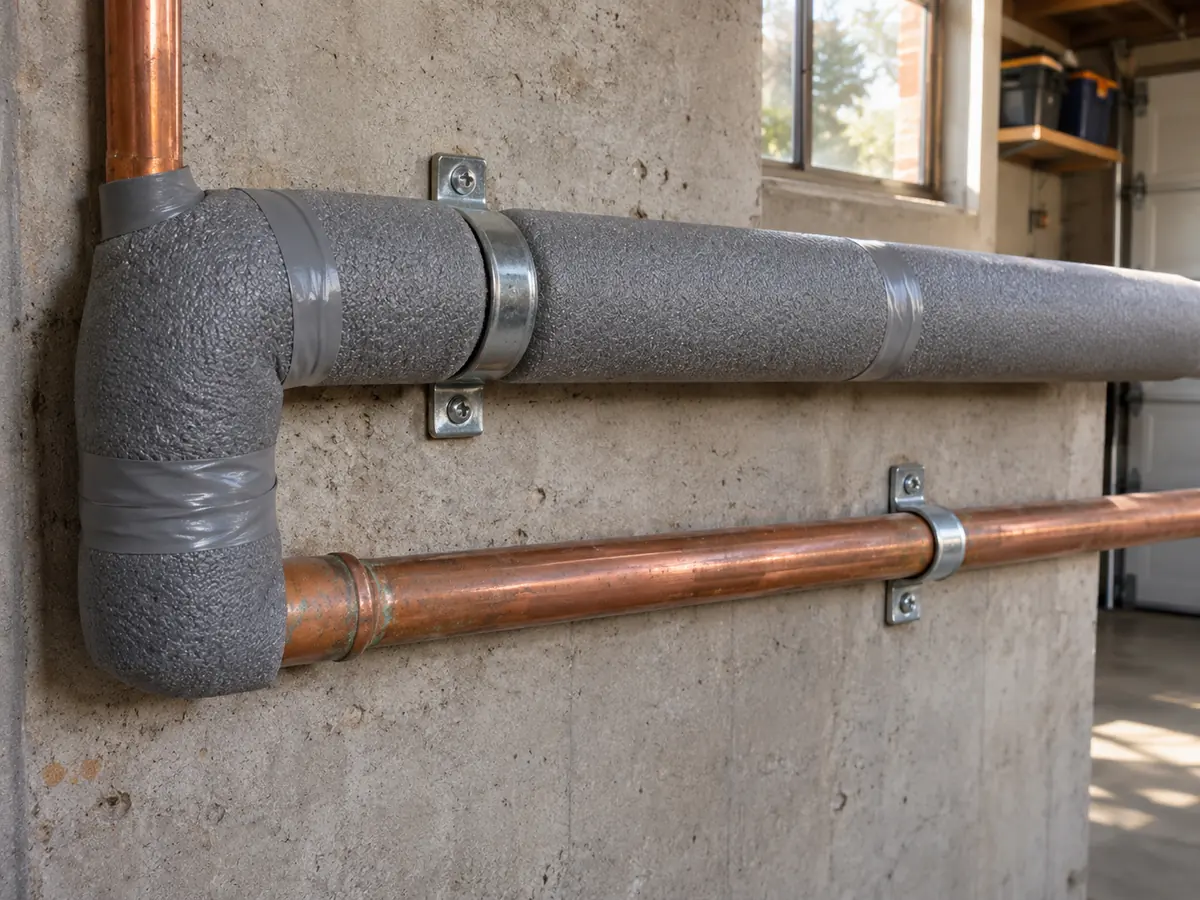
Walk around your home and look for pipes you can see. Check these spots:
- The outside walls where pipes enter the house
- Under sinks on outside walls
- The garage, especially near the water heater
- The attic, if any lines run up there
- The yard, around irrigation and backflow preventers
Cover these pipes with foam pipe insulation from any hardware store. It slips over the pipe and costs very little. El Paso Water also says you can wrap pipes with a towel or scrap material if you do not have insulation on hand. See their Protect Your Pipes page for more tips.
For pipes that are very exposed, you can add heat tape. Only use a listed product and follow the box instructions.
Does heat tape work?
Yes, heat tape works well on short runs of pipe that are hard to protect. It warms the pipe with a small amount of power. Use only a listed product, never wrap it over itself, and plug it into a GFCI outlet. Check it each fall for cracks or worn spots.
Step 2: Unhook Hoses and Cover Outdoor Faucets
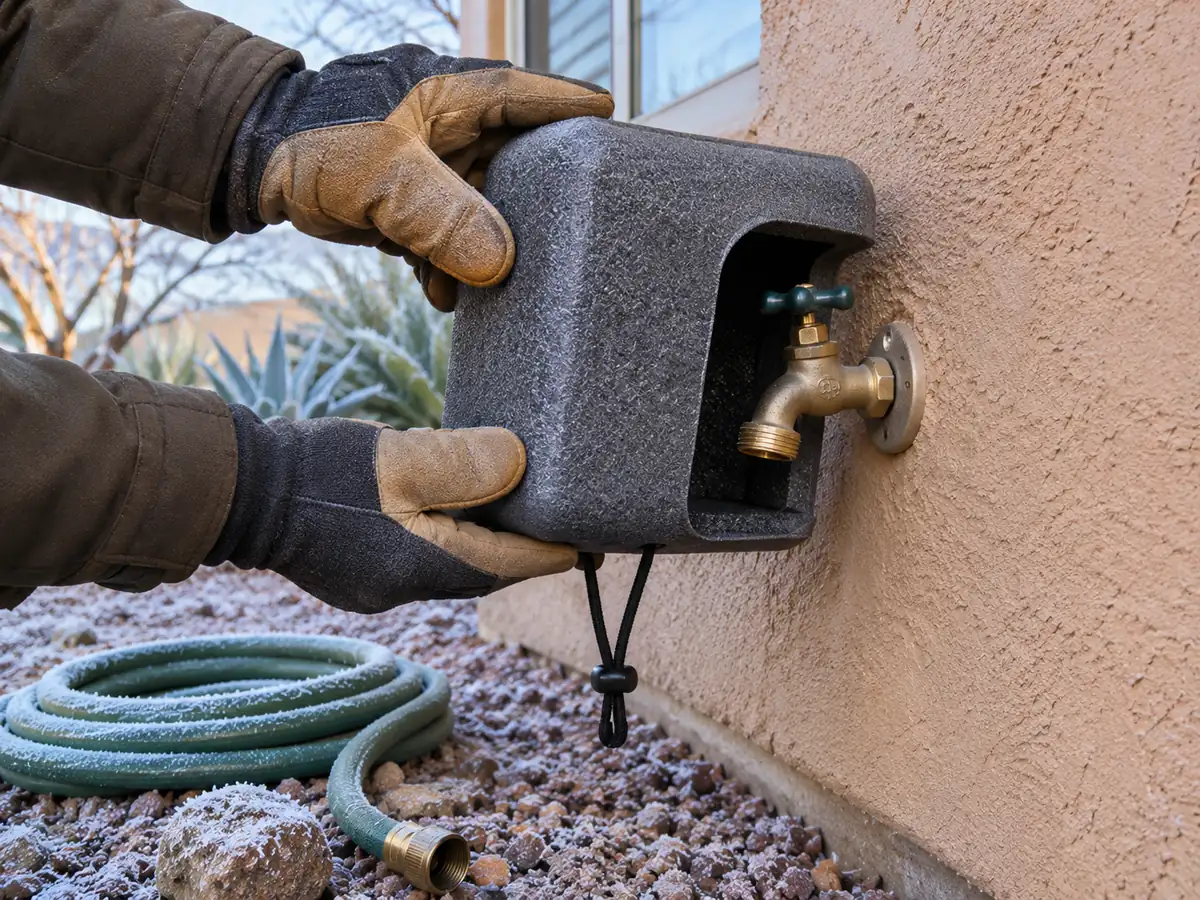
A garden hose left on a faucet traps water inside the faucet and the pipe behind it. When that water freezes, it can crack the pipe inside your wall. You may not see the leak until spring.
Do this before the first freeze:
- Unhook every garden hose.
- Drain the hoses and store them.
- Put a foam faucet cover over each outdoor faucet. A cardboard box works in a pinch.
If an outdoor faucet already drips or sprays, read our guide to what to do during a plumbing emergency before the cold sets in.
Step 3: Keep the House Warm, Day and Night
Keep your thermostat at 55°F or higher, even at night and even when you are away. A cold house is the most common reason pipes freeze inside the walls.
Some easy tips:
- Do not turn the heat way down at night during a cold snap.
- Leave your heat on if you travel. Set it to 55°F at the lowest.
- Keep the garage door closed if there are water lines or a water heater inside.
Step 4: Open Cabinet Doors and Drip Faucets
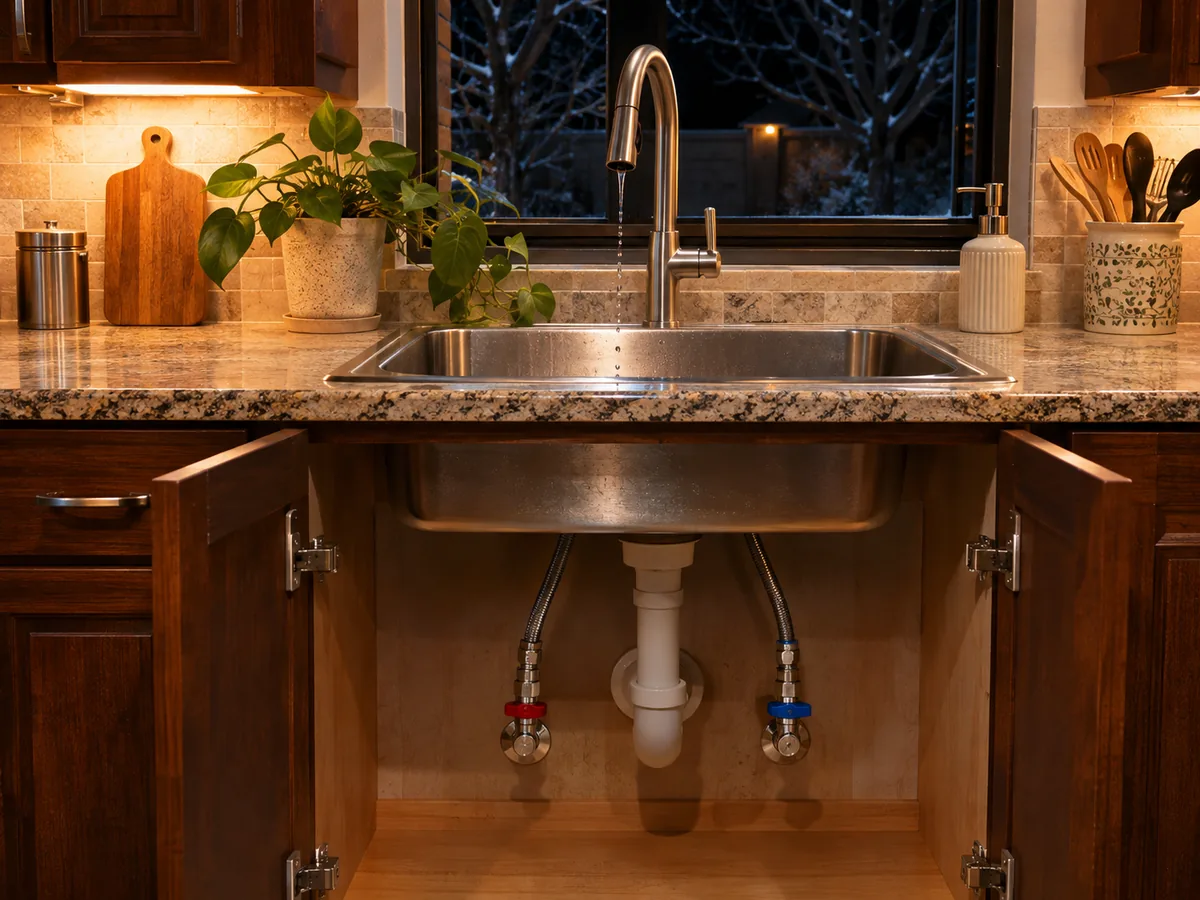
On very cold nights, open the doors under your kitchen and bathroom sinks. This lets warm room air reach the pipes.
Then let a faucet drip. Pick the one farthest from where water enters your home, and if you can, one on an outside wall. A slow drip keeps water moving, and moving water is harder to freeze.
Should you drip faucets in El Paso?
Yes, but only on hard-freeze nights, when lows drop into the low 20s or below. A thin, steady drip is enough. You do not need to drip every faucet. Focus on sinks along outside walls. Turn the drip off once the cold snap ends so you do not waste water.
Step 5: Shut Down the Swamp Cooler Line
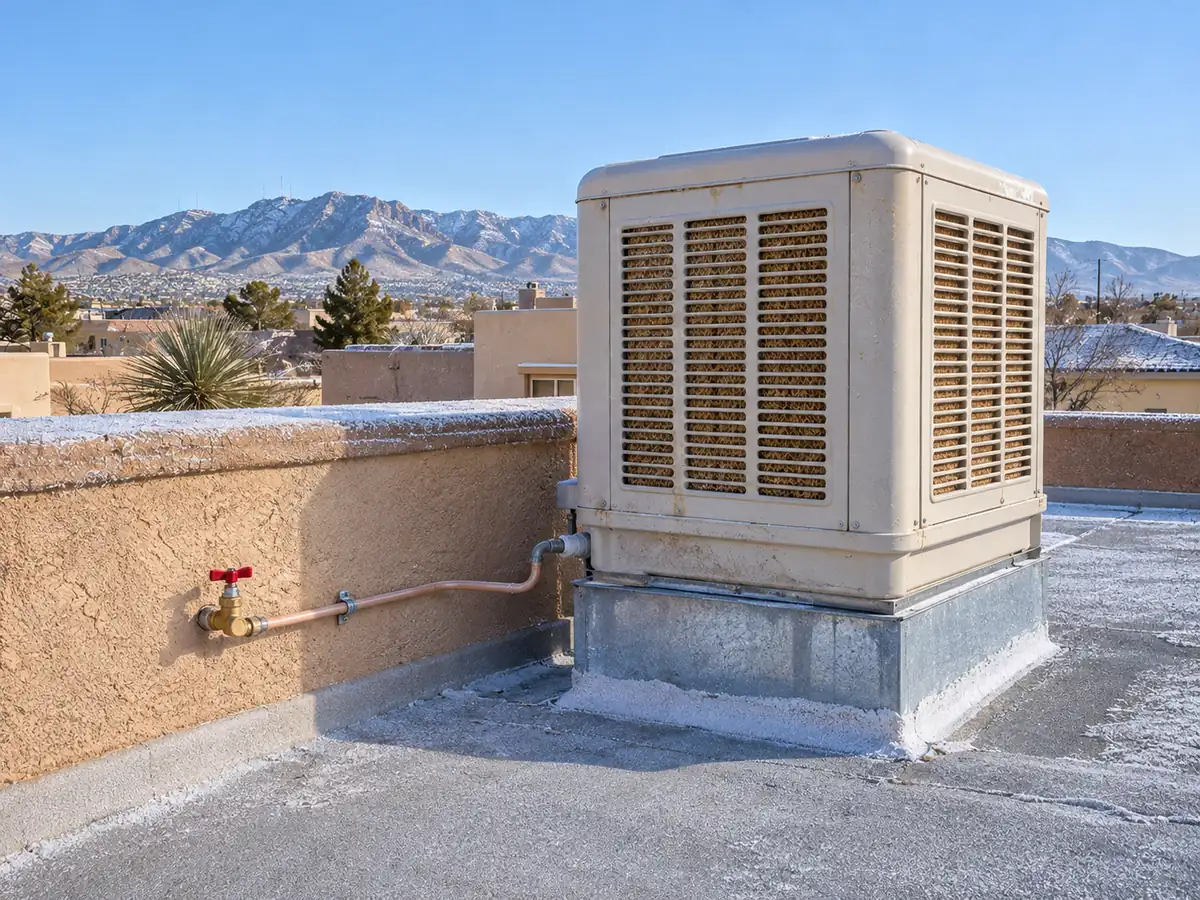
If you have an evaporative cooler on the roof, its water line is one of the first things to freeze. Turn off the valve that feeds the cooler, then drain the line and the cooler pan. Do this in the fall, not during the first freeze.
Step 6: Protect the Yard and Irrigation
Sprinkler lines and backflow preventers sit above ground and freeze easily. Drain them before winter and wrap the backflow preventer with an insulated cover. If you are not sure what that device is, our post on what a backflow preventer is explains it.
Step 7: Know Where Your Shut-Off Is
If a pipe does burst, every minute counts. Find your main water shut-off now, before you need it. In many El Paso homes it is near where the water line enters the house or in a box near the street. El Paso Water says you may need a wrench to turn off the meter.
Can you shut off the water to prevent frozen pipes?
Yes, if you will be gone during a freeze. Turn off the main water and open your faucets to drain the lines. Leave the heat on anyway. If you will be home, it is better to keep water on and drip a faucet, so the water keeps moving.
How to Prevent Frozen Pipes: Quick Checklist
| Task | When to do it |
|---|---|
| Insulate exposed pipes | Before December |
| Unhook and drain garden hoses | Before the first freeze |
| Cover outdoor faucets | Before the first freeze |
| Drain the swamp cooler line | October or November |
| Drain and cover irrigation backflow | Before the first freeze |
| Set heat to 55°F or higher | All winter |
| Open sink cabinets and drip a faucet | Hard-freeze nights |
| Find your main shut-off | Today |
What to Do If a Pipe Freezes Anyway
If you turn on a faucet and only a trickle comes out, a pipe may be frozen. Keep the faucet open. Warm the pipe slowly with a hair dryer or a space heater kept at a safe distance. Never use an open flame.
If you see water spraying or pooling, turn off the main water right away and call a plumber. Small leaks hide inside walls and add up fast, as we explain in our post on what a small leak can cost you.
Need Help Getting Ready for a Freeze?
Paso Plumbing has 30 years in the trade and works on homes across El Paso, from the Westside to the Eastside, Horizon City and Socorro. We can insulate pipes, fix outdoor faucets and repair burst lines. If a pipe breaks, our 24/7 emergency plumbing team answers day or night. Call (915) 200-8525.
Frequently Asked Questions
Which pipes freeze first in El Paso homes?
Outdoor faucets, swamp cooler lines and pipes in outside walls freeze first. Lines in garages and attics are next. Pipes in the middle of a warm house rarely freeze.
How long does it take for pipes to freeze?
It depends on the cold and the pipe. Exposed pipes can freeze in a few hours when it is far below freezing. Insulated pipes inside the house take much longer.
Do PEX pipes freeze?
Yes, PEX can freeze. It stretches more than copper, so it is less likely to split. But fittings can still crack, so protect PEX the same way.
Will frozen pipes thaw on their own?
They often thaw when the weather warms up. But a pipe may already be cracked, and it will leak the moment it thaws. Check for water after every hard freeze.
Should I leave my cabinet doors open all night?
Yes, on nights when it drops into the low 20s or colder. Close them again in the daytime if you have small children or pets.
Does homeowners insurance cover burst pipes in Texas?
Many policies cover sudden water damage from a burst pipe. Some may deny a claim if the heat was left off. Read your policy or call your agent to be sure.
Should I turn off my water if I travel in winter?
Yes. Turn off the main water, drain the faucets and leave the heat at 55°F or higher. Ask a neighbor to check the house if a hard freeze is coming.
How do I protect my sprinkler backflow preventer?
Shut off and drain the irrigation line before winter. Then cover the backflow preventer with an insulated bag or cover made for it.
How do I know if a pipe froze?
Little or no water comes out of a faucet, or you see frost on a pipe. You may also hear odd sounds when you open a tap.
Who should I call if a pipe bursts?
Turn off your main water first. Then call a licensed plumber. Paso Plumbing answers 24/7 at (915) 200-8525.