
So, is a water softener worth it in El Paso? For many homes, yes. Our water is hard enough to leave scale on fixtures, shorten the life of water heaters and wear out faucet parts, and a softener reduces that buildup. It is most worth it if you see heavy white crust, flush sediment from your water heater often, or plan to stay in the home for years. It is less worth it if you rent, plan to move soon, or are only bothered by spots on glasses.
A softener is not a must-have. It is a tool that trades a bit of upkeep and cost for less scale and longer-lasting plumbing.
How Hard Is El Paso Water?
El Paso Water describes local water as moderately hard to hard. Hardness comes from calcium and magnesium. Our supply blends river water, groundwater and desalinated water, so hardness can vary by neighborhood and time of year.
The best way to know your number is to test it. Our guide to testing water hardness at home shows simple ways to do it.
What Hard Water Does in Your Home
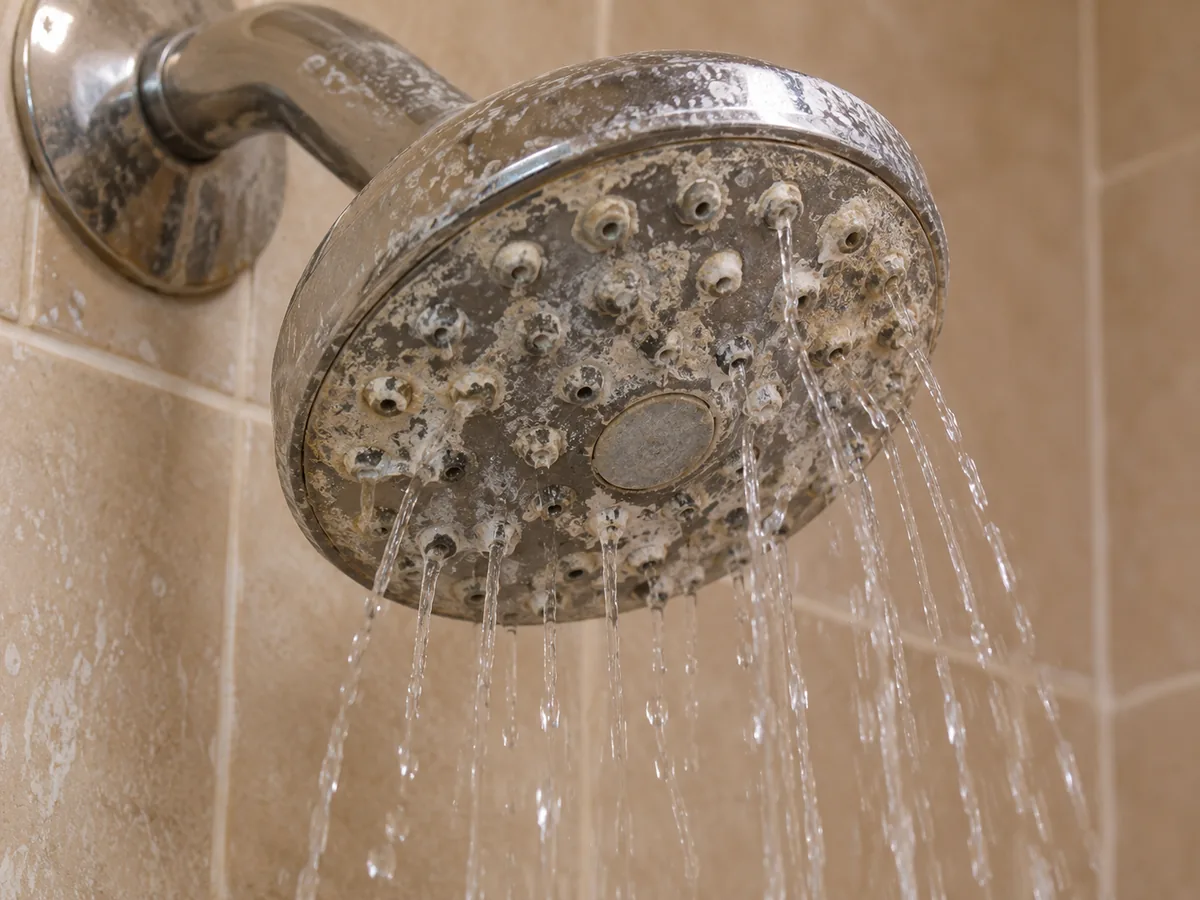
- Water heaters: Scale settles at the bottom of the tank and coats electric elements, which lowers efficiency and shortens life. Our post on hard water and water heaters explains more.
- Fixtures: White crust on faucets and showerheads, and clogged aerators. See our guide to white crust on faucets and showerheads.
- Faucet parts: Scale wears cartridges and seals, leading to drips.
- Appliances: Dishwashers and washing machines work harder and can wear out sooner.
- Daily life: Spots on dishes, stiff laundry, and soap that does not lather well.
How a Water Softener Works
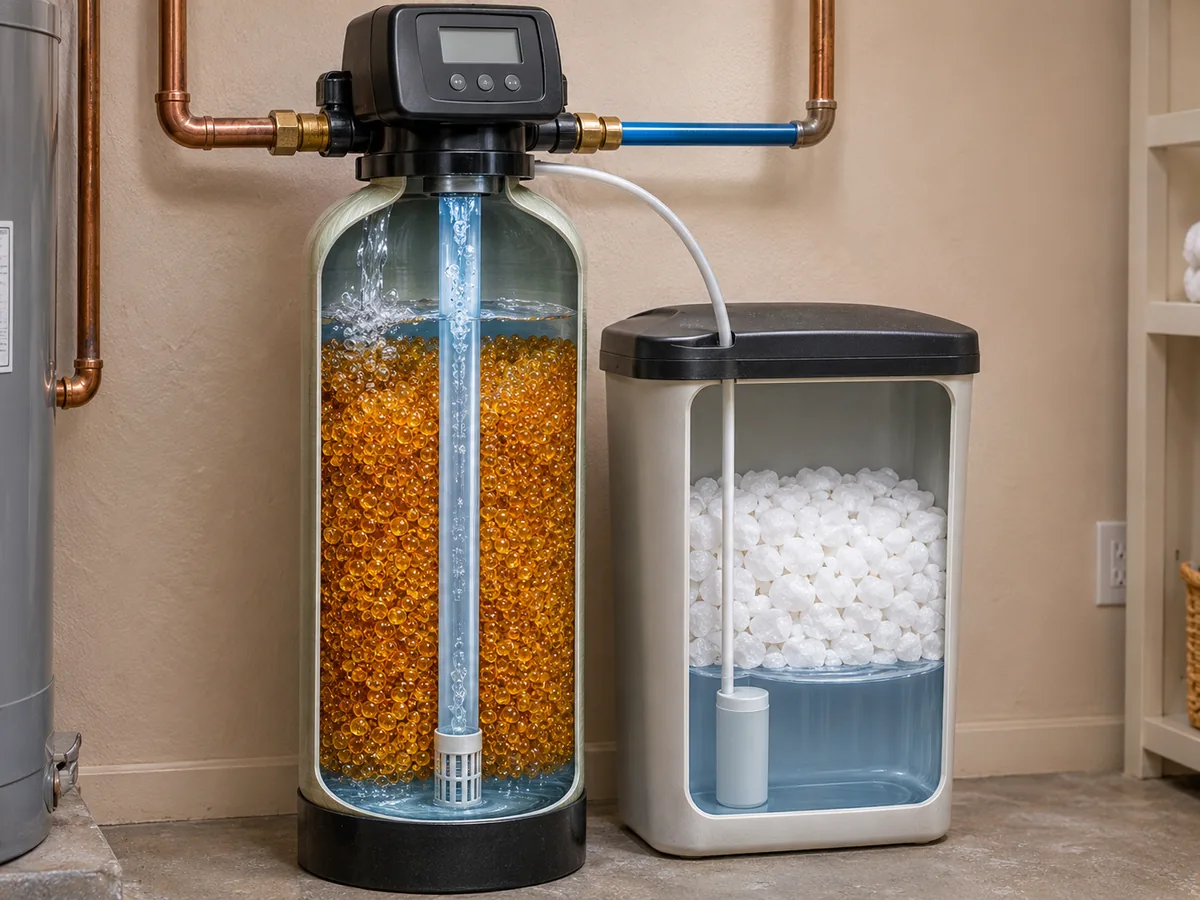
A traditional softener uses ion exchange. Water flows through a tank of resin beads that grab calcium and magnesium and swap them for sodium or potassium. Every so often, the system rinses the beads with salt water from a brine tank to recharge them and flushes that rinse down the drain.
Does softened water damage pipes or the water heater?
Softened water does not hurt pipes in normal use. It can make the anode rod in a tank water heater wear faster, so check the rod more often. Our post on the water heater anode rod explains why.
Pros and Cons
| Pros | Cons |
|---|---|
| Much less scale on fixtures and in pipes | Upfront cost of the system and install |
| Water heaters and appliances can last longer | Salt or potassium to buy and refill |
| Better lather, cleaner dishes and laundry | Uses some water to regenerate |
| Fewer faucet drips from scale | Adds a little sodium to the water |
| Less time cleaning crust | Needs space and a drain near the unit |
Is softened water safe to drink?
For most people, yes. It adds a small amount of sodium. People on low-sodium diets can use potassium chloride instead of salt, or keep one unsoftened tap for drinking and cooking.
Salt-Free Options
Salt-free “conditioners” do not remove hardness minerals. Many use a process that changes how the minerals behave so they are less likely to stick as scale. They need less upkeep and do not use salt or send brine down the drain, but they do not give the slippery feel of soft water or stop spots on dishes the same way. Ask for independent test results before you buy.
Who Benefits Most in El Paso
- Homeowners planning to stay several years
- Homes with a tankless water heater, which is very sensitive to scale
- Families with heavy crust on fixtures and frequent faucet repairs
- Homes with newer appliances they want to protect
When might a water softener not be worth it?
If you rent, plan to move soon, or only notice light spotting, the cost may not pay off. A whole-house filter, regular cleaning, and a yearly water heater flush may be enough.
Upkeep
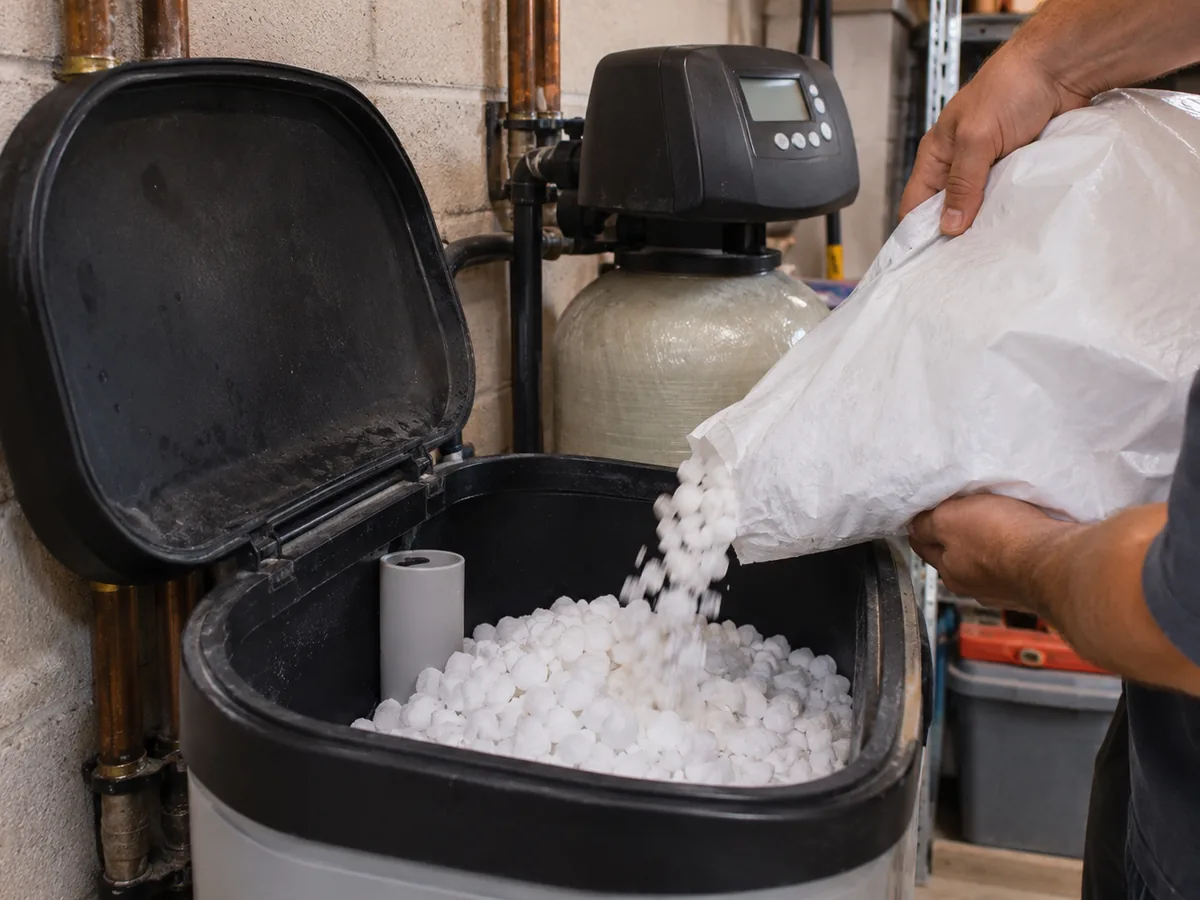
- Check the salt level about once a month and refill as needed.
- Break up any salt crust in the brine tank.
- Have the system checked every year or two.
- Set the hardness level correctly so it does not waste salt and water.
What to Ask Before You Buy
- What is my water’s hardness, and how big a system do I need?
- Where will it be installed, and is there a drain and outlet nearby?
- How often will it regenerate, and how much salt will it use?
- What is the warranty on the tank, resin and valve?
- Will the kitchen cold tap be left unsoftened for drinking?
Get Honest Advice
Paso Plumbing has 30 years in the trade and works on water heaters and plumbing that face El Paso hard water every day. We can test your water, look at your water heater and fixtures, and tell you if a softener makes sense for your home. You get the price before any work starts. See our water heater repair service or call (915) 200-8525.
Frequently Asked Questions
Do I need a water softener in El Paso?
It is not required, but many homes benefit because local water is moderately hard to hard.
How long does a water softener last?
Many last 10 to 15 years or more with regular care.
Does a water softener help a water heater last longer?
It reduces scale buildup, which can help, but check the anode rod more often.
Can I install a water softener myself?
Some homeowners do, but it involves the main water line, a drain and an outlet. Many hire a plumber.
Will a water softener lower my water bill?
Not directly. It uses some water to regenerate. Savings come from longer-lasting appliances and fixtures.
Is a salt-free water conditioner the same as a softener?
No. It does not remove hardness minerals but aims to reduce scale sticking to surfaces.
Does softened water feel slippery?
Yes. Many people notice a smoother feel because soap rinses differently in soft water.
Can a water softener remove other contaminants?
A softener mainly removes hardness. Other issues may need a filter or reverse osmosis.
Where should a water softener be installed?
Usually near where the main line enters the home, often in the garage, with a drain and outlet nearby.
How much salt does a water softener use?
It depends on your hardness, water use and the system. Many homes refill monthly.